Locations:





Redesigned protocols enhance infection-prevention measures
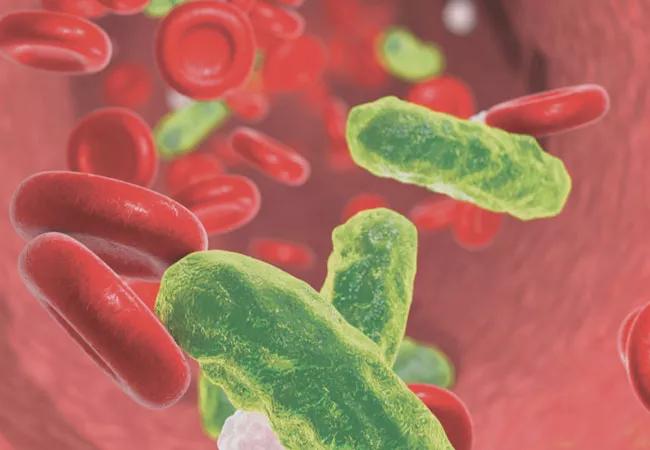
Image content: This image is available to view online.
View image online (https://assets.clevelandclinic.org/transform/91a264b6-520f-4670-a664-19b7f8d401d3/23-NUR-3955494-NN-CLABSI-reductEfforts-RTmeAuditProcess-CQD-kc_650x450_jpg)
23-NUR-3955494-NN-CLABSI-reductEfforts-RTmeAuditProcess-CQD-kc_650x450
Cleveland Clinic’s ongoing program to reduce central line-associated bloodstream infections (CLABSIs) has led to the implementation of multiple initiatives designed to address issues that contribute to potentially deadly nosocomial infections.
Advertisement
Cleveland Clinic is a non-profit academic medical center. Advertising on our site helps support our mission. We do not endorse non-Cleveland Clinic products or services. Policy
In recent years, the majority of CLABSIs enterprisewide have been traced back to issues with central-line maintenance. Now, a nurse-led multispecialty team aims to reduce the risk of infection with a visual, easy-to-understand central-line assessment (CLA) form and a confirmation process that maximizes its effectiveness.
“We requested input from every team that touches patients — nursing, nursing leadership, continuous improvement, infection prevention, pharmacy and others — to ensure that each patient receives the best care possible,” explains Kayla Little, MSN, APRN, AGCNS-BC, PCCN, the cardiovascular clinical nurse specialist who developed the visual form.
The CLA form lists 13 evidence-based measures for reducing CLABSIs, superimposed on an illustration of a correctly applied dressing. Each step includes a box with three options to circle: a green check mark indicating the step was performed correctly; a red X indicating the step was not performed correctly or at all; and an option that indicates that the step was unnecessary (N/A) or that an umbilical catheter (U) was used. (See illustration on facing page.)
Little explains that the form’s simplicity makes it faster to implement and reduces misunderstandings. Artwork reinforces the processes, and definitions are included on the back of the form for clarity.
“When we first trialed this form, novice nurses said it gave them a better understanding of what was expected,” says Little. “The tool empowers nurses to coach their peers and makes everyone aware of best practices.”
Advertisement
At the start of every 7 a.m. shift change, two nurses take a form to the bedside of each patient with a central line. They address each of the 13 measures one by one, circling the appropriate response. Is the central-line dressing dated? Is it clean, dry and intact on all sides? Measures that receive a red X are immediately corrected.
After all lines have been checked, the forms are submitted for review at a centralized location, where outcomes are displayed for the entire unit to see. Approximately 334 assessments are performed each day on Cleveland Clinic’s main campus. Nurse managers collect the data, and any incorrectly performed or omitted preventative measures are plotted by type on a Pareto chart in Excel.
“We need to know how we are doing, so if preventive measures were not taken in 100% of cases, we can examine why those failures occurred and decide what corrective steps are needed,” explains Myra King, DNP, APRN-CNS, ACNS-BC, CCRN-CSC, an advanced practice nursing manager.
The success of projects like the visual CLA form is enhanced by Cleveland Clinic’s Continuous Improvement (CI) personnel, who work with front-line nursing caregivers to design pragmatic, useful clinical tools. In addition to training and coaching the users, CI leads develop processes for gathering and evaluating the resulting data and teaching leaders how to develop effective corrective-action plans.
Senior nursing leaders turned to Michael Waterman, MBA, BSIE, CSSBB, CI Program Director for the Stanley Shalom Zielony Nursing Institute, to identify a process for evaluating compliance with CLABSI prevention measures. Process confirmation is used to verify that a best practice is being followed. This tool is one of 10 tactics in Cleveland Clinic‘s CLABSI reduction strategy.
Advertisement
Waterman worked with Little and her colleagues to refine the CLA form and optimize the usefulness of the data obtained. “We plot trends by individual units and across all hospitals so we can focus on where improvements need to be made,” he says. “In this way, each unit can tailor solutions to its specific problems and monitor performance for the entire site.”
CLABSI rates on Cleveland Clinic’s main campus have dropped by 31.4% since November 2022, when all nurses began using the CLA form daily. That translates to approximately 75 fewer infections per year. Importantly, the standardized infection ratio at Cleveland Clinic improved 31% in the first quarter of 2023.
“Daily line maintenance is one of the most important elements in reducing CLABSIs,” says Quality Improvement Specialist Kalyani Gonuguntla, MBA, who led the enterprise-wide CLABSI reduction efforts. “It’s where you get the biggest bang for your buck.”
Although nurses know the 13 evidence-based measures on the daily CLA form quite well, a paper checklist helps ensure that no step is missed. “When it comes to CLABSI prevention, you want to cross your t’s and dot your i’s 100% of the time,” says Gonuguntla. “Patients’ lives are in our hands.”
Advertisement
Advertisement

Nurses play key role in comprehensive lifetime treatment program
Customized bots improve speed, efficiency by streamlining daily clinical, clerical tasks

Nurses play pivotal role in patients’ ability to recover in the comfort of their own homes
New protocol reduces costs, increases patient and caregiver satisfaction

Advocating for patient safety is imperative in fast-paced surgical settings

M-Power program improves the perinatal experience for people who have survived abuse

Advice for those pursuing a WOC nursing career

Veteran nurse shares his experience as a caregiver and community volunteer
 Search