Locations:





South Pointe CNO Sheila Miller shares her secrets
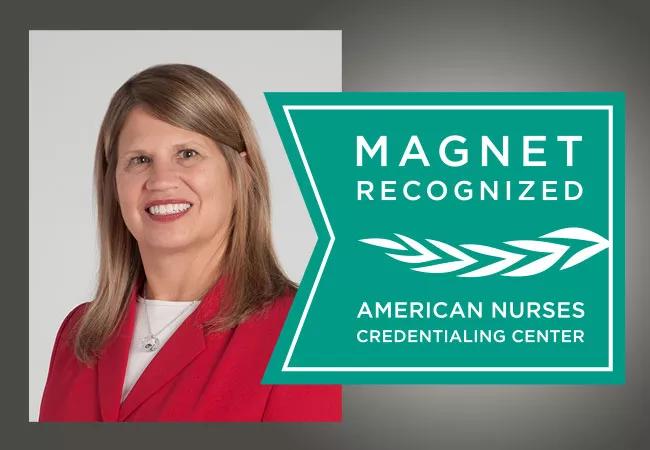
Image content: This image is available to view online.
View image online (https://assets.clevelandclinic.org/transform/e79bd359-89ab-4d7f-acd4-5e7bef8c24f5/18-NUR-4412-millerMagnet_650x450_jpg)
18-NUR-4412-millerMagnet_650x450
On the heels of another successful ANCC National Magnet Conference, nurse leaders and their caregiver teams are especially focused on the prestigious Magnet Recognition Program®. Whether they are part of an organization aiming to earn the gold-standard recognition, one that was newly honored for achieving it, or one that earned the coveted status in the past and is seeking re-designation, nurses have Magnet on their minds.
Advertisement
Cleveland Clinic is a non-profit academic medical center. Advertising on our site helps support our mission. We do not endorse non-Cleveland Clinic products or services. Policy
In this Q&A, Sheila Miller, DNP, MBA, RN, NEA-BC, Chief Nursing Officer of Cleveland Clinic South Pointe Hospital, offers nurse leaders at organizations pursuing Magnet recognition, her top preparation tips. Cleveland Clinic South Pointe Hospital became a Magnet-recognized hospital roughly one year ago on Dec. 20, 2017.
A: Magnet submission documents are all about two things: highlighting professional nursing and the impact of nursing on outcomes. Processes and structures that support professional nursing, such as Shared Governance and nurse involvement in decision-making are foundational to the Magnet process. By recognizing and valuing the impact of nursing, Magnet is uplifting to nurses and the entire organization. When preparing Magnet submission documents, make sure you are very clear on the difference between process outcomes and empirical outcomes. For example, hand hygiene is a process outcome; however, hospital-acquired infections are an empirical outcome.
Additionally, engage your Shared Governance representatives in identifying Magnet-worthy examples to include in your document, keeping in mind that more isn’t always better. Aim to be thorough and thoughtful when describing how your examples meet the required Magnet elements, but don’t add details that are unrelated to what is being asked – this can cause confusion and lack of clarity.
A: My best advice is to make it fun and tap into the excitement of your nurses! Share the content using game formats like ‘bingo’ or ‘jeopardy’ instead of lectures. Another tip is to have your Shared Governance representatives share the information with their peers. And finally, practice, practice, practice! Hold a mock-survey and identify areas where your organization is strong, as well as those in which you are weaker. Remember, the site visit is an opportunity for nurses to share their passion and dedication to quality professional nursing care by way of Magnet components.
Advertisement
A: One of the biggest things Magnet appraisers will want to take a look at or discuss during their visit is data. It’s very important to prepare your nurses to speak comfortably about your organization’s data. The appraisers want to hear from those who provide direct patient care, not managers or directors, so as a nurse leader, you need to help your bedside caregivers understand the data that has been presented, and how to interpret it as favorable or unfavorable.
Additionally, make it a point to go beyond what you’ve included in your submission document when reviewing with your team. Remember, the purpose of a Magnet visit is to validate, verify and amplify the information you’ve already submitted. Appraisers are looking to see if the necessary elements exist in your environment, not just that people can recite what’s in your document.
For more helpful information, the ANCC offers numerous tools and resources to aid organizations that are considering the Journey to Magnet Excellence®.
Advertisement
Advertisement
Nurses play key role in comprehensive lifetime treatment program
Customized bots improve speed, efficiency by streamlining daily clinical, clerical tasks
Nurses play pivotal role in patients’ ability to recover in the comfort of their own homes
New protocol reduces costs, increases patient and caregiver satisfaction
Advocating for patient safety is imperative in fast-paced surgical settings
M-Power program improves the perinatal experience for people who have survived abuse

Advice for those pursuing a WOC nursing career
Veteran nurse shares his experience as a caregiver and community volunteer
 Search