Locations:





Pairing 7T MRI with gene expression analysis to probe molecular and brain changes
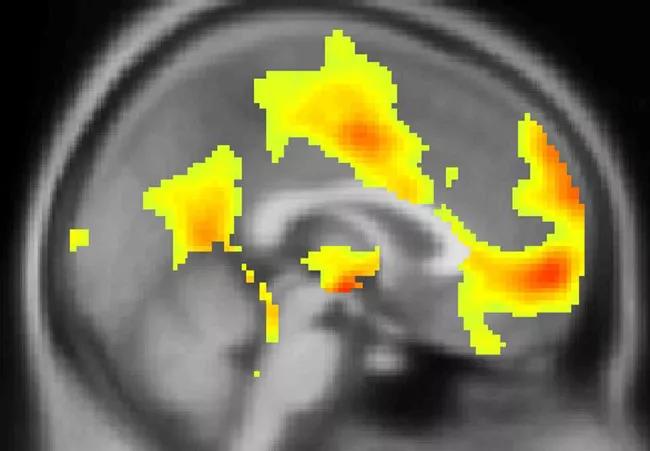
Image content: This image is available to view online.
View image online (https://assets.clevelandclinic.org/transform/77eb1c74-e228-4919-bb1b-ab17dac46e5d/17-NEU-4269-Anand-Lithium-Bipoloar-650x450_jpg)
17-NEU-4269-Anand-Lithium-Bipoloar-650×450
Cleveland Clinic researchers have received a $3.7 million National Institutes of Health R01 grant to investigate the effects of lithium on the brains of patients with bipolar disorder. The element’s mood-stabilizing qualities have been recognized for decades, but its exact mechanisms of action are poorly understood.
Advertisement
Cleveland Clinic is a non-profit academic medical center. Advertising on our site helps support our mission. We do not endorse non-Cleveland Clinic products or services. Policy
“Lithium is one of the most specific and effective treatments we have for bipolar disorder, but no one knows how it works,” says psychiatrist Amit Anand, MD, who is leading the study. “This research will address important knowledge gaps by exploring changes in the brain and at the molecular level in patients on lithium therapy.”
Dr. Anand is Vice Chair for Research in Cleveland Clinic’s Center for Behavioral Health and directs the Mood and Emotional Disorders Across the Life Span (MEDALS) program in the Department of Psychiatry and Psychology.
The five-year study will recruit 90 patients diagnosed with bipolar II disorder (depressed type) who are not on medications. Participants will be studied with MRI and blood testing at baseline and after two, eight and 26 weeks of lithium monotherapy. In addition, 30 closely matched healthy controls will undergo the same testing, but without treatment. Preliminary results are expected to be available in about three years.
The investigations are multifold:
Advertisement

Image content: This image is available to view online.
View image online (https://assets.clevelandclinic.org/transform/155589fa-7c0e-4768-a2fd-8f023922f7ef/17-NEU-4269-Anand-Lithium-Bipoloar-b-650x450_jpg)
A gene expression microarray of the type to be used in the new study.
Dr. Anand is a leader in the field of advanced neuroimaging in bipolar disorder. He is especially interested in characterizing the neural networks or “connectomes” between different regions of the brain rather than focusing on possible abnormalities in discrete areas. The functional and structural MRI scans obtained in this study will be analyzed using graph theory metrics and independent component analysis, sophisticated mathematical techniques for revealing hidden factors underlying apparently random signals. They are anticipated to provide important insights into how mood elevation and stabilization affect brain networks.
A newly published Cleveland Clinic study led by Dr. Anand (J Affect Disord. 2018;225:4-12) found that clinical improvement during lithium therapy in patients with bipolar disorder correlated with changes in the brain’s amygdala-ventromedial prefrontal cortex. This study had fewer test subjects than the new study, observed the effects of lithium therapy for only eight weeks and evaluated only resting-state functional connectivity. “Our initial study led to interesting results despite its limited scope,” Dr. Anand notes. “We are eager to confirm and expand our findings with this larger and more extensive investigation of both short- and longer-term effects of lithium therapy, using the most sophisticated imaging and cellular analysis techniques available.”
Beside its very specific effects for treatment of bipolar disorder, lithium’s benefits have recently been touted in the popular and scientific press, with some experts even suggesting that lithium should perhaps be added to drinking water to provide public health benefits (JAMA Psychiatry. 2017;74:983-984). Several studies have shown that high levels of naturally occurring lithium in drinking water are associated with reduced suicide rates as well as a lower risk of dementia.
Advertisement
The problem with lithium, Dr. Anand explains, is that too much of it can lead to lithium toxicity, which, if not treated, can evolve from gastrointestinal symptoms to confusion, seizures and coma. Therefore, lithium treatment should always be administered under the care of a physician.
Lithium also interacts with multiple drugs and foods that can either enhance or diminish its effects. Frequent lithium monitoring is required to ensure that blood levels stay in the therapeutic range.
Dr. Anand expects that a better understanding of the effects of lithium will enable development of safer drugs with similar benefits but without the associated toxicities. “This new study provides a novel paradigm to investigate the effects of lithium and other psychotropic drugs,” he says. “Our ultimate goal is to discover biomarkers that can be used for treatment monitoring and drug development.”
Advertisement
Advertisement

New study advances understanding of patient-defined goals

Testing options and therapies are expanding for this poorly understood sleep disorder
Real-world claims data and tissue culture studies set the stage for randomized clinical testing
Digital subtraction angiography remains central to assessment of ‘benign’ PMSAH

Cleveland Clinic neuromuscular specialist shares insights on AI in his field and beyond

Findings challenge dogma that microglia are exclusively destructive regardless of location in brain
Neurology is especially well positioned for opportunities to enhance clinical care and medical training
New review distills insights from studies over the past decade
 Search