Locations:





Replacement procedures surge while repairs ebb in wake of study publication
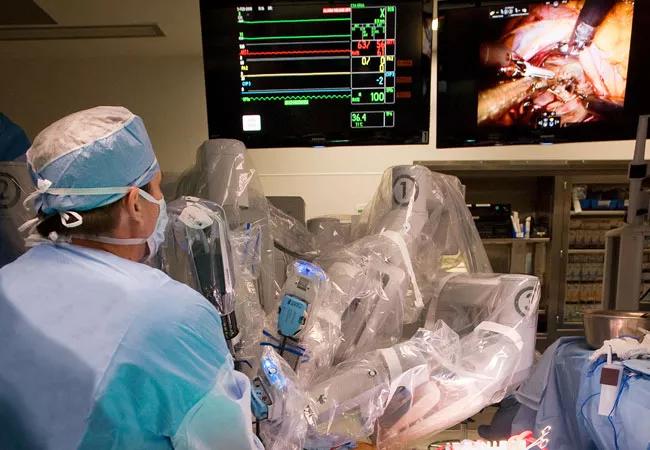
Image content: This image is available to view online.
View image online (https://assets.clevelandclinic.org/transform/34edbdde-4e89-43ad-a1cd-e77054084b0a/16-HRT-289-MitralRegurg-CQD-650x450_jpg)
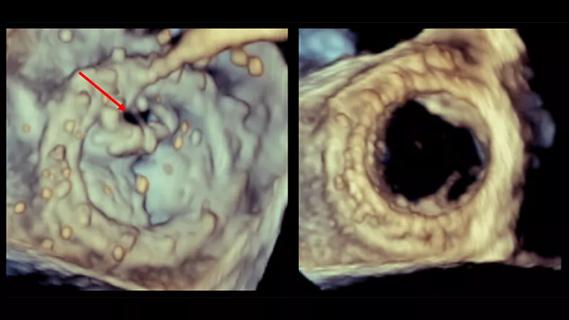
Mitral Valve Repair
U.S. surgical management of patients with severe ischemic mitral regurgitation has significantly shifted toward mitral valve replacement in the wake of the January 2014 publication of the milestone Cardiothoracic Surgical Trials Network (CTSN) study comparing mitral valve repair versus replacement in this setting. So reported investigators with the multicenter trial — known as the NHLBI CTSN trial due to its support by the National Lung, Heart, and Blood Institute — in a late-breaking abstract presentation at the annual meeting of the Society of Thoracic Surgeons (STS) on January 29, 2018.
Advertisement
Cleveland Clinic is a non-profit academic medical center. Advertising on our site helps support our mission. We do not endorse non-Cleveland Clinic products or services. Policy
Across 1,131 sites participating in the STS Adult Cardiac Surgery Database from 2011 through 2016, 4,440 patients underwent mitral valve surgery for severe ischemic mitral regurgitation. The 2,271 procedures performed before January 2014, when the NHLBI CTSN trial was published in the New England Journal of Medicine, broke down as follows:
The 2,169 procedures performed after April 2014 broke down as follows:
The difference in the rates of replacement versus repair between the two periods was statistically significant (P < .0001), the investigators reported at the STS meeting. Their analysis of the post-study publication period began after April (rather than January) 2014 to allow several months for the NHLBI CTSN results to be absorbed and translated to practice.
“This trial appears to be changing practice across the country,” says Cleveland Clinic Cardiothoracic Surgery Chair A. Marc Gillinov, MD, who is a co-author of the new NHLBI CTSN analysis presented at the STS meeting, along with Rakesh Suri, MD, DPhil, Acting CEO and Chair of Thoracic and Cardiovascular Surgery at Cleveland Clinic Abu Dhabi. Cleveland Clinic is a CTSN member site.
While mitral valve repair is the gold-standard surgical approach for degenerative mitral valve disease, the preferred approach for severe ischemic mitral regurgitation had been uncertain until publication of the NHLBI CTSN results. The randomized trial assessed the tradeoff between reduced perioperative risk with restrictive mitral valve annuloplasty and more durable correction of mitral regurgitation with chordal-sparing mitral valve replacement.
Advertisement
Although the study found no significant differences between repair and replacement in survival or left ventricular reverse remodeling at one-year or two-year follow-up, repair was associated with higher rates of mitral regurgitation and heart failure-related adverse events and hospital readmissions.
“It is difficult to predict which patients will have a repair that lasts,” Dr. Gillinov notes, “so replacement should be the first consideration in this patient population.”
This recommendation seems to be increasingly heeded by U.S. cardiac surgeons and their patients with severe ischemic mitral regurgitation, as evidenced by the data presented at the STS meeting. That analysis also tracked one-year outcomes among the 4,440 mitral valve surgery patients evaluated from 2011 through 2016. While it showed that mortality was comparable between the periods before and after NHLBI CTSN publication, rates of heart failure-related readmissions were lower during the period after the study publication, although the reduction was not directly attributable to higher rates of replacement versus repair.
“We still have more to learn about the nuances of outcomes with each of these approaches,” says Dr. Gillinov. “Ongoing long-term analysis is warranted to refine our understanding of optimal treatment of severe ischemic mitral regurgitation.”
Advertisement
Advertisement

A sampling of outcome and volume data from our Heart & Vascular Institute
Concomitant AF ablation and LAA occlusion strongly endorsed during elective heart surgery

Large retrospective study supports its addition to BAV repair toolbox at expert centers

Young age, solid tumor, high uptake on PET and KRAS mutation signal risk, suggest need for lobectomy
Surprise findings argue for caution about testosterone use in men at risk for fracture
Residual AR related to severe preoperative AR increases risk of progression, need for reoperation

Findings support emphasis on markers of frailty related to, but not dependent on, age
Provides option for patients previously deemed anatomically unsuitable
 Search