Locations:





 Search
Hard-to-treat GI disorders benefit from multidisciplinary approach
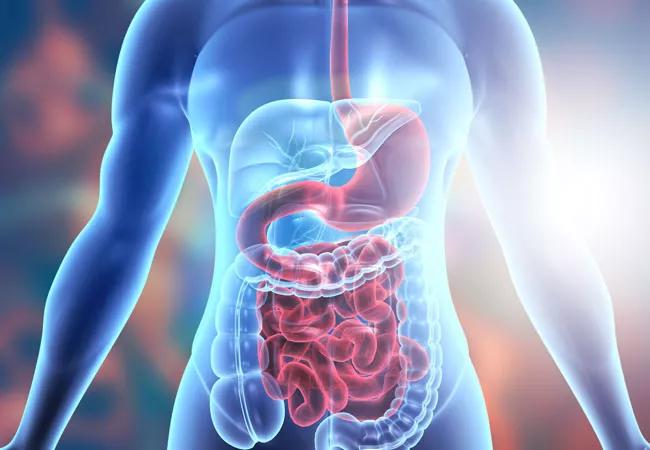
Image content: This image is available to view online.
View image online (https://assets.clevelandclinic.org/transform/e86f39e2-7c27-4327-a239-4925c33a72e1/22-DDI-3283958-CQD-Neuro-GI-program-preview-Gabbard_jpg)
22-DDI-3283958 CQD Neuro GI program preview-Gabbard
Neurogastroenterological and motility disorders — which can involve one or more of the organs along the gastrointestinal (GI) tract — can be debilitating and disheartening. Patients may suffer for years with such symptoms as dysphagia, nonspecific pain, abdominal bloating, vomiting, severe constipation or diarrhea without getting a definite diagnosis and adequate treatment.
Advertisement
Cleveland Clinic is a non-profit academic medical center. Advertising on our site helps support our mission. We do not endorse non-Cleveland Clinic products or services. Policy
To address these sometimes baffling conditions — including but not limited to achalasia, reflux disease not responsive to medications, gastroparesis, chronic intestinal pseudo-obstruction and pelvic floor dyssynergia — Cleveland Clinic has created the multidisciplinary Neurogastroenterology and Motility Center.
“The Neurogastroenterology and Motility Center is an important addition to the portfolio of specialty care we provide for patients with gastrointestinal disorders,” says Michelle Kang Kim, MD, PhD, Chair of Cleveland Clinic’s Department of Gastroenterology, Hepatology and Nutrition. “The expertise and comprehensive range of clinical services available at the center, as well as the research underway there, have the potential to help many people who struggle with these difficult conditions.” “These disorders can be complex, and centers that specialize in them are rare,” says gastroenterologist Scott Gabbard, MD, the center’s Director. “It’s not surprising that the correct diagnosis is often missed.”
“For new patients, our aim is to provide evaluation, specialist consultation, dietetics and behavioral therapy in a single visit over one or two days,” he explains. “That way, patients — particularly those from out of the area — can go home with a diagnosis, specific ways to help their problem immediately and an individual care plan.”
Dr. Gabbard says that service coordination starts before the patient visit, when a trained appointment manager arranges a schedule to make the most of each individual visit. An initial examination with a gastroenterologist is followed by appropriate onsite testing and further evaluation by a specialist and/or surgical consult as needed. Patients evaluated at the center have access to all specialists and surgeons pertinent to their case.
Advertisement
A session with a behavioral therapist also can be scheduled during the visit. Almost all neurogastroenterological conditions cause, and are exacerbated by, stress, which can be addressed with evidence-based home exercises. Gut-directed hypnotherapy has been shown to help up to 90% of patients with certain conditions. Patients can learn to practice the technique on their own.
Neurogastroenterology has become an important area of research, and the center’s clinicians are involved in many research projects and clinical trials. Dr. Gabbard highlights some current topics of special interest in the field:
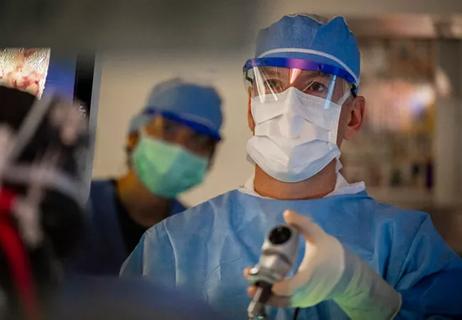
Cleveland Clinic is at the forefront of advanced diagnostics and therapeutics in gastroenterology, with minimally invasive techniques becoming more available for an increasing number of conditions.
Often, neuromodulator medications are used; these are medications that can decrease nerve pain and sensitivity in the gastrointestinal tract. Transcutaneous electroacupuncture is a promising new treatment for non-erosive reflux disease refractory to proton pump inhibitor therapy.
Advertisement
“Many gastrointestinal disorders have an underlying nerve sensitivity issue that is often unrecognized,” summarizes Dr. Gabbard. “We are fortunate at Cleveland Clinic to have deep and broad capabilities in this field so that we can offer complete care in one center based on a comprehensive multidisciplinary approach to diagnostics and treatment.”
For more information about the Neurogastroenterology and Motility Center, healthcare providers may contact Dr. Gabbard at gabbars@ccf.org
Advertisement
Advertisement

Strong patient communication can help clinicians choose the best treatment option
ctDNA should be incorporated into care to help stratify risk pre-operatively and for post-operative surveillance

The importance of raising awareness and taking steps to mitigate these occurrences
New research indicates feasibility and helps identify which patients could benefit

Treating a patient after a complicated hernia repair led to surgical complications and chronic pain
Standardized and collaborative care improves liver transplantations
Fewer incisions and more control for surgeons

Caregiver collaboration and patient education remain critical