Locations:





Procedure yields better outcomes than amiodarone

Image content: This image is available to view online.
View image online (https://assets.clevelandclinic.org/transform/a656032f-d303-4bfb-b7b6-1313fd07b956/Ablation-690x380_jpg)
Catheter ablation
The recently presented AATAC-AF in Heart Failure study shows that performing catheter ablation for persistent atrial fibrillation in patients with heart failure appears to be worth the risks, according to Cleveland Clinic electrophysiologist Walid Saliba, MD.
Advertisement
Cleveland Clinic is a non-profit academic medical center. Advertising on our site helps support our mission. We do not endorse non-Cleveland Clinic products or services. Policy
“Keeping this group of patients out of atrial fibrillation is definitely an unmet need today,” says Dr. Saliba, who was not involved in the study. “They have higher hospitalization rates and higher recurrence rates of atrial fibrillation because it tends to coexist with heart failure.”
The study, which was presented at the American College of Cardiology Scientific Session earlier this year, was a multicenter comparison of catheter ablation with the antiarrhythmia medication amiodarone in 203 patients with NYHA class II to III heart failure plus atrial fibrillation. All patients had a left ventricular ejection fraction (LVEF) less than 40 percent and a dual-chamber implantable cardioverter defibrillator or cardiac resynchronization therapy device. Patients were randomized to catheter ablation or amiodarone in a parallel-group, open-label fashion.
Dr. Saliba notes that this study differed from prior comparisons of amiodarone with ablation for atrial fibrillation because it looked exclusively at patients who also had heart failure.
At mean follow-up of 26 months, 70 percent of patients in the catheter ablation group showed freedom from atrial fibrillation compared with 34 percent randomized to amiodarone (P < .001). The ablation group also showed statistically significant advantages in all-cause mortality and hospitalization rates.
The study found that heart function improved by significantly greater degrees among recurrence-free patients compared with patients who experienced atrial fibrillation recurrence, in terms of LVEF, six-minute walk distance and Minnesota functioning score (P < .001 for all).
Advertisement
Dr. Saliba says that while ablation procedures have some risks, this study helps show that many of the risks are worth it. He notes that amiodarone also poses risks, and patients taking it for a long time need regular monitoring of the thyroid, liver, lungs, eyes, skin and central nervous system.
“Amiodarone is a strong medication,” he says, “and we do not like to give it to young patients since they would face years of possible side effects. We have thought it was best used for a short time with a specific goal, such as until the patient can undergo ablation. This study shows that this is the correct approach for most patients.”
He notes, however, that ablation does not “cure” atrial fibrillation, especially in patients with concomitant heart failure; instead, it tends to maximize the chance of staying in normal rhythm. Patients who still have symptoms, such as dyspnea, may need to try antiarrhythmic drug therapy as well.
Dr. Saliba points out that AATAC-AF in Heart Failure was a small study and that more research on the best ways to treat atrial fibrillation in heart failure is needed, but he calls it a step in the right direction.
“Overall mortality in this study was 8 percent in the ablation group vs. 18 percent in the amiodarone group,” he says. “This is a positive finding that helps reaffirm results from other studies showing that ablation offers the greatest chance of success for heart failure patients.”
He adds that keeping patients in normal rhythm without medication means that “we are potentially changing the natural history of the disease.”
Advertisement
Advertisement

A sampling of outcome and volume data from our Heart & Vascular Institute
Concomitant AF ablation and LAA occlusion strongly endorsed during elective heart surgery
Large retrospective study supports its addition to BAV repair toolbox at expert centers
Young age, solid tumor, high uptake on PET and KRAS mutation signal risk, suggest need for lobectomy
Surprise findings argue for caution about testosterone use in men at risk for fracture
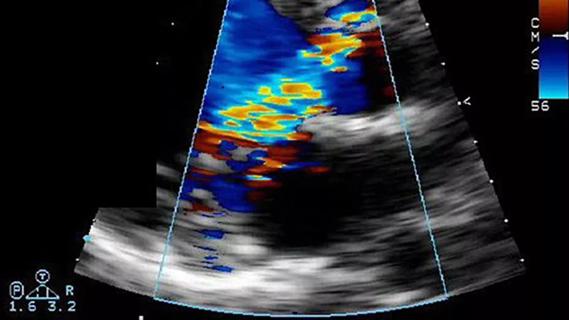
Residual AR related to severe preoperative AR increases risk of progression, need for reoperation

Findings support emphasis on markers of frailty related to, but not dependent on, age
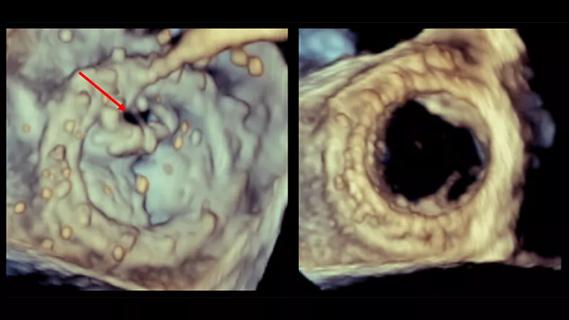
Provides option for patients previously deemed anatomically unsuitable
 Search