Locations:





Written guide eventually will be integrated into the EMR
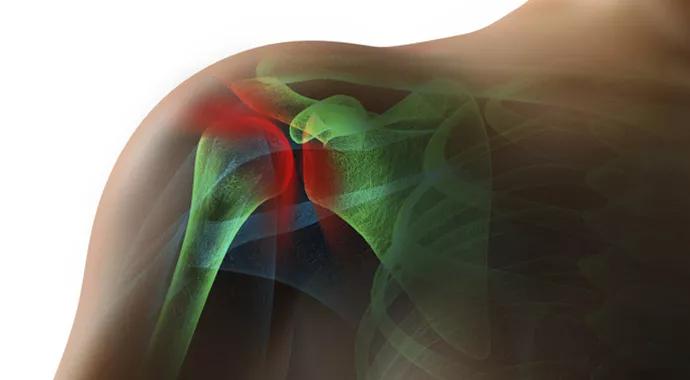
Image content: This image is available to view online.
View image online (https://assets.clevelandclinic.org/transform/432098f7-e400-46a0-bfa3-bb6a798c6e7c/14-ORT-1696-Ricchetti-Hero-Image-690x380pxl_jpg)
14-ORT-1696-Ricchetti-Hero-Image-690x380pxl
Advertisement
Cleveland Clinic is a non-profit academic medical center. Advertising on our site helps support our mission. We do not endorse non-Cleveland Clinic products or services. Policy
Over the past several years, Cleveland Clinic has begun to develop care paths for treatment of specific conditions, with the goal of standardizing care around best practices to reduce variation, improve quality and decrease cost.
The Department of Orthopaedic Surgery has embraced this initiative and focused its efforts on care path development for several commonly treated orthopaedic conditions, including full-thickness rotator cuff tears. Rotator cuff disease is one of the most common musculoskeletal disorders in adults, and rotator cuff disorders are the most common cause of shoulder disability.
Despite a considerable medical literature on management of full-thickness rotator cuff tears, variability still exists in both nonoperative and operative treatment of these tears.
Cleveland Clinic care paths start with evidence- and consensus-based care path “guides” ‒ succinct documents detailing the appropriate steps in patient management for the condition at hand, with supporting rationales. The guides, which are developed by multidisciplinary teams of Cleveland Clinic experts, are translated into algorithms and work flows for practical application.
The care path guide for treatment of full-thickness rotator cuff tears was designed around the concept of an episode of care, defined from the time when a full-thickness rotator cuff tear is diagnosed on advanced imaging through the point of maximum medical improvement for the patient, either at the end of nonoperative treatment or after postsurgical rehabilitation.
Advertisement
Ultimately, this written guide will be integrated into the electronic medical record (EMR) to help providers implement recommended best practices. Several pilot projects are under way or in development to further refine or create care algorithms that can be operationalized in the EMR.
The initial pilot study has focused on defining the indications for advanced imaging, including both MRI and ultrasound, in the diagnosis of full-thickness rotator cuff tears. While an advanced imaging study is typically necessary for diagnosis, such studies are costly and can be overused. This pilot aims to determine both the appropriateness and timing of an advanced imaging study in order to eliminate unnecessary tests that do not impact treatment yet increase cost.
Clinical scenarios to avoid include obtaining an MRI or ultrasound in a patient who is not a surgical candidate or obtaining an advanced imaging study before a patient completes a sufficient period of nonoperative treatment.
Data on the number of advanced imaging studies currently being ordered within the Cleveland Clinic health system and the impact on treatment are being analyzed. Specific patient criteria will then be defined to determine when ordering advanced imaging is appropriate, after which these pilot study criteria will be analyzed (post-implementation) to determine their effect on ordering patterns and any resulting cost savings.
MRI is the current gold-standard advanced imaging study for diagnosis of a full-thickness rotator cuff tear (Figure), but it is the most expensive and time-consuming advanced imaging study to obtain. Advancements in MRI technology and image quality have made it possible to perform an MRI of the shoulder in less time, and it may also be possible to obtain fewer sequences during a particular study to make a disease-specific diagnosis.
Advertisement
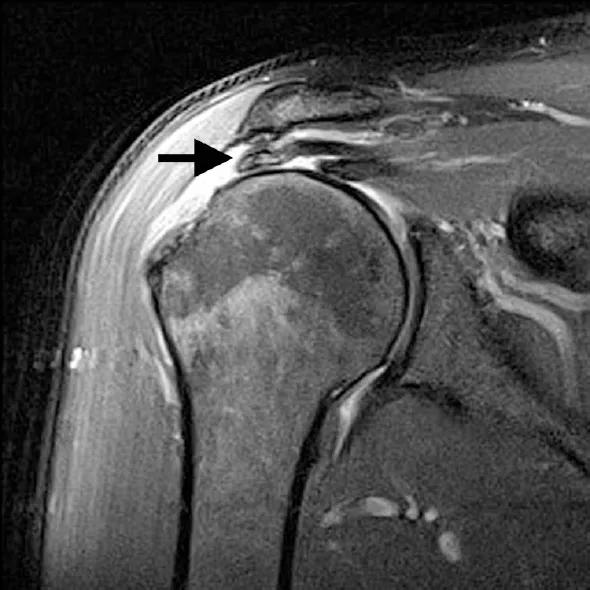
Image content: This image is available to view online.
View image online (https://assets.clevelandclinic.org/transform/7cf297f4-24db-4590-8655-b0ebef5596c6/14-ORT-1696-Ricchetti-Inset-Image-Fig-1-590pxl-width_jpg)
Figure As part of Cleveland Clinic’s initiative to develop care paths for specific conditions, the Department of Orthopaedic Surgery is creating one to reduce variability in care for full-thickness rotator cuff tears.
Therefore, another pilot study is under way to develop a faster MRI imaging protocol to decrease cost and time requirements while maintaining diagnostic accuracy. Images from a standard-sequence MRI of the shoulder will be compared with images from a fast sequence (performed in as little as four minutes) to assess whether there are any differences in the ability to diagnose rotator cuff pathology or in impact on clinical decision-making.
Initiatives such as these have the goal of improving overall healthcare value in at least two ways:
As this and other care paths evolve from written guidelines and recommendations to operational tools within the EMR, we can expect more effective adherence to clinical management practices as well as an unprecedented ability to monitor patient outcomes and provider practices.
This enhanced monitoring capability will allow for continual improvement and refinement of best practices, with the ultimate goal of ongoing improvement of patient outcomes.
Dr. Ricchetti is a shoulder specialist in the Upper Extremity Center in the Department of Orthopaedic Surgery.
Advertisement
Advertisement
Biologic approaches, growing implants and more
Study reports zero infections in nearly 300 patients
How to diagnose and treat crystalline arthropathy after knee replacement
Study finds that fracture and infection are rare
Center will coordinate, interpret and archive imaging data for all multicenter trials conducted by the foundation’s Osteoarthritis Clinical Trial Network

Reduced narcotic use is the latest on the list of robotic surgery advantages
Cleveland Clinic specialists offer annual refresher on upper extremity fundamentals
Cleveland Clinic orthopaedic surgeons share their best tips, most challenging cases and biggest misperceptions
 Search