Locations:





Three Cleveland Clinic cardiologists size up the ACC/AHA recommendations
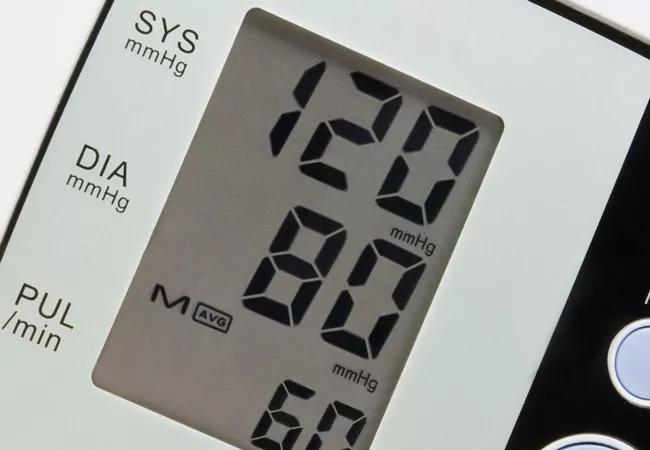
Image content: This image is available to view online.
View image online (https://assets.clevelandclinic.org/transform/985a51d5-804d-4f42-a403-8d3139d6b90b/BP-650x450_jpg)
BP-650×450
The new hypertension guidelines from the American College of Cardiology (ACC) and the American Heart Association (AHA) call for a major shift to more aggressive blood pressure management. Cleveland Clinic cardiologists welcome the recommendations in that they align with the approach they’ve been taking in recent years. Yet despite agreement with the new guidelines in the big picture, these cardiologists say there are a few points on which concern is warranted, particularly regarding the need to individualize treatment and the lack of data for patients with diabetes.
Advertisement
Cleveland Clinic is a non-profit academic medical center. Advertising on our site helps support our mission. We do not endorse non-Cleveland Clinic products or services. Policy
“The ACC/AHA guidelines generally hold no major surprises and were issued in the direction that many cardiologists were predicting, based on robust data and with consensus from numerous professional societies,” says Haitham Ahmed, MD, MPH, Cleveland Clinic’s Medical Director of Cardiac Rehabilitation. “This type of consensus was not necessarily achieved previously, so that was refreshing.”
Some of that consensus likely stems from the fact that the guidelines come in the wake of newer data — notably the 2015 publication of the SPRINT trial — showing cardiovascular benefit from aggressive blood pressure lowering. The new guidelines advise treating to a goal of less than 130/80 mmHg when such a level can be achieved without significant side effects, with tailoring of medication based on the degree of hypertension and underlying cardiovascular risk.
The recommendations also now advise home blood pressure monitoring to overcome “white coat hypertension” and a nomenclature change eliminating the term prehypertension in favor of defining levels from 130/80 to 139/89 mmHg as stage 1 hypertension.
The data supporting lower blood pressure targets are “overwhelming, especially in higher-risk patients,” Dr. Ahmed says. “The strategy to tailor treatment to a combination of blood pressure targets and cardiovascular risk is also an important step forward since net benefit is determined by both baseline risk and absolute change in that risk.”
His Cleveland Clinic colleague Leslie Cho, MD, notes that the new ACC/AHA guidelines are far preferable to those of the 2014 Eighth Joint National Committee (JNC 8), which had recommended much looser blood pressure targets based on old clinical trial data and were so controversial that half of the writing group disavowed them.
Advertisement
“Thankfully, SPRINT came out and we now have more data,” says Dr. Cho, Section Head of Preventive Cardiology and Rehabilitation. “There’s also been much discussion back and forth, so we now have a more robust guideline. This is a big improvement over JNC 8.”
Although he generally supports the new guidelines, Cleveland Clinic’s Cardiovascular Medicine Chair, Steven Nissen, MD, worries that some clinicians might interpret them as one-size-fits-all requirements when in fact clinical judgment is required to assess which patients may be at greater risk for adverse effects of treatment and should therefore be managed to less-stringent targets.
“There’s been an accumulation of evidence to suggest that lower blood pressure targets provide some benefits,” Dr. Nissen observes. “However, they also carry some increased risks. In balancing the benefits and risks, the guideline writers tilted toward the more aggressive targets. That’s generally reasonable for many people, but not necessarily for all.”
He cites the example of individuals with frailty. “There are patients in whom very aggressive blood pressure reduction potentially can cause kidney problems, dizziness and falls,” he says. “So it’s important that people view these as guidelines rather than mandates.”
“Physicians also must be cautious when making medication changes,” Dr. Ahmed adds. “Older patients with chronic kidney disease need judicious medication titration and close monitoring. The lower blood pressure targets need not be achieved overnight. Rather, we aim to achieve them safely and over time in our center.”
Advertisement
Dr. Nissen also takes issue with use of the ACC/AHA’s recommended calculator for assessing 10-year ASCVD risk, the same one provided in the controversial 2013 ACC/AHA lipid guidelines. “It’s been widely identified as relatively inaccurate and hasn’t been tested in the blood pressure realm,” he explains. “The whole idea of using a risk calculator for blood pressure targets is a new and unstudied concept, so many of us have concerns.”
Instead, Dr. Nissen uses the well-validated Reynolds Risk Score, which includes family history of cardiovascular disease, whereas the ACC/AHA calculator doesn’t.
All three cardiologists agree that the ACC/AHA guidelines fall short when it comes to patients with diabetes, recommending the same 130/80 mmHg target for that population despite a lack of sufficient data. Patients with diabetes were excluded from the SPRINT trial, and the ACCORD-BP trial showed no cardiovascular benefit with more intensive blood pressure control in patients with diabetes.
“Suffice it to say that the data aren’t uniformly positive for lower targets in patients with diabetes,” Dr. Nissen says. In fact, the ACC/AHA recommendations now conflict with those of the American Diabetes Association, which has not changed its recommended target of below 140/90 mmHg for people with diabetes in its 2018 Standards of Care.
Dr. Cho notes that blood pressure control is indeed important in patients with diabetes, in view of their exceptionally high risk for cardiovascular disease. Yet these patients may also be at increased risk for medication side effects and for renal failure with blood pressure levels that are too high or too low. “We need a larger trial to figure out the optimal balance for patients with diabetes,” she observes.
Advertisement
She adds that the clinical judgment required for such questions of balance is essential for applying the new guidelines in general, particularly when it comes to “de-prescribing” in older adults or otherwise adjusting treatment to individual patient circumstances. “These are guidelines, but the person in front of you is not a guideline,” she says. “Our aging population demands that we all really be doctors. This is where so-called personalized medicine truly comes into play.”
Advertisement
Advertisement

A sampling of outcome and volume data from our Heart & Vascular Institute

Concomitant AF ablation and LAA occlusion strongly endorsed during elective heart surgery

Large retrospective study supports its addition to BAV repair toolbox at expert centers

Young age, solid tumor, high uptake on PET and KRAS mutation signal risk, suggest need for lobectomy

Surprise findings argue for caution about testosterone use in men at risk for fracture

Residual AR related to severe preoperative AR increases risk of progression, need for reoperation

Findings support emphasis on markers of frailty related to, but not dependent on, age

Provides option for patients previously deemed anatomically unsuitable
 Search