Locations:





Pipeline for therapeutics is small; 99.6 percent of drug attempts fail
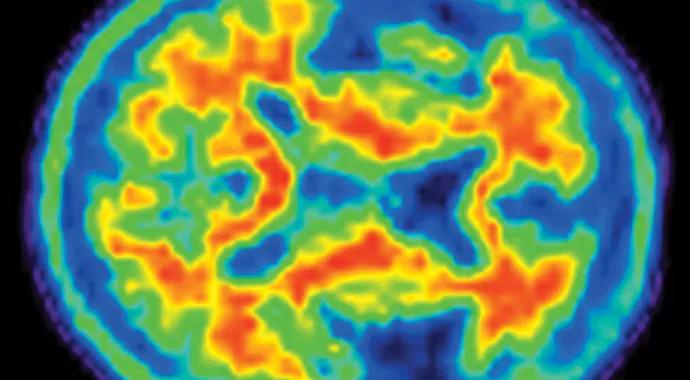
Image content: This image is available to view online.
View image online (https://assets.clevelandclinic.org/transform/a095b4ec-14c2-4a1a-9e5b-db9db3be62e0/Alz-690x380_jpg)
Alz-690×380
The number of patients with Alzheimer’s disease (AD) is going up. But few drugs are in development to treat it – while the number of available drugs is decreasing.
Advertisement
Cleveland Clinic is a non-profit academic medical center. Advertising on our site helps support our mission. We do not endorse non-Cleveland Clinic products or services. Policy
In a new analysis published today, researchers say there is an urgent need to increase the number of agents entering the AD drug development pipeline in order to increase the chances of some drugs making successful progress toward new therapy treatments.
The analysis, by researchers at the Cleveland Clinic Lou Ruvo Center for Brain Health, is the first analysis of clinical trials for AD. Results appear today in the journal Alzheimer’s Research & Therapy.
The comprehensive look at all clinical trials under way shows:
• Relatively few AD drugs are in development.
• The failure rate for AD drug development is 99.6 percent from the years 2002 to 2012.
• The number of AD drugs has been declining since 2009.
“With an estimated 44 million people living worldwide with the condition, the study shows that the Alzheimer’s disease drug development ecosystem needs more support, given the magnitude of the problem.” says Jeffrey L. Cummings, MD, ScD, Director of the Lou Ruvo Center for Brain Health.
Dr. Cummings led a team of researchers who constructed a comprehensive analysis to examine all AD clinical trials since 2002. The team used the advanced search mechanisms of ClinicalTrials.gov, a government website that records all ongoing clinical trials.
“Our goal was to examine historical trends to help understand why Alzheimer’s disease treatment development efforts so often fail,” Dr. Cummings says.
The team of researchers included Kate Zhong, M.D., Senior Director of Clinical Research and Development at the Lou Ruvo Center for Brain Health, and Touro University medical student Travis Morstorf.
Advertisement
The team analyzed completed and on-going trials, as well as currently active compounds.
“The results of this analysis gave us insight into longitudinal trends in drug development,” Dr. Zhong says. “What we found was that the investment in AD drugs and therapies is relatively low compared to the challenge posed by the disease. The pipeline is almost dry.”
The analysis illustrates the high failure rate of compounds and the need for a constant supply of new drugs or a higher focus on repurposing, which can be assessed for efficacy in treating AD, the researchers say.
AD is more expensive to the U.S. economy than cardiovascular disease or cancer. The system of AD drugs must be supported, grown and coordinated to improve the success rate and development of new therapies, the research team says.
The researchers note the need for more repositioning studies, which involve studying an already-approved drug in a new use or condition. This would accelerate the drug development process and reduce the need to constantly invent new drugs.
One example of this is a landmark Phase IIa clinical trial to find out if bexarotene, a drug that is FDA-approved to treat skin cancer, can remove protein build-up in the brains of AD patients, as it did in a recent animal study. Researchers at the Lou Ruvo Center for Brain Health are leading this study.
For more information about clinical trials or the various programs available at Cleveland Clinic Lou Ruvo Center for Brain Health, visit ClevelandClinic.org/BrainHealthTrials or call 855.LOU.RUVO.
Advertisement
Advertisement

New study advances understanding of patient-defined goals

Testing options and therapies are expanding for this poorly understood sleep disorder
Real-world claims data and tissue culture studies set the stage for randomized clinical testing
Digital subtraction angiography remains central to assessment of ‘benign’ PMSAH

Cleveland Clinic neuromuscular specialist shares insights on AI in his field and beyond
Findings challenge dogma that microglia are exclusively destructive regardless of location in brain

Neurology is especially well positioned for opportunities to enhance clinical care and medical training

New review distills insights from studies over the past decade
 Search