Locations:





Updated treatment options include some game-changers

Image content: This image is available to view online.
View image online (https://assets.clevelandclinic.org/transform/c5e3bbfd-76cb-416f-95aa-3c78665ccbc4/Afib-guidelines-690x380_jpg)
Afib guidelines-690×380
Updated guidelines on the treatment of atrial fibrillation (AFib), issued by the American Heart Association/American College of Cardiology/Heart Rhythm Society in March, are being well received, because the arrhythmia can be complex and difficult to manage.
Advertisement
Cleveland Clinic is a non-profit academic medical center. Advertising on our site helps support our mission. We do not endorse non-Cleveland Clinic products or services. Policy
“These guidelines are helping me choose treatments that are firmly evidence-based,” says Cleveland Clinic’s Oussama Wazni, MD, Director, Outpatient Electrophysiology Department.
Dr. Wazni co-directs the Ventricular Arrhythmia Center with Patrick Tchou, MD, who served on the guidelines writing committee. Dr. Tchou is Associate Head of the Section of Electrophysiology and Cardiac Pacing.
Between 2.7 and 6.1 million U.S. adults have AFib, and the number is expected to double over the next 25 years. Resolution of AFib is a priority, since the arrhythmia is associated with a five-fold risk of stroke, three-fold risk of heart failure and two-fold risk of dementia and death.
The 123-page update contains many changes from the 2006 and 2011 recommendations, reflecting advances in evidence-based knowledge. Four of the new changes are likely to influence clinical practice.
“This document does a very good job of considering all the evidence we have about ablations. We’ve seen a trend that when patients are highly symptomatic, and their AFib cannot be controlled with medications, ablation is warranted,” says Dr. Wazni.
In addition, the guidelines say ablation is “a reasonable initial rhythm-control strategy prior to therapeutic trials of anti-arrhythmia drug therapy” in patients with recurrent symptomatic paroxysmal AFib.”
Previous guidelines recommended only warfarin (level of evidence A). This update adds dabigatran, rivaroxaban and apixaban as alternatives for certain patients (level of evidence B).
Advertisement
“Evidence shows some of these new anticoagulants are more effective than warfarin. At any rate, they are just as effective and safer from a bleeding standpoint,” says Dr. Wazni.
The document provides clear guidance for which patients qualify for the new oral anticoagulants, including those with non-valvular AFib with prior stroke, TIA or CHA2D2s-VASc score of 2 or greater (see point 4 below). Dabigatran and rivaroxaban are contraindicated in patients with end-stage renal disease or hemodialysis. Apixaban was recently approved for dialysis, but there is little clinical experience in this arena to date.
“As we know from clinical trial results and past experience, aspirin is not very good in stroke prevention and can cause bleeding. This document does a very good job at guiding physicians on when it is appropriate to use aspirin and when it’s not,” says Dr. Wazni.
CHADS2 is the most widely used scoring system for determining risk of stroke in patients with AFib. The scoring system gives one point each for congestive heart failure, hypertension, age 75 or older, diabetes and two points for history of stroke or TIA.
The writing committee expanded the scoring system to include vascular disease, age 65-74, female sex and two points each for age 75 and older and history of stroke, TIA or thromboembolism.
“The CHA2DS2-VASc scoring system provides a more granular calculation of stroke risk by incorporating more information on the patient. It’s going to be very beneficial, because if we have a better idea of stroke risk, we can prevent stroke and manage it better,” says Dr. Wazni.
Advertisement
The authors emphasized that the guidelines should be used for guidance and not viewed as rules. “The ultimate judgment about care of a particular patient must be made by the clinician and patient in light of all the circumstance presented by that patient,” said the authors.
Advertisement
Advertisement
A sampling of outcome and volume data from our Heart & Vascular Institute
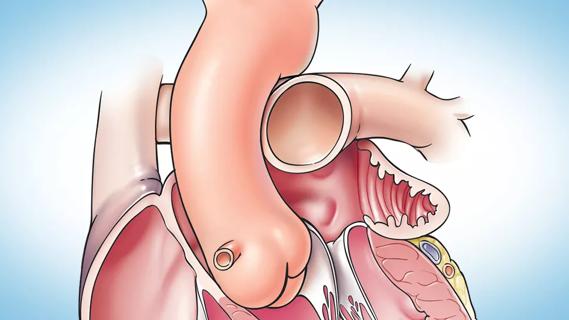
Concomitant AF ablation and LAA occlusion strongly endorsed during elective heart surgery
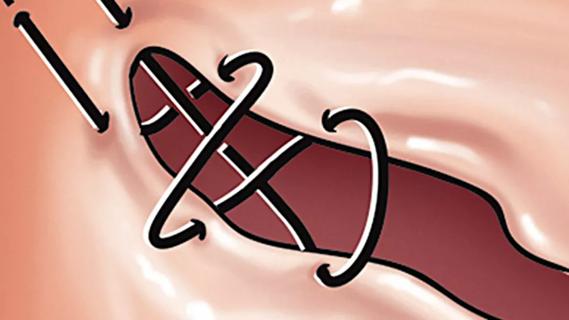
Large retrospective study supports its addition to BAV repair toolbox at expert centers
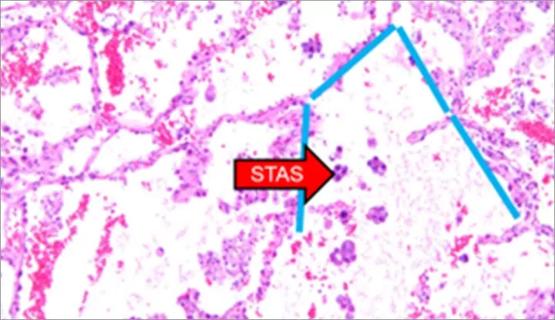
Young age, solid tumor, high uptake on PET and KRAS mutation signal risk, suggest need for lobectomy
Surprise findings argue for caution about testosterone use in men at risk for fracture
Residual AR related to severe preoperative AR increases risk of progression, need for reoperation

Findings support emphasis on markers of frailty related to, but not dependent on, age
Provides option for patients previously deemed anatomically unsuitable
 Search