Locations:





Optimize patients for surgery by reducing their overdose risk score

Image content: This image is available to view online.
View image online (https://assets.clevelandclinic.org/transform/4305ffdb-c191-47e2-969b-7c354efb882b/22-ORI-2847260-CQD-650x450-1_jpg)
A woman with a sore knee holds a chondroprotector tablet and a glass of water, glucosamine and chondroitin sulfate in her hand, copy space
Cleveland Clinic patients who used more narcotics before total knee arthroplasty were more likely to have adverse outcomes following the procedure, showed a recent study. Those findings weren’t surprising. But the way Cleveland Clinic’s Department of Orthopaedic Surgery measured the risk — using the NarxCare overdose risk score to quantify the relationship between preoperative drug use and postoperative outcome — is a novel method that can be reproduced at other medical centers to better optimize patients for knee surgery.
Advertisement
Cleveland Clinic is a non-profit academic medical center. Advertising on our site helps support our mission. We do not endorse non-Cleveland Clinic products or services. Policy
“NarxCare score is to narcotics use what hemoglobin A1c is to diabetes,” says the study’s senior author, Nicolas S. Piuzzi, MD, Director of Adult Joint Reconstruction Research at Cleveland Clinic. “For decades, orthopaedic surgeons knew that patients with diabetes had an increased risk of infection and other complications following total knee arthroplasty. When that risk became quantifiable by measuring A1c, we became able to mitigate the risk. Now orthopaedic patients with hemoglobin A1c levels 8% or higher are referred to endocrinology or primary care to be optimized for surgery.”
The NarxCare overdose risk score enables a similar approach for patients who use excessive prescription narcotics, sedatives or stimulants, he says.
In the study published in JAMA Network Open, more than 4,000 Cleveland Clinic patients who had total knee arthroplasty between November 2018 and March 2020 were evaluated retrospectively. More than 96% of the cohort had arthroplasty due to osteoarthritis. Their preoperative NarxCare overdose risk score (on a scale of 0 to 999, where 0 indicates no use of prescription drugs and higher scores indicate more prescriptions and higher dosages) was compared with their healthcare use 90 days after surgery.
The research team reported that, compared to patients with an overdose risk score of 0, patients with a score of 300 or higher were:
Advertisement
Patients with an overdose risk score of 500 or higher had an even greater risk of prolonged hospital stay (OR 3.71), nonhome discharge (OR 4.09) and 90-day readmission (OR 4.41). They also were six times more likely than patients with an overdose risk score of 0 to have a reoperation within 90 days (OR 6.09; 95% CI 1.44-25.80; P = .01).
“These findings suggest that overdose risk score could inform preoperative conversations between caregivers and patients,” says Dr. Piuzzi. “For patients with scores of 300 or higher, we should consider involving other caregivers to help modify prescription drug use before knee surgery to help reduce the risk of adverse outcomes after knee surgery.”
NarxCare technology, which is integrated with Cleveland Clinic’s electronic medical record system, is available nationwide.
“The platform is easy to use, especially for a high-volume practice where you need a fast and effective way to assess risk of prescription drug use,” says Dr. Piuzzi.
Before NarxCare, narcotics use was assessed as a binary issue, he adds. A patient either did or did not use prescription narcotics. Now the assessment can be much more precise and personalized.
“A patient who has had one narcotics prescription for an isolated event should not be counseled the same as a patient who has been on multiple prescriptions for months or years,” he concludes.
Advertisement
Advertisement
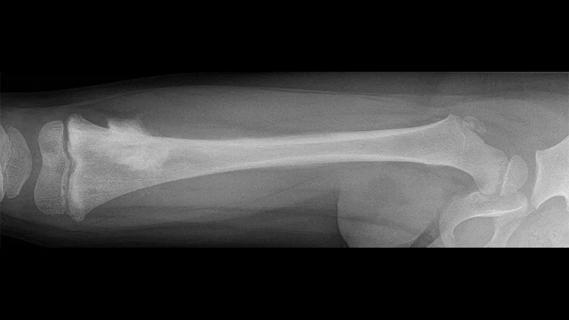
Biologic approaches, growing implants and more
Study reports zero infections in nearly 300 patients
How to diagnose and treat crystalline arthropathy after knee replacement
Study finds that fracture and infection are rare
Center will coordinate, interpret and archive imaging data for all multicenter trials conducted by the foundation’s Osteoarthritis Clinical Trial Network

Reduced narcotic use is the latest on the list of robotic surgery advantages
Cleveland Clinic specialists offer annual refresher on upper extremity fundamentals
Cleveland Clinic orthopaedic surgeons share their best tips, most challenging cases and biggest misperceptions
 Search