Locations:





Cleveland Clinic researchers raise awareness of disparity and call for change
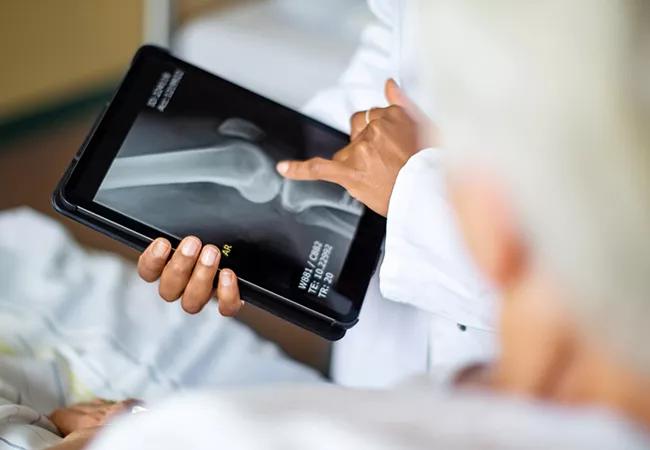
Image content: This image is available to view online.
View image online (https://assets.clevelandclinic.org/transform/30e4df0e-4079-4035-ab70-c43a0582680f/22-ORI-3411764-CQD-650x450-1_jpg)
Doctor showing result of radiography to patient
Despite that an aging population is increasing the prevalence, disability burden and healthcare costs of musculoskeletal disease in the U.S., research funding from the National Institutes of Health (NIH) remains disproportionately allocated to other conditions, according to a call-to-action study recently published in the Journal of Bone and Joint Surgery.
Advertisement
Cleveland Clinic is a non-profit academic medical center. Advertising on our site helps support our mission. We do not endorse non-Cleveland Clinic products or services. Policy
The Cleveland Clinic-led research team used data from the 2019 Global Burden of Disease Study (GBD 2019), which found that approximately 127.4 million people in the United States — more than a third of the U.S. population — are affected by disabling musculoskeletal conditions. These conditions include osteoarthritis, rheumatoid arthritis, neck pain, low back pain, gout, and other musculoskeletal disorders such as joint and limb pain, myalgia and osteoporosis.
Overall, the GBD 2019 ranked musculoskeletal disorders as the third most prevalent disease or injury in the U.S. Musculoskeletal conditions also were the third leading contributor to burden of disease and the top contributor to burden of disability.
In terms of costs, musculoskeletal disorders accounted for the highest amount of healthcare spending in 2016. The estimated $380.9 billion spent on these conditions topped diabetes ($309.1 billion) and cardiovascular disease ($255.1 billion).
The burden of disease, measured in disability-adjusted life years (DALYs), has been steadily increasing. DALYs consist of both years of life lost due to premature death and years of healthy life lost due to disability, where 1 DALY represents one year of lost full health.
In 1990, the global burden of other musculoskeletal conditions (e.g., joint and limb pain, myalgia, osteoporosis) was 17.7 million DALYs. That number jumped to 40.4 million in 2019, a relative increase of 129%. Similarly, low back pain had a global burden of 43.4 million DALYs in 1990 and 63.7 million DALYs in 2019, a 47% increase.
Advertisement
In spite of musculoskeletal disorders’ being the No. 1 condition associated with burden of disability and healthcare costs, as well as the third leading contributor to burden of disease, NIH continues to disperse less than 2% of its annual research funding to this area.
Most NIH funding for musculoskeletal research comes through the National Institute of Arthritis and Musculoskeletal and Skin Diseases (NIAMS). In 2016, NIAMS received only 1.67% of the $41.7 billion NIH budget. And even though the burden of musculoskeletal disease has been increasing, NIAMS was allocated even less in 2022 — 1.31% of the NIH budget.
“In the United States, NIH is how we spend our research funding from federal money, the funds that are collected from the hard work of all American taxpayers, yet the money spent on musculoskeletal research is astonishingly low,” says the study’s lead author, Nicolas S. Piuzzi, MD, Director of Adult Joint Reconstruction Research at Cleveland Clinic.
In the past 10 years, the burden of disease from musculoskeletal conditions was second only to diabetes in its amount of growth, yet NIH funding for musculoskeletal conditions decreased by 17%.
“Musculoskeletal was the only area in which the burden of disease went in one direction and funding went in the opposite direction,” Dr. Piuzzi notes.
Between an aging U.S. population and increasing life expectancy, the prevalence of musculoskeletal conditions will continue to grow. There are no established disease-modifying treatments for many of these conditions, notably osteoarthritis, though it’s categorized as a serious disease by the U.S. Food and Drug Administration due to its debilitating impact on virtually every area of life.
Advertisement
Musculoskeletal research funding is desperately needed to develop the healthcare system and treatments to address the rising burden of these often chronic conditions, says Dr. Piuzzi. “Otherwise, we’re going to face a tsunami of consequences that we won’t be able to manage because it’s going to be too late,” he warns.
“How we assign research dollars and how we create opportunities to solve problems perhaps need to be targeted to the needs of our taxpayers,” says Dr. Piuzzi. “How are we coordinating the care of these musculoskeletal patients, and what are we doing to prepare ourselves to serve these patients in a better way?”
He says this study is a call to action not only for the federal agencies that create the research budget, but also for nonprofit institutions, healthcare systems and individual donors. Dr. Piuzzi also would like to see medical students and early-career researchers get excited about opportunities in the musculoskeletal field.
In the end, those in the aging population are “the people who have gotten us where we are, and I think we owe it to them to get answers so that when they are able to slow down and enjoy their lives, we can allow them to do it in a better way,” he says. “Hopefully in 20 or 30 years, we’ll be able to look back and say we were able to make a change together.”
Advertisement
Advertisement
Biologic approaches, growing implants and more
Study reports zero infections in nearly 300 patients
How to diagnose and treat crystalline arthropathy after knee replacement
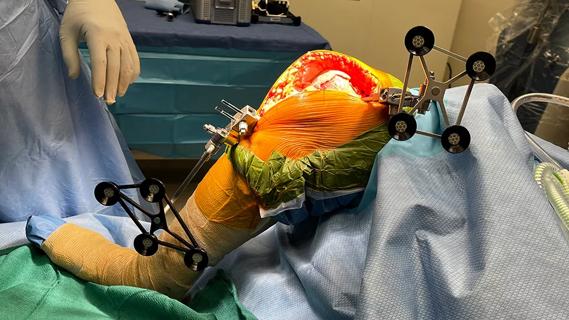
Study finds that fracture and infection are rare
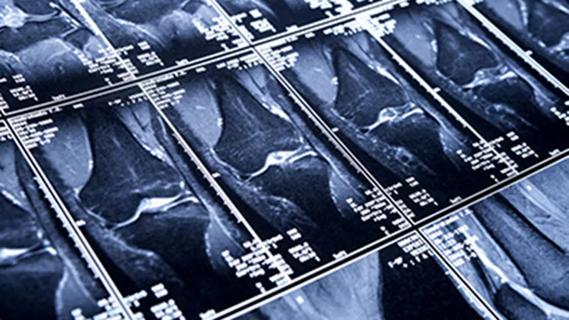
Center will coordinate, interpret and archive imaging data for all multicenter trials conducted by the foundation’s Osteoarthritis Clinical Trial Network

Reduced narcotic use is the latest on the list of robotic surgery advantages

Cleveland Clinic specialists offer annual refresher on upper extremity fundamentals
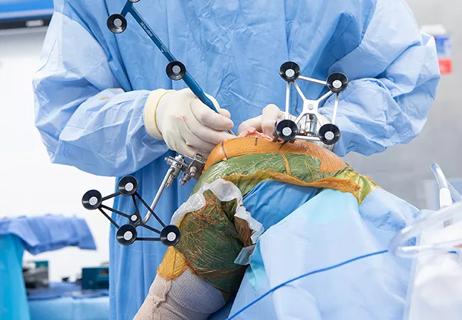
Cleveland Clinic orthopaedic surgeons share their best tips, most challenging cases and biggest misperceptions
 Search