Locations:





 Search
First time a child with Martinez-Frias syndrome lives beyond 2 years
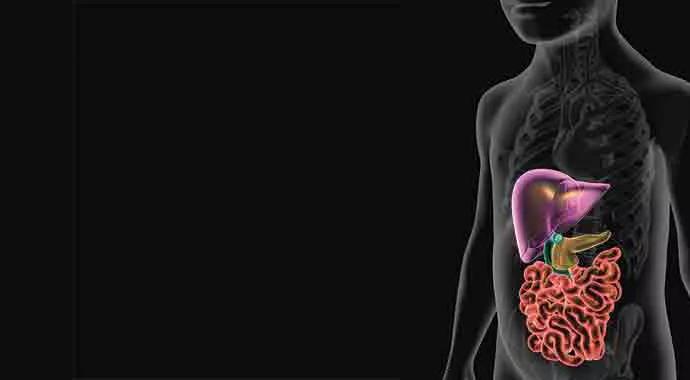
Image content: This image is available to view online.
View image online (https://assets.clevelandclinic.org/transform/de9952d7-158d-4046-b1d3-42a839768219/690x380-Kareem1_jpg)
690×380-Kareem1
Khaled Mahamid wasn’t supposed to have even made it to Cleveland Clinic Children’s. He was born half a world away with Martinez-Frias syndrome, a very rare disorder with autosomal recessive inheritance and a host of life-threatening manifestations. In Khaled’s case, these included neonatal diabetes, duodenal atresia, gallbladder agenesis, hypothyroidism, thalassemia, and iron overload with cholestatic liver disease.
Advertisement
Cleveland Clinic is a non-profit academic medical center. Advertising on our site helps support our mission. We do not endorse non-Cleveland Clinic products or services. Policy
There were no reports of any child with the condition reaching his or her second birthday.
Yet today Khaled is an energetic and chatty 5-year-old whose experience is rewriting the book on Martinez-Frias syndrome after he underwent a landmark four-organ multivisceral transplant at Cleveland Clinic Children’s in September 2013.
Since birth, Khaled required total parenteral nutrition (TPN) and multiple daily doses of insulin. “He had a line placed and had infections all the time,” his mother recalls. “He weighed only 3 kg on his first birthday.” His doctors were preparing the family for his death soon after that birthday.
But somehow little Khaled hung on. After he turned 2, doctors in his home country in the Middle East suggested that his parents explore a transplant abroad.
They eventually connected with Kareem Abu-Elmagd, MD, PhD, Director of Cleveland Clinic’s Transplant Center and the leading member of a pioneering team of transplant surgeons who developed multivisceral transplantation in the early 1990s. He proposed a complex transplant procedure to provide Khaled with a new intestine, duodenum, liver and pancreas.
“The fact that Khaled had survived longer than any other patient with Martinez-Frias syndrome suggested he might fare well,” says Dr. Abu-Elmagd. “It prompted us to try to give him a second chance through transplantation.”
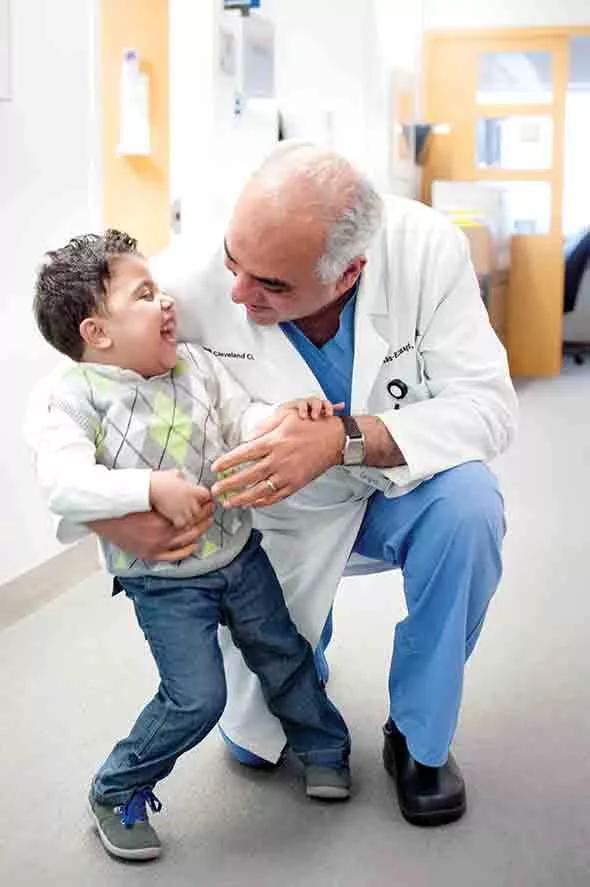
Image content: This image is available to view online.
View image online (https://assets.clevelandclinic.org/transform/758df628-82b6-4df2-89d9-5c491d657702/Inset-Kareem_jpg)
Khaled with his lead transplant surgeon, Kareem Abu-Elmagd, MD, PhD.
So Khaled and his parents came to Cleveland Clinic in August 2012, when he was almost 3½ years old, to wait for suitable organs to become available.
Advertisement
Thus began months of inpatient therapy in the care of Kadakkal Radhakrishnan, MD, Cleveland Clinic Children’s Director of Nutrition and Intestinal Rehabilitation as well as Medical Director of Intestinal and Multivisceral Transplantation. His team provided Khaled with complex IV nutrition, maintained his fluid balance, worked with pediatric endocrinology colleagues to manage his diabetes and ensured his lines were clean to prevent infection.
In September 2013, a little more than a year into Khaled’s stay at Cleveland Clinic Children’s, donor organs became available and Dr. Abu-Elmagd led a team of five operating surgeons through a 15-hour transplant procedure on then 4-year-old Khaled. The transplant was a success, with all four donor organs grafting well.
Khaled was discharged less than two months later on an unrestricted oral diet and with his diabetes cured. At seven months after transplant, Khaled was faring well, with no need for insulin and enjoying his unrestricted diet to full extent. “His favorite foods include mussels, octopus and lobster!” his mother recounts.
For his part, Dr. Abu-Elmagd is gratified as an academic surgeon “to be able to show humanity this outcome” in a disease with such a traditionally dismal prognosis, but he is even more satisfied by helping to give Khaled a second chance. “I am confident he won’t have recurrent disease with the new organs,” he says. “I want to see the boy continue to be healthy, leading a normal life and enjoying his family.”
Khaled is back home in the Middle East, but Dr. Abu-Elmagd’s team will continue to monitor him to study what happens when someone with Martinez-Frias syndrome ages and grows — something that had never been possible before.
Advertisement
Advertisement

Strong patient communication can help clinicians choose the best treatment option
ctDNA should be incorporated into care to help stratify risk pre-operatively and for post-operative surveillance

The importance of raising awareness and taking steps to mitigate these occurrences
New research indicates feasibility and helps identify which patients could benefit
Treating a patient after a complicated hernia repair led to surgical complications and chronic pain
Standardized and collaborative care improves liver transplantations
Fewer incisions and more control for surgeons

Caregiver collaboration and patient education remain critical