Locations:





A neurocritical care specialist shares what’s spurring growth of this new evaluation approach
Multimodal monitoring in the neurointensive care unit involves the continuous, simultaneous evaluation of a patient’s cerebral and systemic function using a diversity of modalities. Like other leading centers, Cleveland Clinic is increasingly using multimodal monitoring for patients in its neurological ICUs with devastating neurologic injuries.
Advertisement
Cleveland Clinic is a non-profit academic medical center. Advertising on our site helps support our mission. We do not endorse non-Cleveland Clinic products or services. Policy
Because this monitoring approach is novel to many, it was an ideal focus for the newest episode of Cleveland Clinic’s Neuro Pathways podcast. In this 16-minute podcast, Christopher Newey, DO, Medical Director of Multimodal Monitoring at Cleveland Clinic, addresses topics including the following:
Neuro Pathways podcast host Glen Stevens, DO, PhD, also asks Dr. Newey, a neurocritical care specialist, about how neuro ICU patients and care processes have changed since the advent of COVID-19.
Click the player below to listen to the podcast now, or read on for a short edited excerpt. Check out more Neuro Pathways episodes at clevelandclinic.org/neuropodcast or wherever you get your podcasts.
Podcast content: This podcast is available to listen to online.
Listen to podcast online (https://www.buzzsprout.com/2243576/13534567)
Dr. Newey: We’ve been talking about [multimodal monitoring] for years and now it’s reached the point of becoming more feasible. The technology is catching up to the ideas. We’ve got better software and hardware. And a lot of people are becoming very interested in this field, to the point where I’m now part of a national group that’s looking at creating standards and guidelines for what exactly constitutes multimodal monitoring. We’re exploring issues like: What do you have to monitor? How much do you have to monitor? Ultimately, the goal will be to see if we can create or lobby for some CPT codes so that clinicians who do this can get reimbursed for the work they’re doing and the care they’re providing.
Advertisement
So it’s an exciting time. This field is still in its infancy, and it’s been fun watching it grow over the past few years.
Advertisement
Advertisement

New study advances understanding of patient-defined goals
Testing options and therapies are expanding for this poorly understood sleep disorder
Real-world claims data and tissue culture studies set the stage for randomized clinical testing
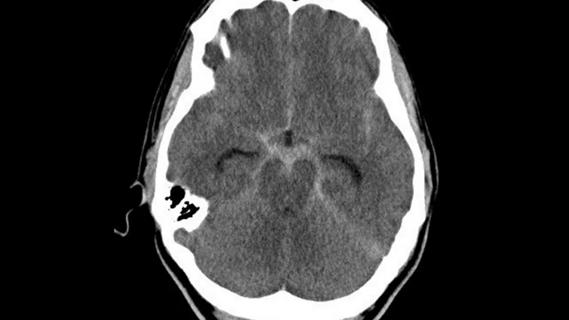
Digital subtraction angiography remains central to assessment of ‘benign’ PMSAH

Cleveland Clinic neuromuscular specialist shares insights on AI in his field and beyond
Findings challenge dogma that microglia are exclusively destructive regardless of location in brain
Neurology is especially well positioned for opportunities to enhance clinical care and medical training
New review distills insights from studies over the past decade
 Search