Locations:





Time constraints, language barriers, substance misuse, mood disorders targeted for improvements
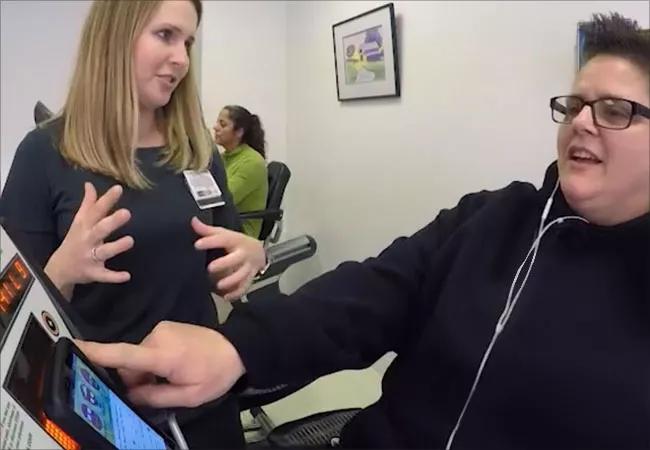
Image content: This image is available to view online.
View image online (https://assets.clevelandclinic.org/transform/6fc2d33d-ef7b-4cc3-9c85-ba7c7cac142b/19-NEU-5594_back-on-trek-650x450_jpg)
19-NEU-5594_back-on-trek-650×450
Since Cleveland Clinic launched its interdisciplinary Back on TREK rehabilitation program for patients with chronic low back pain in 2016, participants who complete the multi-week program have consistently demonstrated significant improvements in a range of functional and quality-of-life measures. But what about those who don’t complete the program? What might predict whether or not individuals stick with the program and realize its benefits?
Advertisement
Cleveland Clinic is a non-profit academic medical center. Advertising on our site helps support our mission. We do not endorse non-Cleveland Clinic products or services. Policy
Both the successes of the program and its shortcomings related to nonadherence were subjects of recent Cleveland Clinic study presentations that hold valuable lessons for those offering or considering similar programs for patients with chronic low back pain.
As profiled in earlier Consult QD posts, Back on TREK offers a population health approach to chronic low back and leg pain by combining physical and behavioral pain rehabilitation as the first line of care, ideally prior to procedure-based treatment or use of opioids or other significant analgesics. However, Back on TREK often successfully treats patients who have had inadequate results from procedures or habit-forming medications such as opioids.
Treatment in Back on TREK consists of two primary components: physical therapy and behavioral medicine for pain. Physical therapy is provided in individual and group sessions that emphasize functional rehabilitation and teach pain neuroscience education, which enhances understanding about the causes of pain. Participants also undergo pain coping skills training that’s delivered in a weekly group session by a specialist in behavioral medicine for pain. These group sessions focus on improving one’s pain mindset and learning behavioral strategies to improve pain and overall function.
At the 2018 annual meeting of the American Academy of Pain Medicine, Cleveland Clinic researchers presented outcomes among the first 75 participants to complete the program (abstract 186 here). They reported clinically significant changes from baseline to the end of 12 weeks in measures of social role satisfaction, pain interference in daily life, perceived disability and overall physical health.
Advertisement
The researchers have since accumulated outcomes in more patients — specifically, 217 graduates of Back on TREK from August 2016 through December 2018. They found statistically significant improvements from baseline to 12 weeks (at the P < 0.001 level) in all outcomes assessed among the graduates: Oswestry Disability Index score and scores on the Patient-Related Outcomes Measurement Information System (PROMIS) domains for depression, anxiety, fatigue, functional status, global mental health, global physical health, pain interference, sleep disturbance and social role satisfaction. Additionally, clinically significant changes on these measures were reported in at least 28.8% and as many as 54.6% of patients across the cohort, depending on the individual measure.
As encouraging as these results are, they are tempered by findings from another Back on TREK analysis presented by former Cleveland Clinic trainee Desimir Mijatovic, MD, at the 2019 annual meeting of the American Academy of Pain Medicine. In this retrospective review of 369 participants enrolled in Back on Track from August 2016 to August 2018, more participants withdrew from the program than graduated from it, by a margin of 59% to 41%. Graduates participated in the program for an average of 13 weeks versus about 3 weeks for those who withdrew.
More recent data — through August 2019 — reveal a lower withdrawal rate of 48%, according to lead researcher Sara Davin, PsyD, MPH, but she notes that this rate is still unacceptably high. “Such high withdrawal rates make it incumbent on clinicians to understand the risk factors for nonadherence so that targeted interventions can be developed and patients can be better triaged according to their needs,” says Dr. Davin, a clinical psychologist in Cleveland Clinic’s Center for Behavioral Health.
Advertisement
The following factors were found to be significantly predictive of early withdrawal from the program:
Psychosocial risk factors for withdrawal included higher likelihood of catastrophizing, feeling that pain must disappear completely before activity can be undertaken, and believing that one’s pain is uncontrollable. Participants who withdrew were also more likely to use opioids and believe only surgery or medications can help pain.
Since the initial findings, significant changes have been made aimed at improving program engagement, according to Dr. Davin. These include:
Advertisement
Outcomes of specific initiatives are expected to be published in the future, Dr. Davin notes.
She adds that as her team’s findings suggest, some Back on TREK candidates are not ready to accept that chronic pain is a psychosocial as well as biological issue. As a result, the team is becoming more selective in choosing participants who are likely to complete and benefit from the program.
“Resistance to ‘buying in’ to a behavioral approach is a common barrier with any multidisciplinary program,” Dr. Davin explains. “It’s important to identify participants who are open to addressing their pain through methods other than medications and surgery.”
She cautions, however, against allowing programs like this to be seen as having a primarily psychological or stress-reduction focus, which patients may perceive as implying that the problem is “all in your head.” While acknowledging that pain is real, she lets candidates know that the program emphasizes education and behavioral approaches to manage pain and optimize functioning, and that evidence indicates that such approaches lead to pain reduction for most people.
Dr. Davin also emphasizes that the social benefits of a group program like Back on TREK cannot be overstated. That’s why she questions whether online-based programs would be as effective for this population and supports further research being done in this area.
“The social component of chronic pain is extremely important,” she concludes. “People feel isolated, and becoming part of a group with others who really understand them is very powerful.”
Advertisement
Advertisement

New study advances understanding of patient-defined goals

Testing options and therapies are expanding for this poorly understood sleep disorder
Real-world claims data and tissue culture studies set the stage for randomized clinical testing
Digital subtraction angiography remains central to assessment of ‘benign’ PMSAH

Cleveland Clinic neuromuscular specialist shares insights on AI in his field and beyond

Findings challenge dogma that microglia are exclusively destructive regardless of location in brain

Neurology is especially well positioned for opportunities to enhance clinical care and medical training
New review distills insights from studies over the past decade
 Search