Locations:





The longitudinal study will examine long-term risk factors for osteoarthritis after ACL injury
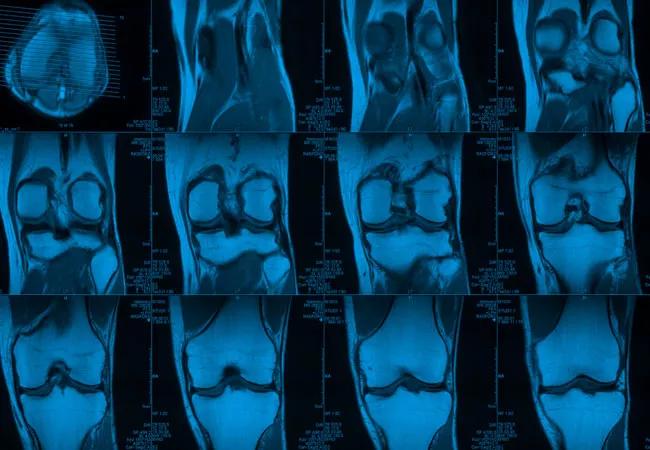
Image content: This image is available to view online.
View image online (https://assets.clevelandclinic.org/transform/377bad06-6c1d-4af4-a3f3-5c04563e0e6d/19-ORT-1188-Musculoskeletal-CQD_jpg)
19-ORT-1188-Musculoskeletal-CQD
A multicenter team of researchers led by Xiaojuan Li, PhD, Department of Biomedical Engineering, Lerner Research Institute, and Kurt Spindler, MD, Orthopaedic & Rheumatology Institute, has received a five-year, $3.1 million grant from the National Institute of Arthritis and Musculoskeletal and Skin Diseases (part of the National Institutes of Health) to help identify long-term risk factors for osteoarthritis after an anterior cruciate ligament (ACL) tear and reconstruction.
Advertisement
Cleveland Clinic is a non-profit academic medical center. Advertising on our site helps support our mission. We do not endorse non-Cleveland Clinic products or services. Policy
ACL injuries are one of the most common, and severe, knee injuries, and are usually reconstructed with surgery. Even after surgery, however, patients are at greater risk for post-traumatic osteoarthritis (PTOA). At this time, it is difficult to accurately predict which patients will develop PTOA several years after the surgery. While earlier studies have focused on short- and mid-term magnetic resonance imaging (MRI) follow-up, long-term soft tissue degeneration of the knee following ACL surgery has not been evaluated.
This multicenter study will add on to the Multicenter Orthopaedic Outcomes Network Study, which followed for 10 years patients who had an ACL reconstruction to determine their risk for PTOA. The new study will utilize an advanced type of MRI known as quantitative MRI, or qMRI, to see damage to the knee earlier than a regular MRI, while it can still be prevented. Nancy Obuchowski, PhD, Department of Quantitative Health Sciences, helped design this new study.
The qMRI studies will evaluate the cartilage, bone, muscle and other lesions in the surgically reconstructed knees that may be related to osteoarthritis. The goal of the study is to illustrate long-term structural damage and degeneration of the cartilage after the ACL reconstruction to help identify the risk factors for PTOA, as well as ways to prevent them.
The study will take place at three sites, including Cleveland Clinic, Vanderbilt University and Ohio State University. “Our ultimate goal is to use quantitative radiology to provide guidance for personalized, optimized interventions to reduce the prevalence of PTOA after anterior cruciate ligament injury and reconstruction,” says Dr. Li. “This study has the potential to improve patient management of this young and active population with an evidence-based approach.”
Advertisement
Story adapted from LRI News
Advertisement
Advertisement
Biologic approaches, growing implants and more
Study reports zero infections in nearly 300 patients
How to diagnose and treat crystalline arthropathy after knee replacement
Study finds that fracture and infection are rare
Center will coordinate, interpret and archive imaging data for all multicenter trials conducted by the foundation’s Osteoarthritis Clinical Trial Network

Reduced narcotic use is the latest on the list of robotic surgery advantages
Cleveland Clinic specialists offer annual refresher on upper extremity fundamentals
Cleveland Clinic orthopaedic surgeons share their best tips, most challenging cases and biggest misperceptions
 Search