Locations:





Timely detection is key
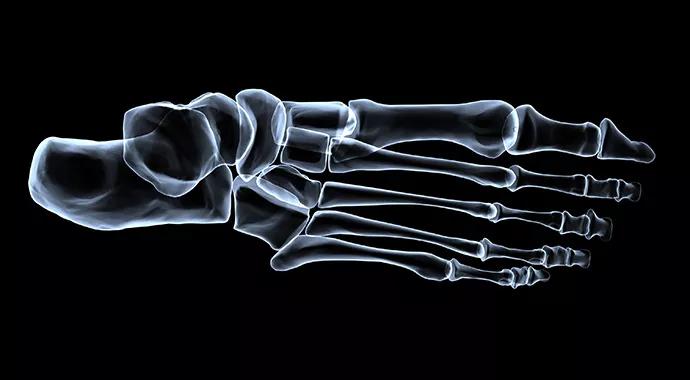
Image content: This image is available to view online.
View image online (https://assets.clevelandclinic.org/transform/66a4ba1d-b902-4952-8f3f-81a73825def4/Sferra-Inset-Foot-690x380pxl_jpg)
Sferra-Inset-Foot-690x380pxl
By Sean Matuszak, MD, and James J. Sferra, MD
Advertisement
Cleveland Clinic is a non-profit academic medical center. Advertising on our site helps support our mission. We do not endorse non-Cleveland Clinic products or services. Policy
Fractures of the foot and ankle have been reported as the most commonly missed injuries in the emergency room. There are many reasons for this, including the rarity of these injuries and the subtle radiographic findings that accompany them.
Motor vehicle accidents are a major cause of these injuries. Despite an overall decline in motor vehicle fatalities, the number of motor vehicle accident survivors who sustain foot and ankle injuries has increased. Improved survival rates due to airbags, for example, have increased the number of patients who are treated for high-energy motor vehicle trauma. Moreover, studies have shown that overall morbidity is greater in polytraumatized victims with foot injuries than in those without foot injuries, which underscores the importance of proper recognition of these injuries.
Peritalar injuries are defined as fractures or ligamentous disruption resulting in instability of one or more peritalar joints (the tibiotalar, subtalar, calcaneocuboid and talonavicular joints). Of these, the tibiotalar, subtalar and talonavicular are all essential joints of the lower extremity — i.e., necessary for normal biomechanical function. Because of the effect on foot kinematics, missed or delayed diagnosis of peritalar injuries often results in permanent functional impairment. Patients with missed injuries often go on to develop significant morbidity and require complex reconstructive procedures or salvage procedures due to advanced degeneration of the peritalar structures.
Advertisement
A recently presented study of missed foot and ankle injuries at a Level I trauma center identified 27 patients with 44 missed injuries over a 10-year span. Of these 44 injuries, talus fractures were the most commonly missed, followed by calcaneus and navicular fractures. Additionally, there were nine dislocations identified encompassing the peritalar joints. Of the 17 talus fractures identified, fractures of the lateral process were most commonly missed. Other identified fractures included those of the posterior talar process, talar head, talar body, intra-articular calcaneus and navicular bone. This study demonstrated a correlation between patient sex and time to diagnosis, with males having a statistically significant delay from presentation to diagnosis. Age also appeared to be correlated with time to diagnosis, with younger patients having greater delay.
While previous reviews have defined the scope of these missed peritalar injuries, we are only recently coming to recognize just how common these misdiagnoses are.
Because foot and ankle injuries are the most commonly missed orthopaedic injuries in the acute setting, it is important to have a heightened awareness of these injuries. A fundamental concept to understand is the complex nature of their diagnosis. Previous authors have tried to simplify algorithms for diagnosis with the development of the Ottawa rules, which aim to identify which patients with foot and ankle injuries should undergo X-ray studies. However, as described by Wei et al, only one-third of these missed injuries are due to improper X-ray technique or unidentifiable X-ray findings; two-thirds of all missed injuries are identifiable on initial X-rays when these are re-reviewed.
Advertisement
These data underscore how important it is not only to order X-rays but to scrutinize them carefully — and to have a low threshold for advanced imaging At Cleveland Clinic, our practice is often to order a CT scan or MRI in the acute setting for patients who are unable to ambulate, have sustained high-energy injuries or have exam findings out of proportion to their X-ray findings. At the very least, these findings in the acute setting must prompt referral to a specialist.
While it is impossible to completely eliminate the possibility of missed injuries in the foot and ankle, proper awareness and education regarding the complexity of diagnosing these injuries should reduce the frequency of missed and delayed diagnoses and the resultant morbidity.
Dr. Matuszak is a foot and ankle fellow in the Department of Orthopaedic Surgery. He can be reached at matuszs@ccf.org. Dr. Sferra specializes in foot and ankle reconstructive surgery in the Department of Orthopaedic Surgery. He can be reached at 216.445.8507 or sferraj@ccf.org.
Kou J, Fortin P. Commonly missed peritalar injuries. J Am Acad Orthop Surg. 2009;17:775-786.
Wei CJ, Tsai WC, Tiu CM, Wu HT, Chiou HJ, Chang CY. Systemic analysis of missed extremity fractures in emergency radiology. Acta Radiol. 2006;47:710-717.
Matuszak SA, Fortin P, Baker E. Missed peritalar injuries: a retrospective review. Paper presented at: 26th Annual Summer Meeting of the American Orthopaedic Foot & Ankle Society; July 9, 2010; National Harbor, MD.
Burgess AR, Dischinger PC, O’Quinn TD, Schmidhauser CB. Lower extremity injuries in drivers of airbag-equipped automobiles: clinical and crash reconstruction correlations. J Trauma. 1995;38:509-516.
Advertisement
Sangeorzan BJ, ed. The Traumatized Foot. Rosemont, IL: American Academy of Orthopaedic Surgeons; 2001.
Advertisement
Advertisement
Biologic approaches, growing implants and more
Study reports zero infections in nearly 300 patients
How to diagnose and treat crystalline arthropathy after knee replacement
Study finds that fracture and infection are rare
Center will coordinate, interpret and archive imaging data for all multicenter trials conducted by the foundation’s Osteoarthritis Clinical Trial Network

Reduced narcotic use is the latest on the list of robotic surgery advantages
Cleveland Clinic specialists offer annual refresher on upper extremity fundamentals
Cleveland Clinic orthopaedic surgeons share their best tips, most challenging cases and biggest misperceptions
 Search