Locations:





Minor incisions, fewer complications, quicker recoveries
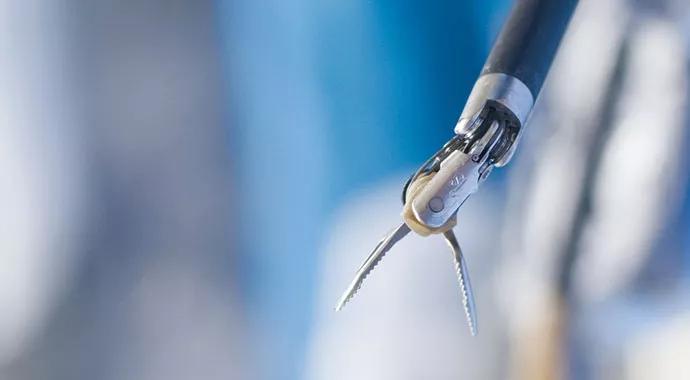
Image content: This image is available to view online.
View image online (https://assets.clevelandclinic.org/transform/f0c5793c-bfee-4818-8a50-14a5f16ad88e/MIS-690x380_jpg)
MIS-690×380
The Department of Colorectal Surgery’s rapidly growing Minimally Invasive Surgery Program, led by Section Head Hermann Kessler, MD, PhD, continues pushing the envelope to bring patients new techniques with smaller incisions, fewer complications and quicker recovery times. The program’s latest efforts include:
Advertisement
Cleveland Clinic is a non-profit academic medical center. Advertising on our site helps support our mission. We do not endorse non-Cleveland Clinic products or services. Policy
SINGLE-PORT SURGERY: The colorectal surgery team has taken minimally invasive surgery to a new level — with less pain, quicker recovery times and better outcomes than traditional open techniques. In 2007, we performed the world’s first right hemicolectomy with a single incision. Since then, more than 400 single-incision colorectal procedures have been performed.
Key to our current growth is Meagan Costedio, MD, who routinely removes colons with a single-port technique that leaves a small incision in the umbilicus that is practically invisible. She says, “I believe the results are equal to or even better than laparoscopy, and single-port represents the future of colon and rectal surgery as we keep moving forward.”
ENDOSCOPY/LAPAROSCOPY: Cleveland Clinic is one of just a few centers nationwide using endoscopic submucosal dissection to remove large colonic polyps. Here, Emre Gorgun, MD, has been using the technique for removing such polyps — especially flat colonic lesions — for the past three years and says the technique is safe and cost-effective in carefully selected patients. Dr. Gorgun is also utilizing combined endoscopic-laparoscopic surgery to remove difficult colonic lesions. This combination of technologies reduces trauma in patients with certain tumors or lesions that previously required major surgery.
ROBOTIC SURGERY: Robotic colorectal surgery is quickly gaining momentum, with the department performing more than 175 cases since the technology was introduced. We are one of the few centers offering this approach, with five colorectal surgeons who perform the technique regularly — primarily for lower anterior resections (LARs) for rectal cancer. They have found that the approach addresses some of the inherent limitations found with conventional laparoscopy, improving visualization and creating better dexterity and retraction.
Advertisement
Studies show using the robotic approach for LAR compared with conventional laparoscopy may result in a lower conversion rate to open surgery, fewer major complications, shorter hospital stays, and a quicker return to normal diet, urinary and sexual function. Cleveland Clinic research has found this to be especially true in the obese patient population.
“The expanding robotics program here reflects a further refinement of our surgical armamentarium,” says Dr. Kessler.
Advertisement
Advertisement

Strong patient communication can help clinicians choose the best treatment option
ctDNA should be incorporated into care to help stratify risk pre-operatively and for post-operative surveillance

The importance of raising awareness and taking steps to mitigate these occurrences
New research indicates feasibility and helps identify which patients could benefit
Treating a patient after a complicated hernia repair led to surgical complications and chronic pain
Standardized and collaborative care improves liver transplantations
Fewer incisions and more control for surgeons

Caregiver collaboration and patient education remain critical
 Search