Locations:





Surgeon Michael Steinmetz, MD, on recent advances, ideal candidates and more
When it comes to minimally invasive spine surgery, most patients want it, but few understand exactly how it differs from traditional spine surgery. And too often their referring providers don’t (or can’t) shed light on the matter.
Advertisement
Cleveland Clinic is a non-profit academic medical center. Advertising on our site helps support our mission. We do not endorse non-Cleveland Clinic products or services. Policy
In a new episode of Cleveland Clinic’s Neuro Pathways podcast for healthcare professionals, Cleveland Clinic Neurosurgery Chair Michael Steinmetz, MD, clarifies the distinctions and brings nonspecialists up to speed on minimally invasive spinal repair, including:
Click the player below to listen to the podcast now, or read on below for an edited excerpt from the podcast focusing on the emerging role of artificial intelligence in guiding spine care. Check out more Neuro Pathways episodes at clevelandclinic.org/neuropodcast or wherever you get your podcasts.
Podcast content: This podcast is available to listen to online.
Listen to podcast online (https://www.buzzsprout.com/2243576/13534586)
Dr. Steinmetz: [Another] thing that is gaining a foothold in spine surgery is the use of artificial intelligence. You know, spine care is still one of those areas of practice that often has some of the art of medicine and not just the science, right? It’s a matter of trying to correlate the patient’s imaging to their symptoms, to see if there’s a surgical approach to treat it, and you’re often guessing to some extent about some of these pathologies. With the advent of artificial intelligence and large patient data registries like we have at Cleveland Clinic, we can develop population-based predictive algorithms or software platforms that can help us take a patient and know early on, with a fairly high degree of certainty, whether doing a particular operation is going to be effective. Or the predictive analytics may tell us whether another surgeon in our group might be more effective for the given operation in a given patient, or maybe whether it would be best to perform the surgery at a different hospital in our system. The power we have in being able to accurately predict the outcomes of our interventions is only going to grow astronomically.
Advertisement
Advertisement

New study advances understanding of patient-defined goals
Testing options and therapies are expanding for this poorly understood sleep disorder
Real-world claims data and tissue culture studies set the stage for randomized clinical testing
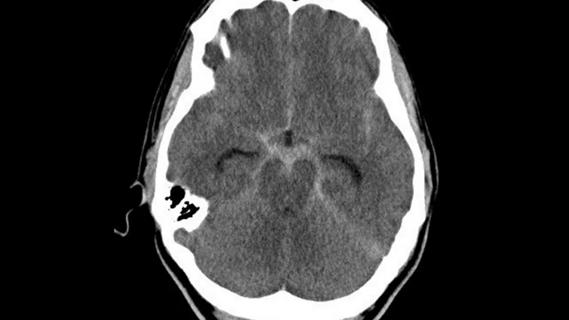
Digital subtraction angiography remains central to assessment of ‘benign’ PMSAH

Cleveland Clinic neuromuscular specialist shares insights on AI in his field and beyond

Findings challenge dogma that microglia are exclusively destructive regardless of location in brain

Neurology is especially well positioned for opportunities to enhance clinical care and medical training
New review distills insights from studies over the past decade
 Search