Locations:





Robot-assisted technique provides an alternative to open surgery in a complex case
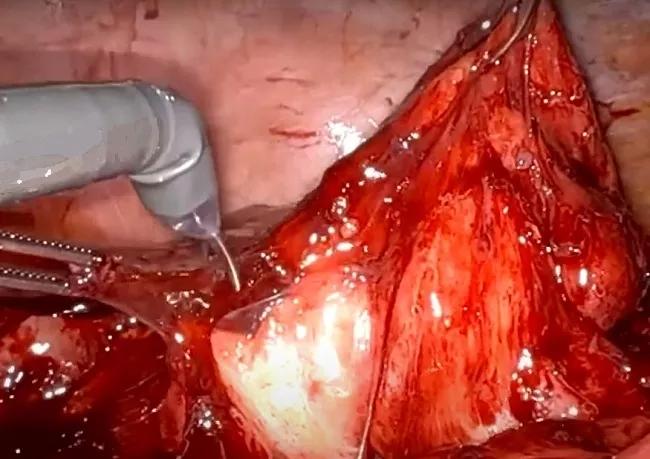
Image content: This image is available to view online.
View image online (https://assets.clevelandclinic.org/transform/645ad81d-e677-43d8-8c30-e657b4de5ba9/22-DDI-2629608-Robotic-colorectal-surgery-650x450-1_jpg)
22-DDI-2629608 Robotic colorectal surgery 650×450
A 51-year-old woman with a leaking ileostomy and a history of seven prior abdominal surgeries sought treatment at Cleveland Clinic’s Digestive Disease & Surgery Institute. Dense adhesions in her right upper abdomen were causing the bowel to retract into the abdomen, altering the stoma’s contour and preventing a proper seal with the ileostomy appliance, resulting in leakage.
Advertisement
Cleveland Clinic is a non-profit academic medical center. Advertising on our site helps support our mission. We do not endorse non-Cleveland Clinic products or services. Policy
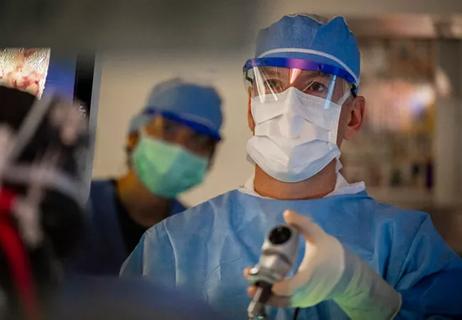
The extensive adhesiolysis needed to resolve this condition typically would require open abdominal surgery. In this Quick Case video summary, colorectal surgeon Anuradha Bhama, MD, talks with Scott Steele, MD, MBA, Chair of the Department of Colorectal Surgery, about the robot-assisted laparoscopic procedure she performed to treat the patient.
Video content: This video is available to watch online.
View video online (https://www.youtube.com/embed/GzIuAF5jDpY?feature=oembed)
Cleveland Clinic Quick Case: Robotic Colorectal Surgery (Graphic)
Dr. Bhama says:
“One of the things that I do in my practice is try to maximize minimally invasive techniques, even in patients who have had prior abdominal operations. I offered her a robotic ostomy reversal and was able to take her to the operating room and take down her ileostomy. Once I was inside her abdomen, I was able to see that her adhesive burden was all within the right upper quadrant, and that was what was pulling down her stoma, causing the contour of her ostomy to not hold the appliance properly and lead to leakage.
She had very dense adhesions that typically would require an open adhesiolysis. The robotic technology offers improved magnification and extreme dexterity along with wristed instrumentation that allows you to actually mimic open operations but do it in a minimally invasive fashion. I was able to perform an extensive adhesiolysis to free up all of those adhesions and allow her intestine to reach her abdominal wall in a very nice fashion to create a well-contoured stoma.
One of the benefits of performing this operation robotically is that the patient experienced less pain and was actually able to be discharged within two days.”
Advertisement
Advertisement

Strong patient communication can help clinicians choose the best treatment option
ctDNA should be incorporated into care to help stratify risk pre-operatively and for post-operative surveillance

The importance of raising awareness and taking steps to mitigate these occurrences
New research indicates feasibility and helps identify which patients could benefit

Treating a patient after a complicated hernia repair led to surgical complications and chronic pain
Standardized and collaborative care improves liver transplantations
Fewer incisions and more control for surgeons

Caregiver collaboration and patient education remain critical
 Search