Locations:





New CDC guideline issued on diagnosing and managing pediatric mTBI

Image content: This image is available to view online.
View image online (https://assets.clevelandclinic.org/transform/73087550-9914-471b-bb55-fbae709de1c1/18-NEU-5505-Pediatric-concussion-650x450_jpg)
How many fingers am I holding up?
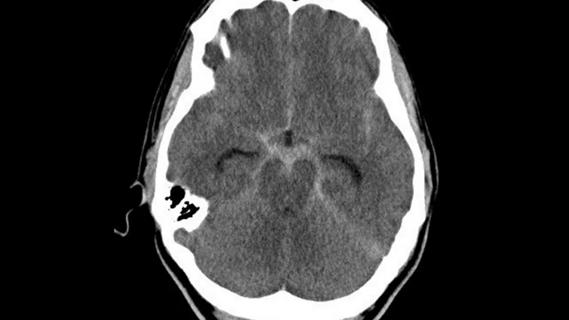
Don’t rush to order a CT for a child presenting with mild traumatic brain injury (mTBI), says a new guideline released by the Centers for Disease Control and Prevention (CDC). First assess for a combination of factors indicating that the injury may be severe.
Advertisement
Cleveland Clinic is a non-profit academic medical center. Advertising on our site helps support our mission. We do not endorse non-Cleveland Clinic products or services. Policy
Although emergency departments and clinics see children with blows to the head on a near-daily basis, a lack of consensus on standards of care for evaluation and management have left clinicians on their own to make a host of decisions surrounding diagnosis and resumption of activities.
The CDC guideline, based on an assessment of 25 years of published evidence by a committee of experts, consists of 19 sets of clinical recommendations covering diagnosis, prognosis, management and treatment of pediatric mTBI. It appears in the current issue of JAMA Pediatrics and has been summarized in easy-to-read handouts for parents, coaches and healthcare providers on the CDC website.
“Until now, doctors, coaches and athletic trainers have had to shoot from the hip when dealing with head injury in children,” says Edward Benzel, MD, a neurosurgeon in Cleveland Clinic’s Center for Spine Health who served on the committee that developed the CDC guideline. “This new document, rigorously based on available evidence, provides objective support for common challenges.”
The CDC guideline committee, including Dr. Benzel (an expert on concussion who has conducted extensive research on helmet safety), has identified the following potentially practice-changing recommendations in the new guideline:
Advertisement
Dr. Benzel feels confident that the committee recommendations are based on thorough evaluation of the best available evidence. He notes that he reviewed about 1,000 papers related to pediatric mTBI and that others on the committee — consisting of dozens of professionals, including neurosurgeons, psychologists, emergency physicians and statisticians — carried similar workloads and engaged in lively discussion.
He identifies one particularly hot issue during the drafting of the guideline: setting the upper age limit for defining pediatric mTBI at 18. Although 18-year-olds are arguably closer to adults than children in terms of brain recovery, the committee wanted the guideline to cover all high school athletes and be easily applicable in a variety of settings.
He also notes that more work is to be done. “The final guidelines are really a call to arms to conduct better research on the issues surrounding diagnosis and management of mild TBI,” he says. “We hope to increase awareness of the importance of head injury in children and the need to quantify clinical outcomes from different scenarios.”
Advertisement
Advertisement

New study advances understanding of patient-defined goals

Testing options and therapies are expanding for this poorly understood sleep disorder

Real-world claims data and tissue culture studies set the stage for randomized clinical testing
Digital subtraction angiography remains central to assessment of ‘benign’ PMSAH

Cleveland Clinic neuromuscular specialist shares insights on AI in his field and beyond

Findings challenge dogma that microglia are exclusively destructive regardless of location in brain

Neurology is especially well positioned for opportunities to enhance clinical care and medical training

New review distills insights from studies over the past decade
 Search