Locations:





 Search
System potentially less invasive with reduced trauma
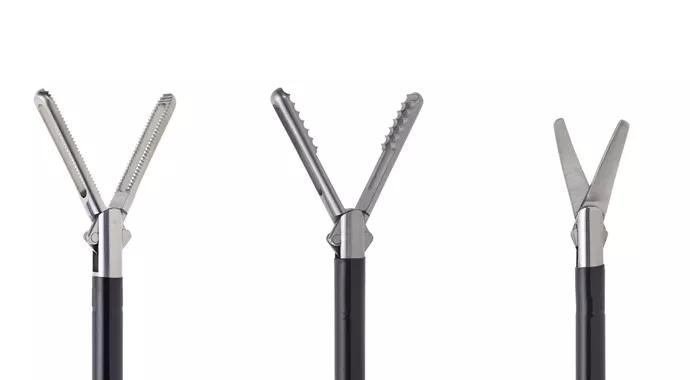
Image content: This image is available to view online.
View image online (https://assets.clevelandclinic.org/transform/f15b37b2-7b00-4e47-af58-d1bdcc77d2c5/MicroLap-690x380_jpg)
MicroLap-690×380
Traditional laparoscopic surgery using 5-mm instruments has dominated the minimally invasive surgery landscape.
Advertisement
Cleveland Clinic is a non-profit academic medical center. Advertising on our site helps support our mission. We do not endorse non-Cleveland Clinic products or services. Policy
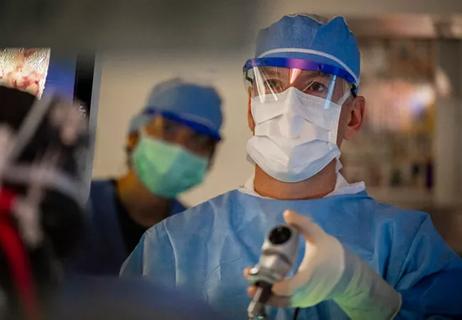
Cleveland Clinic is the first institution in the world to test a potentially less invasive surgical system that employs a 2.9-mm diameter shaft (or 2.1 mm smaller) that can be inserted percutaneously without the use of an introductory trocar. Use of the micro-laparoscopic platform requires a smaller incision than traditional laparoscopic surgery but allows for the use of fully functional standard laparoscopic instruments, with the potential advantages of less scarring and less pain, says Matthew Kroh, MD, Director of Surgical Endoscopy in the Cleveland Clinic’s Digestive Disease Institute.
The percutaneous surgical system platform consists of a set of components in various configurations to allow for multiple functions. The 2.9-mm diameter shaft is inserted percutaneously using an introducer needle tip. Via a reusable handle, the shaft can be connected extracorporeally to a variety of interchangeable 5-mm end effector tips.
The system performed well in the first 15 general laparoscopic cases in which it was used at Cleveland Clinic, and functioned “just as we would expect a standard 5-mm laparoscopic instrument would,” Dr. Kroh says.
Instead of using trocars, the shaft of the instrument is entered directly through the abdominal wall. “What’s unique about these is that the shafts can be exchanged outside of the body so that robust standard-size laparoscopic instruments can be attached to them. Basically, the shaft is passed through an adjacent trocar, so some trocars have to be used,” he says.
Advertisement
Use of the same 5-mm instruments as in standard laparoscopy offers the advantage of instrument strength, overcoming an obstacle with narrow-caliber laparoscopic instruments. In addition to the smaller incisions, use of the percutaneous system requires few adjustments to surgeons’ techniques.
“The difference with the percutaneous surgical system is that you can pass the shaft all the way out through the abdominal wall and then attach a typical 5-mm end effector,” Dr. Kroh explains. “You’re doing a more standard laparoscopic operation with the same instruments that can cut, grasp and retract effectively, but with decreased trauma and access to the abdominal wall.”
In addition, the smaller incision and access sites required may allow for less hesitancy to use additional ports as needed, he indicates.
Fifteen consecutive patients, including three with high body mass index who presented for bariatric surgery, underwent various laparoscopic surgical procedures at Cleveland Clinic using the percutaneous surgical system to varying degrees. “In every case, we used at least one of the percutaneous instruments, and some had up to four,” says Dr. Kroh.
On average, about two trocars were used per case, and several extracorporeal instrument exchanges were performed. There were no postoperative complications and patients were discharged as expected. At initial follow-up between one and two weeks postoperatively, patients reported no complications at surgical sites and less pain at the sites in which the percutaneous system was used compared with other surgical sites.
Advertisement
“I think the system will allow us to change some of our access sites to decrease trauma for certain applications,” he predicts. “It won’t be just in general surgery but the urologist, gynecologist and colorectal surgeon, for example, will have applications using other devices designed to decrease trauma to the abdominal wall.”
Advertisement
Advertisement

Strong patient communication can help clinicians choose the best treatment option
ctDNA should be incorporated into care to help stratify risk pre-operatively and for post-operative surveillance

The importance of raising awareness and taking steps to mitigate these occurrences
New research indicates feasibility and helps identify which patients could benefit

Treating a patient after a complicated hernia repair led to surgical complications and chronic pain
Standardized and collaborative care improves liver transplantations
Fewer incisions and more control for surgeons

Caregiver collaboration and patient education remain critical