Locations:





Advances in disease classification mean better solutions
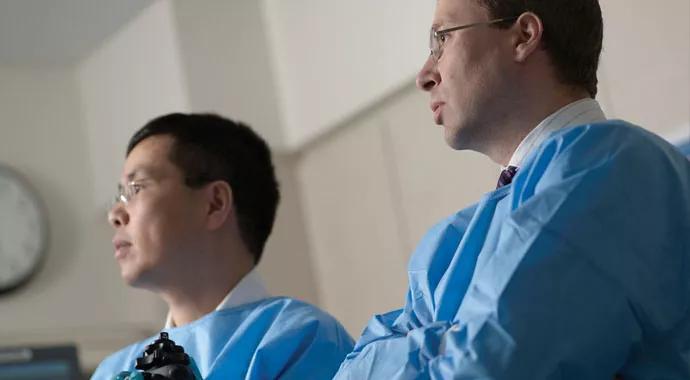
Image content: This image is available to view online.
View image online (https://assets.clevelandclinic.org/transform/a453f4ab-b79a-41a3-8004-67590320a921/Pouch-690x380_2_jpg)
Pouch-690x380_2
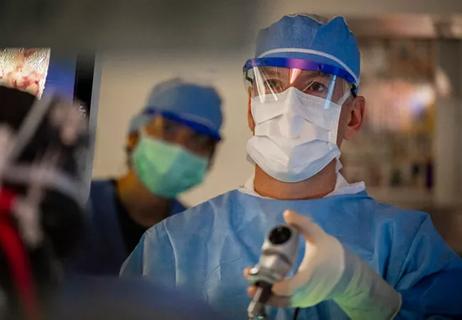
Cleveland Clinic’s Center for Ileal Pouch Disorders (CIPD) was the first multidisciplinary facility of its kind in the world, and is currently the largest. CIPD gastroenterologists and colorectal surgeons see the nation’s highest volumes of both initial and reoperative J-pouch cases, with more than 5,000 initial and 500 reoperative pouch surgeries, including pouches that have failed either from disease or complications related to prior surgical procedures.
Advertisement
Cleveland Clinic is a non-profit academic medical center. Advertising on our site helps support our mission. We do not endorse non-Cleveland Clinic products or services. Policy
Ileal pouch surgery has revolutionized the care offered today. Ileal pouch patients have significantly improved quality of life; they do not need to carry a permanent stoma bag. The operative success rates at Cleveland Clinic are 96 percent in ulcerative colitis patients for initial pouches and 85 percent for redo pouches or pouch revision surgery. Yet the pouch procedure is technically challenging and can result in various mechanical and inflammatory conditions, including strictures, anastomotic leaks and pouchitis.
“Pouchitis used to be a mixed bag of everything together,” says Bo Shen, MD, one of the nation’s first gastroenterologists specializing in pouch disorders. “Now, we subclassify them based on etiology, disease mechanism, clinical presentation and disease course. If we have the correct classification, here’s the proper solution. It’s a much more analytical approach.”
The CIPD is home to the majority of the original pouchitis research done in the United States, including studies of:
For more information, please contact Dr. Shen at 216.444.9252 or shenb@ccf.org.
Advertisement
Advertisement

Strong patient communication can help clinicians choose the best treatment option
ctDNA should be incorporated into care to help stratify risk pre-operatively and for post-operative surveillance

The importance of raising awareness and taking steps to mitigate these occurrences
New research indicates feasibility and helps identify which patients could benefit

Treating a patient after a complicated hernia repair led to surgical complications and chronic pain
Standardized and collaborative care improves liver transplantations
Fewer incisions and more control for surgeons

Caregiver collaboration and patient education remain critical
 Search