Locations:





 Search
Will add education and research programs
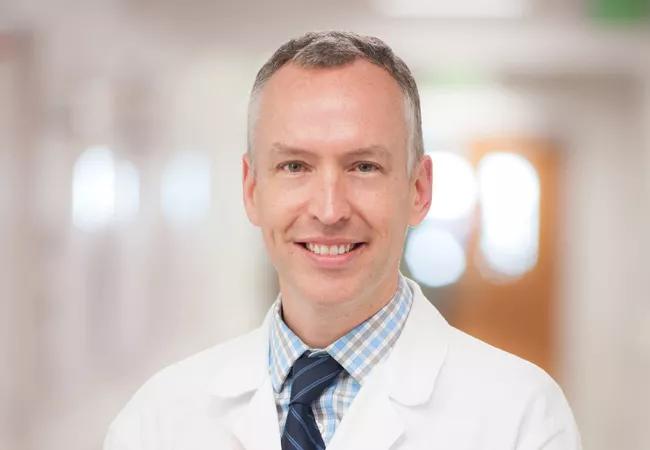
Image content: This image is available to view online.
View image online (https://assets.clevelandclinic.org/transform/38bf6938-ac63-4f1f-ab36-fa9915f9ffc7/16-DDI-2341-Kroh-CQD_jpg)
16-ddi-2341-kroh-cqd
In early 2017, Matthew Kroh, MD, will assume the role of Chief of the Digestive Disease Institute at Cleveland Clinic Abu Dhabi. This comprehensive institute, which encompasses colorectal surgery, gastroenterology and general surgery, is one of Cleveland Clinic Abu Dhabi’s five Centers of Excellence. Interim Chief Eric Matayoshi, MD, will retain his position as Chief of General Surgery. We spoke with Dr. Kroh about his vision for the institute under his leadership.
Advertisement
Cleveland Clinic is a non-profit academic medical center. Advertising on our site helps support our mission. We do not endorse non-Cleveland Clinic products or services. Policy
Cleveland Clinic Abu Dhabi has a highly motivated, well-trained and dedicated group of physicians. The team’s service and practice scope is advancing rapidly. For me, this is an exciting opportunity within Cleveland Clinic to develop the Digestive Disease Institute at Cleveland Clinic Abu Dhabi from an outstanding clinical program to one that encompasses our core missions of education and research.
I hope to build on the success they’ve had by growing existing clinical programs, adding new ones in digestive diseases and starting educational and research programs that engage staff members by utilizing the best of their talent and training.
I plan to add expertise in various subspecialties in gastroenterology, colorectal surgery and general surgery, along with new techniques in minimally invasive surgery, advanced endoscopic procedures and evolving technologies not widely available in that area of the world.
I did all my training at Cleveland Clinic and have held different positions clinically, academically and educationally. Because of this, I have been fortunate to build relationships in diverse fields that will bridge geographic divides. I envision the Digestive Disease Institute in Abu Dhabi and the Digestive Disease & Surgical Institute in Cleveland collaborating on clinical, academic and educational projects, working as one unit, just separated by time and distance.
As part of my role, I will return to Cleveland for one week every quarter to work with Digestive Disease & Surgical Institute leadership, to see patients and to perform surgical and endoscopic procedures. I will also continue to contribute to the research and training programs here in Cleveland, and connect with new and emerging programs in Abu Dhabi.
Advertisement
A major challenge will be establishing Cleveland Clinic’s core identity in a geographically and culturally diverse environment. As a physician-led multispecialty group, we put patients first; it is in our DNA. We are surrounded by people who embody that thinking. Yet many Cleveland Clinic Abu Dhabi physicians and other caregivers come from different institutions in Europe and the U.S. Helping them learn to embrace our core values is exciting, but may be challenging.
On a more granular level, we must learn how to navigate local customs and cultures. Our practice will have to be dynamic. Fortunately, we have great staff, and the providers who are already practicing there can tell us what works and what doesn’t.
The impact of medical care is global. We are pushing through barriers that separate country, time and practice. The Cleveland Clinic model of excellence in clinical care, research and education is universal. I believe in this mission and look forward to the opportunity to practice it in the best way we know in a totally different environment.
Advertisement
Advertisement

Strong patient communication can help clinicians choose the best treatment option
ctDNA should be incorporated into care to help stratify risk pre-operatively and for post-operative surveillance

The importance of raising awareness and taking steps to mitigate these occurrences
New research indicates feasibility and helps identify which patients could benefit
Treating a patient after a complicated hernia repair led to surgical complications and chronic pain
Standardized and collaborative care improves liver transplantations
Fewer incisions and more control for surgeons

Caregiver collaboration and patient education remain critical