Locations:





Case-based CME course offered via complimentary livestream
Image content: This image is available to view online.
View image online (https://assets.clevelandclinic.org/transform/b320ae24-8a87-48d8-89bc-afb311b9c804/20-HVI-1918413-CME-Mastering-the-Mitral-Valve-1_jpg)
20-HVI-1918413-CME-Mastering-the-Mitral-Valve (1)
For the past few years, New York-area physicians have had convenient access to well-received Cleveland Clinic CME courses on heart valve care held in central Manhattan over a Friday and Saturday in early December. While the in-person version of the 2020 installment of that series, “Mastering the Mitral Valve: A Case-Based Approach,” has been canceled due to the pandemic, the course is still very much alive and will be available on December 4 and 5 to a larger audience than ever via livestream with complimentary registration.
Advertisement
Cleveland Clinic is a non-profit academic medical center. Advertising on our site helps support our mission. We do not endorse non-Cleveland Clinic products or services. Policy
“The silver lining of having to forgo the in-person offering of this popular course is that we can now extend its reach to many more physicians and other providers around the world — and with no registration fee,” says course co-director A. Marc Gillinov, MD, Chair of Thoracic and Cardiovascular Surgery at Cleveland Clinic.
Across a full day on Friday, Dec. 4, and the morning of Saturday, Dec. 5, 18 mitral valve experts from Cleveland Clinic and several other leading U.S. institutions will bring participants fully up to speed on contemporary management of mitral valve disease.
The livestreamed course is briskly paced — nearly all presentations are in focused 15-minute segments — and decidedly case-based. In fact, two of the six broad topical sessions are devoted solely to complex cases. Three of the other four sessions — on basic to advanced imaging, surgery and surgical decision-making, and new insights into mitral valve disease pathophysiology — feature a generous offering of cases throughout to guide real-world application of the latest evidence and advances. An additional session covering transcatheter mitral valve repair and replacement is less case-based but is rich with updates on new technologies and ongoing clinical trials.
“This program is designed to provide a practical, highly case-based approach to both the fundamentals of mitral valve disease care and cutting-edge approaches,” says course co-director Milind Desai, MD, Director of Operations in Cleveland Clinic’s Department of Cardiovascular Medicine. “We will focus on applying recent insights to specific patient populations and treatment dilemmas.”
Advertisement
A sampling of presentation titles gives a glimpse of the course’s practicality:
“Another focus is defining the role of transcatheter and surgical therapies, with an emphasis on the collaborative nature of these procedures across many cardiovascular disciplines,” notes course co-director Samir Kapadia, MD, Cleveland Clinic’s Chair of Cardiovascular Medicine. Updates will be provided on topics such as valve-in-valve/valve-in-ring procedures and appropriate patients for new trials of transcatheter mitral valve replacement, often from experts leading the trials or pioneering the techniques discussed.
The course’s comprehensive nature allows for exploration of many special topics in relation to mitral valve disease, including anticoagulation, concomitant tricuspid valve disease, strategies to address atrial fibrillation during mitral valve surgery, radiation-related disease and reoperative mitral valve surgery, among others.
“Attendees of our past December courses in New York on mastering aortic and mitral valve disease can expect the same mix of expert updates, illuminating case studies and spirited panel discussions from this year’s livestream offering,” says course co-director Lars Svensson, MD, PhD, Chair of Cleveland Clinic’s Heart, Vascular & Thoracic Institute. “Despite the circumstances for needing to go virtual, we are excited to be offering this year’s course to many more colleagues who can participate in and learn from it.”
Advertisement
Full details and registration are at ccfcme.org/mitralmasters.
This activity has been approved for AMA PRA Category 1 Credit™.
Advertisement
Advertisement
A sampling of outcome and volume data from our Heart & Vascular Institute
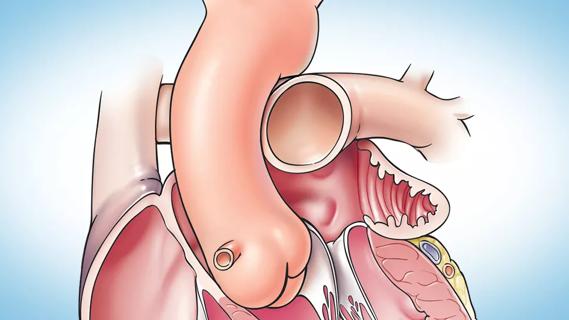
Concomitant AF ablation and LAA occlusion strongly endorsed during elective heart surgery
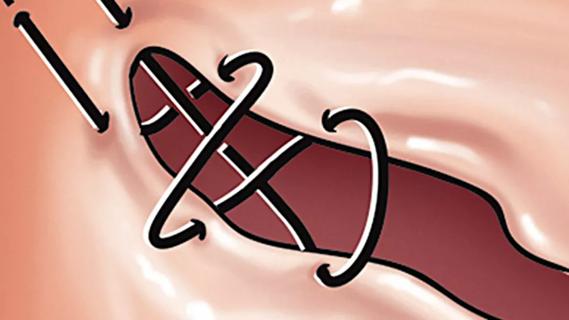
Large retrospective study supports its addition to BAV repair toolbox at expert centers
Young age, solid tumor, high uptake on PET and KRAS mutation signal risk, suggest need for lobectomy
Surprise findings argue for caution about testosterone use in men at risk for fracture
Residual AR related to severe preoperative AR increases risk of progression, need for reoperation

Findings support emphasis on markers of frailty related to, but not dependent on, age
Provides option for patients previously deemed anatomically unsuitable
 Search