Locations:





New center will facilitate care for complex cases
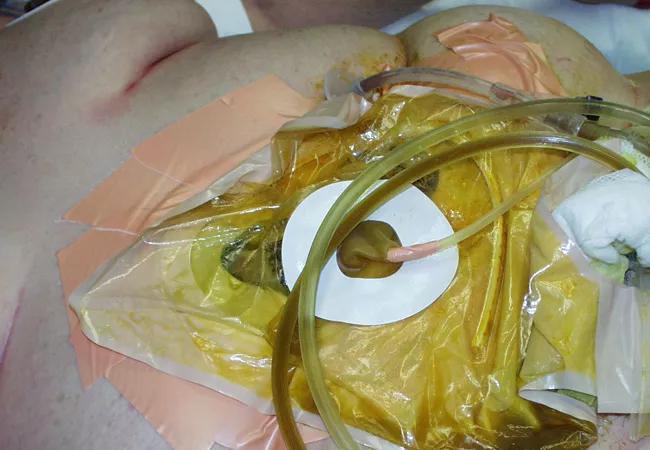
Image content: This image is available to view online.
View image online (https://assets.clevelandclinic.org/transform/3117c273-bd3b-4fb1-80bc-b6613f33d5e6/18-DDI-5729-Delaney-Hero-Image-650x450pxl_jpg)
18-DDI-5729-Delaney-Hero-Image-650x450pxl
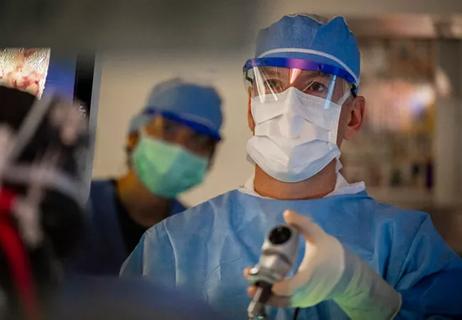
In response to the increasing number of referrals for major abdominal surgeries involving anastomotic leaks, abdominal catastrophes and complex and re-operative surgery, Cleveland Clinic’s Digestive Disease & Surgery Institute has created the Center for Re-operative and Catastrophic Abdominal Surgery to facilitate expert multidisciplinary care, and expedite referrals and transfers.
Advertisement
Cleveland Clinic is a non-profit academic medical center. Advertising on our site helps support our mission. We do not endorse non-Cleveland Clinic products or services. Policy
“Our goal is to provide integrated, multispecialty care for these complex patients, and the surgeons and care teams looking after them,” says Chairman Conor P. Delaney, MD, PhD, who will be coordinating the center with a team of experienced physicians from across the institute and enterprise.
“We are fortunate in that we have a high baseline volume of complex cases, as well as access to highly experienced medical teams in surgery, anesthesia, gastroenterology, radiology, ICU and critical care transport,” Dr. Delaney says. “Additionally, we have specialized expertise within our own institute in bariatric surgery, upper gastrointestinal surgery, colorectal surgery, abdominal wall reconstruction, and hepatobiliary and pancreatic surgery.”
Dr. Delaney notes that Cleveland Clinic is the only hospital system in the U.S. to have a specific gut rehabilitation and transplantation and nutrition teams that specialize in the most complex abdominal re-operative cases, including short bowel syndrome (SBS or short gut), multiple recurrent enterocutaneous fistula (ECF), management of total parenteral nutrition (TPN), and even intestinal and multivisceral transplantation.
“When people have gastrointestinal surgery, it usually involves an anastomosis,” he explains. “Anastomotic leaks can be associated with high mortality and are often devastating for patients. They also are complicated and stressful for surgical teams that may not have as much experience or as many resources for these complications as our multidisciplinary team in the Digestive Disease & Surgery Institute. With teams who specialize in everything from major re-operative surgery, to endoscopic management, to parenteral nutrition and intestinal transplantation, we can help manage these complex abdominal situations, or provide counsel and informed options.”
Advertisement
The center accepts air transfers and also provides treatment for more stable patients recovering from surgery. With the establishment of the center, medical teams can initiate a referral or seek expert advice through a centralized hub, with a dedicated staff. Virtual visits and phone consults also are encouraged.
The multidisciplinary approach is integral to the success of the Center for Re-operative and Catastrophic Abdominal Surgery. The center relies on the expertise of world-class physicians and their teams, notably:
Abdominal Wall Complications and Major Ventral Hernia: Michael Rosen, MD
Bariatric Surgical Reoperation and Complications: Ali Aminian, MD
Colorectal Surgery Reoperation, Recurrent Cancer and Complications: Scott Steele, MD, MBA
Enterostomal Therapy and Complex Wound Care: Ronald A. Rock, MSN, RN, ACNS-BC and Christi Cavaliere, MD
Gut Rehabilitation, Entero-cutaneous Fistulas, Short Bowel Syndrome and Intestinal Transplantation: Kareem Abu-Elmagd, MD, PhD
Hepatobiliary Surgery Reoperation and Complications: Matthew Walsh, MD
Interventional Endoscopy and Non-Operative Complication Management: Bo Shen, MD and John Vargo, MD
Parenteral Nutrition and Nutritional Failure: Donald Kirby, MD
Upper GI Surgery Reoperation and Complications: John Rodriguez, MD
Referring clinicians may contact the center at 216.636.1834 or DDSInavigator@ccf.org.
Advertisement
Advertisement

Strong patient communication can help clinicians choose the best treatment option
ctDNA should be incorporated into care to help stratify risk pre-operatively and for post-operative surveillance

The importance of raising awareness and taking steps to mitigate these occurrences
New research indicates feasibility and helps identify which patients could benefit

Treating a patient after a complicated hernia repair led to surgical complications and chronic pain
Standardized and collaborative care improves liver transplantations
Fewer incisions and more control for surgeons

Caregiver collaboration and patient education remain critical
 Search