Locations:





Guidelines recommend best approaches for each stage of severity

Image content: This image is available to view online.
View image online (https://assets.clevelandclinic.org/transform/8ca4e1a1-02cd-4ed5-a41f-7df3627c58ce/valve3_690x380_jpg)
valve3_690x380
Dr. James Thomas, a member of the AHA/ACC writing committee, talks about the new AHA/ACC guidelines, for the treatment of valvular heart disease including treatment recommendations for 4 classifications (stages) of valve disease. Watch the video below:
Advertisement
Cleveland Clinic is a non-profit academic medical center. Advertising on our site helps support our mission. We do not endorse non-Cleveland Clinic products or services. Policy
Video content: This video is available to watch online.
View video online (https://www.youtube.com/embed/kJjsuf7sLV8?si=lbtHmI1NHXGrKPqg)
Management of heart valve disease has been simplified through updated guidelines issued in March by the American College of Cardiology and American Heart Association, with input from five additional professional groups.
Following the lead taken by the congestive heart failure guidelines, the writers of the new heart valve guidelines categorized heart valve disease and its treatment into four stages by disease progression:
Stage A – Patients at risk due to rheumatic fever or other risk factors
Stage B – Asymptomatic patients with progressive (mild-to-moderate) valve disease
Stage C – Asymptomatic patients with severe valve disease
Stage D – Patients with symptomatic, severe valve disease.
“Within each stage, we recommend appropriate intervals for follow-up with physicians and imaging tests such as echocardiography,” says James Thomas, MD, a staff cardiologist in Cleveland Clinic’s Heart & Vascular Institute with a specialty interest in echocardiography. Dr. Thomas served on the writing committee for the heart valve guidelines.
The new guidelines include a risk assessment tool that includes the Society of Thoracic Surgeons’ Predicted Risk of Mortality model (STS PROM), frailty, major organ system dysfunction and procedure impediments, including radiation damage and heavily calcified ascending aorta.
As the risks of surgical and percutaneous intervention have gone down, early intervention is now considered preferable in select patients. “Some patients with severe valve disease, who are not yet symptomatic, may be appropriate for early valve surgery, because their risk for this operation is low,” says Dr. Thomas.
Advertisement
Aortic valve replacement, for example, is recommended for asymptomatic patients with severe aortic stenosis and a left ventricular ejection fraction of less than 50 percent.
As patients progress into the later stages of severity, a key recommendation is to consult with, or refer the patient to, a Heart Valve Center of Excellence, such as the one at Cleveland Clinic, where a team of experts is best able to define the best treatment for the individual.
The guidelines recommend the team include a cardiologist and surgeon (including a structural valve interventionist, if a catheter-based therapy is being considered), and in selected cases, cardiovascular imaging specialists, cardiovascular surgeons, anesthesiologists, and nurses, with expertise in the management and outcomes of patients with complex heart valve disease.
This team is able to understand the risk–benefit ratio of different treatment strategies, and is particularly beneficial in patients who have treatment options, such as the elderly high-risk patient with severe symptomatic aortic stenosis being considered for transcatheter aortic valve replacement (TAVR) or surgical aortic valve replacement.
Although surgical valve replacement remains the recommended treatment for patients with Stage D valve disease at low-to-intermediate surgical risk, the intervention is now recommended for patients who are at high risk for surgical valve replacement and who are expected to survive longer than 12 months—providing the decision is made by a multidisciplinary team of heart valve experts.
Advertisement
“It is essential that an experienced team take part in their assessment and plan of any high-risk valve patient,” says Dr. Thomas.
TAVR is not recommended when existing comorbidities would negate the expected benefit from correcting the aortic stenosis.
In a busy practice, guidelines are only useful when the information can be easily accessed and dissected. To this end, the heart valve management guidelines are now available as an app for smartphones and tablets.
“We wanted to provide quick answers to questions, such as what you should do if you have a patient with severe mitral regurgitation, or a pregnant patient taking Coumadin. We hope the app will help clinicians better manage their patients with heart valve disease,” says Dr. Thomas.
Advertisement
Advertisement
A sampling of outcome and volume data from our Heart & Vascular Institute
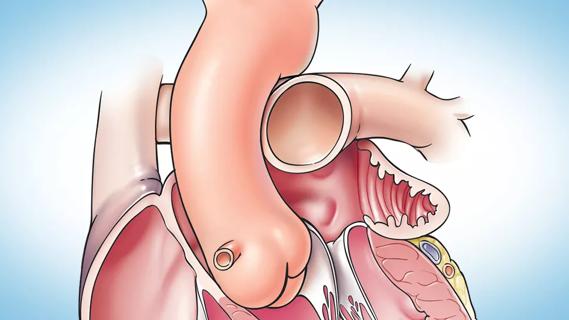
Concomitant AF ablation and LAA occlusion strongly endorsed during elective heart surgery
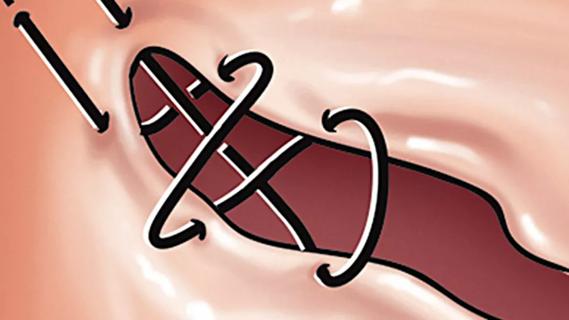
Large retrospective study supports its addition to BAV repair toolbox at expert centers
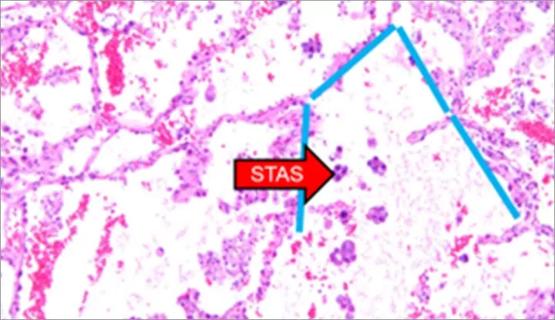
Young age, solid tumor, high uptake on PET and KRAS mutation signal risk, suggest need for lobectomy
Surprise findings argue for caution about testosterone use in men at risk for fracture
Residual AR related to severe preoperative AR increases risk of progression, need for reoperation

Findings support emphasis on markers of frailty related to, but not dependent on, age
Provides option for patients previously deemed anatomically unsuitable
 Search