Locations:





The short answer from Chairman Conor Delaney, MD, PhD
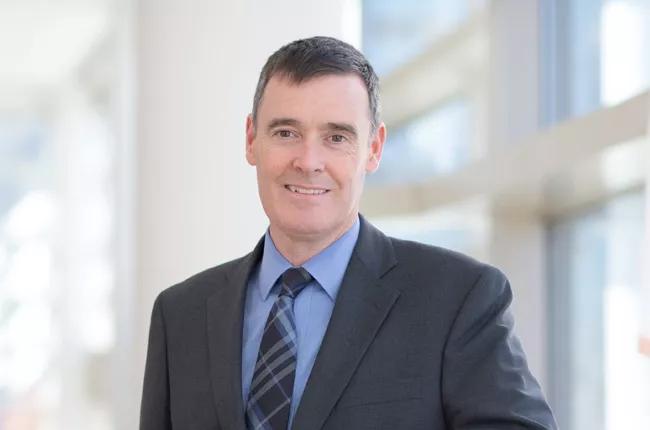
Image content: This image is available to view online.
View image online (https://assets.clevelandclinic.org/transform/95644ac5-6175-4ff0-ae96-bfb4d4b267f6/15-DDI-2421-Delaney-650x450-CQD_jpg)
15-DDI-2421-Delaney-650×450-CQD
A: It is challenging to manage burnout with all the current pressures in healthcare, including the financial changes, and technical changes such as electronic medical records. These have led to extensions to the work day, so that it’s very difficult for people to get away from work.
Advertisement
Cleveland Clinic is a non-profit academic medical center. Advertising on our site helps support our mission. We do not endorse non-Cleveland Clinic products or services. Policy
We’re lucky at Cleveland Clinic that “only” about 35 percent of physicians feel burnt out compared to closer to 60 percent nationally. But that’s still 35 percent of our doctors. So what are we doing? Here’s a look at a few of our efforts:
Restructuring practice. We’re gradually trying to restructure clinical practice so it’s more efficient: being in the same place, standardizing as much as possible.
Adding support. Just recruiting more help doesn’t always fix the problem. Instead, we’re building in support so physicians not only have more nurses and assistants, but the right support. And more importantly, we’re structuring it so they’ll use the added support in the right way.
Education & research time. We’re always trying to improve the ways physicians carry out the other parts of their mission — not just patient care, but education and research. For many of us, these are the reasons that we’re at a major academic institution like Cleveland Clinic. So, we’re working on ways to help give people the opportunities to teach and broaden their career: learn administrative skills or other skills useful in healthcare. Then from a research perspective, we’re restructuring to add value, be more efficient, and ultimately improve research quality.
Communicate, communicate. Finally, we’re putting a huge amount of effort into communications with groups and individual physicians. Often this comes down to personally communicating with people. After all, at the end of the day, our biggest single asset is the incredible staff that we have working with us.
Advertisement
— Conor Delaney, MD, PhD
Chairman, Digestive Disease & Surgery Institute
Cleveland Clinic
Advertisement
Advertisement

Strong patient communication can help clinicians choose the best treatment option
ctDNA should be incorporated into care to help stratify risk pre-operatively and for post-operative surveillance

The importance of raising awareness and taking steps to mitigate these occurrences
New research indicates feasibility and helps identify which patients could benefit
Treating a patient after a complicated hernia repair led to surgical complications and chronic pain
Standardized and collaborative care improves liver transplantations
Fewer incisions and more control for surgeons

Caregiver collaboration and patient education remain critical
 Search