Locations:





Precise immune control mechanisms found in liver transplants

Image content: This image is available to view online.
View image online (https://assets.clevelandclinic.org/transform/85b7409f-2029-435d-9823-174a1537b0eb/qian_650x450_jpg)
qian_650x450
Fear of rejection is a major concern for transplant patients. However, clinicians have noted a remarkable outcome when some liver transplant patients discontinue their immunosuppressive medication for medical reasons. The result: About 25 percent of liver transplant patients who stop immunosuppressive medication do not reject their grafts.
Advertisement
Cleveland Clinic is a non-profit academic medical center. Advertising on our site helps support our mission. We do not endorse non-Cleveland Clinic products or services. Policy
This phenomenon inspired a research project at Cleveland Clinic designed to explore the mechanism that may lead to inducing tolerance in transplant patients without immunosuppression. Cleveland Clinic researchers recently published an exciting discovery related to this research in Hepatology.
Traditionally, the patient’s own T cells will attack a transplanted organ or tissue if immunosuppression is not used. However, a transplanted liver behaves in an unexpected way. Principal investigators Shiguang Qian, MD, and Lina Lu, MD, both from Cleveland Clinic’s Department of Immunology, established a mouse liver transplantation model to study this behavior. They chose to use this animal in their research because its immune system is commonly understood by scientists. In addition, abundant monoclonal antibodies and transgenic lines have been developed in mice.
By studying liver transplant tolerance, scientists have discovered that the liver is infiltrated with many T cells following the transplant. These T cells initially try to reject the transplant; however, the number of T cells gradually decrease over time. While they never return to normal levels, the liver is able to survive and thrive.
The infiltrated T cells produce inflammatory cytokine, interferon (IFN)-gamma, during rejection. Interferon gamma has been thought to promote graft rejection. Surprisingly, mice that are not capable of making IFN-gamma (knockout) promptly reject the liver transplant, suggesting that tolerance is closely related to rejection. In other words, the rejection process is required to steer the transplanted liver toward tolerance.
Advertisement
Building on the success of previous studies, Dr. Qian and his team focused on determining which portion of the liver is responsible for receiving the signal of IFN-gamma.
As published in the article, they discovered that the transplanted liver is equipped with the machineries capable of counterattacking the host immune response in which the mesenchymal cells play a crucial role. This process enables mesenchyme-mediated immune control (MMIC), which is triggered by T effector (Tef) cell-derived IFN-gamma that drives the expression of B7-H1 on liver transplant mesenchymal cells, leading to Tef cell apoptosis (death).
The article explains the negative feedback loop between liver transplant mesenchymal and Tef cells, which ultimately results in liver transplant tolerance. Dr. Qian and his team identified potent MMIC activity in hepatic stellate cells and liver sinusoidal endothelial cells.
The latest findings support that the liver is a powerful regulator that helps control immune response.
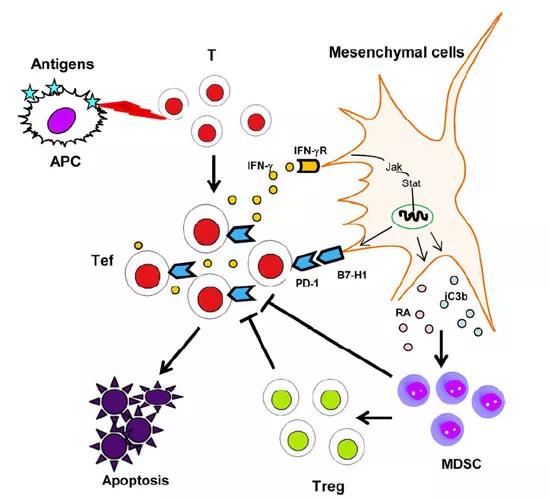
Image content: This image is available to view online.
View image online (https://assets.clevelandclinic.org/transform/9119d176-bd43-43ec-af84-01d461ac4fc5/MMICschematic_inset_jpg)
Figure. Schematic showing the role of the MMIC mechanism in peripheral T cell tolerance.
According to John Fung, MD, PhD, a long-time colleague of Dr. Qian and Dr. Lu and the Director of the Cleveland Clinic Health System Center for Transplantation, the report helps explain the liver’s crucial role in preventing injurious immune activation from food as well as bacterial and viral antigens that are found in the intestines. It also provides insight on the tendency of tumors to go to the liver, thereby protecting themselves from immune destruction.
Advertisement
And this research is key to helping future transplant patients live better. “As research progresses, our goal is to allow patients to receive a new liver without using immunosuppressive drugs,” reveals Dr. Qian. “At the very least, they may dramatically reduce the amount of medication they take. This will enable them to live a longer, healthier life since they will be able to rely on their own immune system.”
In the future, Dr. Qian’s research may be used to manipulate other organs, such as the kidneys and pancreas, to develop transplant tolerance. Additional studies may lead to discovering a universal pathway that exists in other peripheral tissues to regulate immune response and enhance peripheral tolerance. This pathway could help researchers control a patient’s immune response to his or her own antigens, leading to a reversal of autoimmune conditions such as arthritis, diabetes and lupus.
Before Dr. Fung and his colleagues joined Cleveland Clinic Lerner Research Institute in 2005, only about 25 transplants were performed at Cleveland Clinic each year. What about now? “Cleveland Clinic is performing about 130 transplants per year,” explains Dr. Qian. “Our dedication to liver transplant research has resulted in many other transplantation programs, which are growing rapidly. We hope these programs will continue to improve the quality of life for transplant patients worldwide.”
“We owe our success to funding from the NIH and generous benefactors who have supported transplantation research for the past 25 years,” comments Dr. Fung.
Advertisement
The next phase of Dr. Qian’s research will focus on identifying the biomarker to predict the 25 percent of patients who can avoid immunosuppression therapy before the transplant occurs. To learn more about this research, including opportunities for collaboration, contact Dr. Qian at qians@ccf.org or 216.444.2543.
Advertisement
Advertisement
OMT may be right for some with Graves’ eye disease
Perserverance may depend on several specifics, including medication type, insurance coverage and medium-term weight loss

Integrate climate-related health information and counseling into your practice
Physicians discuss a specific case example, and PICC pros, cons and alternatives

A snapshot of the 2020 GINA report

A review of available interventions
Abstinence from combustibles, dependence on vaping
An historical view of the disease
 Search