Locations:





 Search
Research supports a tubeless approach in all PCNL cases
Image content: This image is available to view online.
View image online (https://assets.clevelandclinic.org/transform/efbccb40-094d-4e42-80f7-66599430dfd1/690-Monga_HERO-IMAGE_Kidney-Stones-w-Ruler_jpg)
690-Monga_HERO-IMAGE_Kidney-Stones-w-Ruler
Previous studies have suggested that a nephrostomy tube be left in percutaneous nephrolithotomy (PCNL) patients who experience significant bleeding or other complications. Throughout the last three years, however, Manoj Monga, MD, has used a tubeless approach in all patients undergoing PCNL unless there was a residual stone that he anticipated being able to access through the same tract.
Advertisement
Cleveland Clinic is a non-profit academic medical center. Advertising on our site helps support our mission. We do not endorse non-Cleveland Clinic products or services. Policy
As the result of a study led by Dr. Monga and Mark Noble, MD, the doctors propose that tubeless PCNL is safe, irrespective of bleeding, perforation, extravasation or other intraoperative issues that have previously been used as exclusionary criteria for this approach.
To determine the safety and efficacy of using a tubeless approach, the researchers evaluated 160 patients who were randomly assigned to tubeless PCNL with an indwelling ureteral stent or a conventional PCNL with a small-bore pigtail nephrostomy catheter. All patients underwent balloon dilation of the nephrostomy tract to 30Fr.
Patients were similar with regard to age, gender, American Society of Anesthesiologists score, number of stones, maximum stone dimension, number of calyces involved and use of preoperative narcotics.
Researchers found that patients who underwent the tubeless approach experienced a significantly shorter hospital stay, less postoperative pain and less narcotic utilization compared with those who underwent a standard approach.
The doctors did not exclude patients based on intraoperative bleeding; patients were identified who had a hemoglobin drop of 1 gram or more during surgery, and in this subgroup there was no difference in hemoglobin on postoperative day one. This suggests that a tube does not help with tamponade in patients with significant intraoperative bleeding.
Indeed, four patients in the conventional PCNL group required transfusion and two required embolization, while no patients in the tubeless PCNL group required either transfusion or embolization.
Advertisement
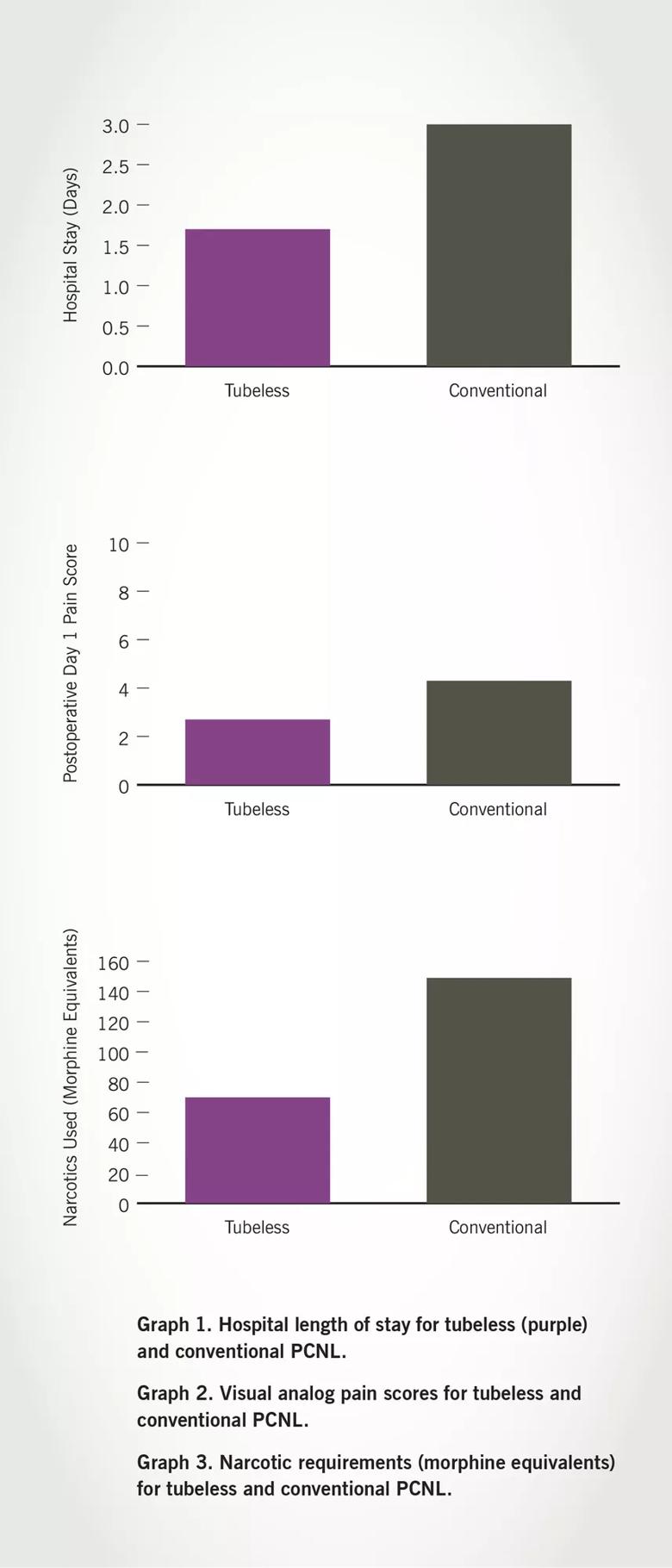
Image content: This image is available to view online.
View image online (https://assets.clevelandclinic.org/transform/db84b620-6963-4dbe-bdef-31656fcd0fe1/Monga_Charts_w-Caption_jpg)
Advertisement
Advertisement
Clinicians should individualize dosing practices based on patient risk factors and preferences
Pioneering and refining the approach in pyeloplasty, nephrectomy and more
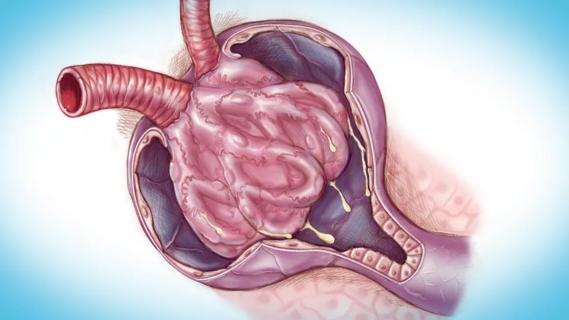
Fully-automated process uses preop CT, baseline GFR to estimate post-nephrectomy renal function
Could mean earlier treatment, but also could have negative effects

Unlike earlier pills, new drugs do not cause liver toxicity

Male factors play a role in about half of all infertility cases, yet men often are not evaluated
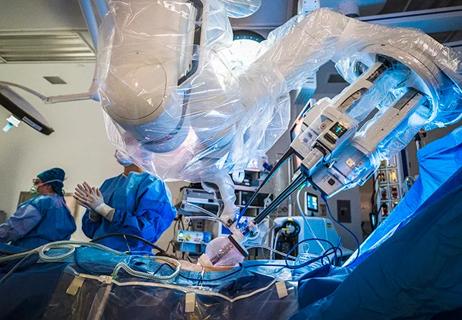
Surgeons choreograph nearly simultaneous procedures, sharing one robot between two patients

Identifying barriers in the renal genetic assessment of Black patients