Locations:





December course in NYC shares the latest learnings with a case-based focus
Image content: This image is available to view online.
View image online (https://assets.clevelandclinic.org/transform/e494ac95-f00d-41be-b6fb-388b4cfb777f/19-HRT-4038-Mastering-the-Aortic-Valve-CME_jpg)
Monitoring the management of Aortic Valve Disease
A day and a half in New York City in December can bring you fully up to speed on all the latest in aortic valve disease management.
Advertisement
Cleveland Clinic is a non-profit academic medical center. Advertising on our site helps support our mission. We do not endorse non-Cleveland Clinic products or services. Policy
That’s the aim of “Mastering the Management of Aortic Valve Disease: A Case-Based Approach,” a Cleveland Clinic-directed live CME program running from Friday morning, Dec. 13, to midday Saturday, Dec. 14, 2019. The course will be held at JW Marriott Essex House New York, adjacent to Central Park.
“For the past two years we’ve offered a very popular CME event called ‘Mastering the Mitral Valve’ at this same venue in New York City on a weekend in early December,” says course co-director Lars Svensson, MD, PhD, Chair of Cleveland Clinic’s Miller Family Heart & Vascular Institute. “This year we decided to mix things up a bit by taking the same approach but applying it to the latest in aortic valve disease care.”
The course does so with a dynamic lineup of topics across five broad sessions focusing on the following areas:
Advertisement
Sessions are briskly paced with well-focused presentations of 10 to 20 minutes, and all are punctuated with panel discussions and Q&A periods where attendees can interact with the 19 expert faculty from Cleveland Clinic and four other leading U.S. medical centers.
“Like the last offering of our ‘Mastering the Mitral Valve’ course, this program takes a decidedly case-based approach, with many presenters sharing their insights through practical application in real-world clinical scenarios,” notes Dr. Svensson.
“Cardiologists, interventionalists, cardiac surgeons and others involved in the care of patients with aortic valve disease will leave this course equipped to apply the latest insights from clinical trials and registry studies to their practice, from considerations surrounding TAVR in low-risk patients to best practices in patient assessment,” he adds.
Visit ccfcme.org/aorticmasters for registration and more details. Early-bird registration pricing ends Oct. 7.
This activity has been approved for AMA PRA Category 1 Credit™.
Advertisement
Advertisement
A sampling of outcome and volume data from our Heart & Vascular Institute
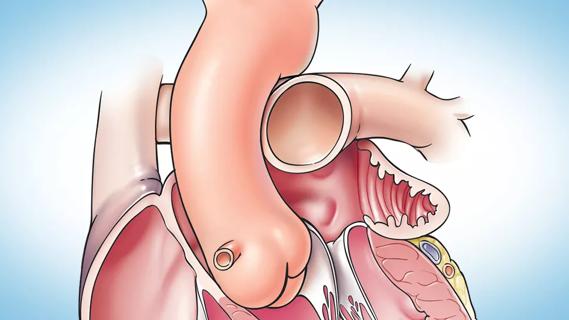
Concomitant AF ablation and LAA occlusion strongly endorsed during elective heart surgery
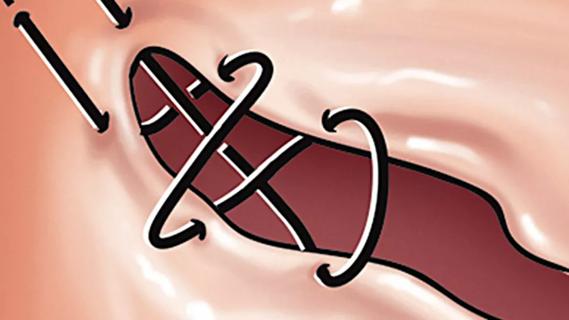
Large retrospective study supports its addition to BAV repair toolbox at expert centers
Young age, solid tumor, high uptake on PET and KRAS mutation signal risk, suggest need for lobectomy
Surprise findings argue for caution about testosterone use in men at risk for fracture
Residual AR related to severe preoperative AR increases risk of progression, need for reoperation

Findings support emphasis on markers of frailty related to, but not dependent on, age
Provides option for patients previously deemed anatomically unsuitable
 Search