Locations:





Physicians explain findings from a recent study

Image content: This image is available to view online.
View image online (https://assets.clevelandclinic.org/transform/e8b556e7-73b0-4f59-9310-f01d78e751ee/22-URL-2669455-CQD-650x450-1_jpg)
power of big data. binary code information bit on computer monitor screen display. Led light text number one and zero. blur defocus blue bokeh light. technology graphic design background concepts
Novel machine learning algorithms can make predictions about treatment outcomes in patients with overactive bladder (OAB) that are similar to — or even more precise — than those of a specialist. This was the chief finding from a recent Cleveland Clinic-led study, published in Neurourology and Urodynamics, that tested trained algorithms on the largest OAB datasets available and compared them to predictions from human experts. The study investigators also recently presented these data at the American Urological Association annual meeting in New Orleans.
Advertisement
Cleveland Clinic is a non-profit academic medical center. Advertising on our site helps support our mission. We do not endorse non-Cleveland Clinic products or services. Policy
OAB is a common urologic diagnosis that affects about 1 in 6 patients. Patients with severe refractory symptoms may be candidates for onabotulinumtoxinA (OBTX-A) and sacral neuromodulation (SNM), similarly effective interventions.
But a certain subgroup of patients does not respond to these treatments, and predicting those who will not respond is an “open question in the field,” says Glenn Werneburg, MD, PhD, lead author of the study and a resident in Cleveland Clinic’s Department of Urology.
Dr. Werneburg and coauthors developed neural networks using a series of novel approaches. They then applied them to the prediction problem in OAB using datasets from the ROSETTA (Refractory Overactive Bladder: Sacral Neuromodulation v. BoTulinum Toxin Assessment) study, a trial that randomized patients to either OBTX-A or SNM interventions. Alongside this, blinded expert urologists also predicted outcomes.
Remarkably, the algorithms demonstrated outstanding accuracy in predicting treatment response (OBTX‐A: AUC 0.95; SNM: 0.88), the authors report.
“Our algorithms were extremely accurate in predicting treatment response to both modalities. In fact, they could correctly predict which patient was a responder and which patient was a non-responder about 90% of the time in patients they had never seen before,” says Dr. Werneburg.
Additionally, he explains, the algorithms generally outperformed human experts in prediction.
“At first glance, this was somewhat surprising, but we have to be careful with how we interpret this finding. The design of the study, which was the most optimal way to test the algorithms at this early stage, favored algorithms over humans. Essentially, we gave the algorithms the ‘home-field advantage’ here by asking the humans to predict based on spreadsheets of data,” he explains.
Advertisement
“And certainly that’s not how prediction is done in the clinical sense. So while both the algorithms and the humans have the same data to start with, the next step is to validate these results in the more natural clinical setting.”
Data from the ROSETTA study, a National Institute of Child Health and Development-sponsored trial and one of the most complete datasets in the field, was important for this type of analysis. The multicenter, open-label randomized trial included 381 women with refractory urgency incontinence across nine different U.S. centers to compare the two interventions. These findings were published in JAMA in 2016.
Sandip Vasavada, MD, an investigator on the ROSETTA trial and senior author of the study conducted with Dr. Werneburg, says the datasets generated by this work are valuable for a study like this.
“There isn’t anything at this scale that exists for this type of analysis, so we were pleased to be able to utilize this robust data for identification of these types of parameters in the context of machine learning,” he says.
Will this technology supplant patient counseling? Put simply, no, the physicians say.
“Many aspects of the physician-patient interaction are not computable. For example, a patient may have a particular treatment preference in mind; in other cases, a complex socioeconomic situation might preclude repeat office visits or certain other comorbidities that lead to shared decision between the patient and the urologist regarding an optimal treatment,” says Dr. Werneburg.
Advertisement
Ultimately, the physicians are hopeful that these algorithmic approaches will complement clinical expertise and judgment.
“At the end of the day, the patient decides their course of treatment with their physician. But in select patients, a machine learning approach might help guide patient decision-making, helping them make a more educated and informed decision about their care,” Dr. Vasavada concludes.
Advertisement
Advertisement
Clinicians should individualize dosing practices based on patient risk factors and preferences
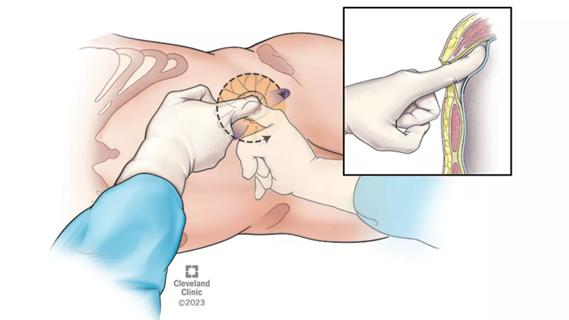
Pioneering and refining the approach in pyeloplasty, nephrectomy and more
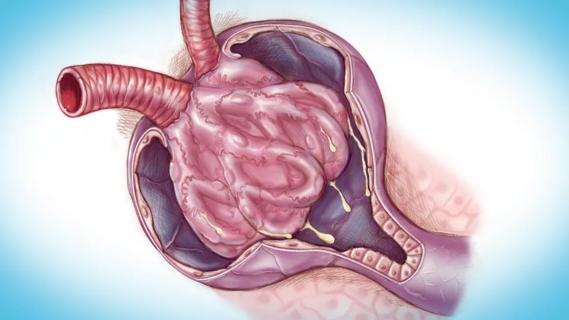
Fully-automated process uses preop CT, baseline GFR to estimate post-nephrectomy renal function
Could mean earlier treatment, but also could have negative effects

Unlike earlier pills, new drugs do not cause liver toxicity
Male factors play a role in about half of all infertility cases, yet men often are not evaluated
Surgeons choreograph nearly simultaneous procedures, sharing one robot between two patients

Identifying barriers in the renal genetic assessment of Black patients
 Search