Locations:





April 12-13 course packs a punch with multidisciplinary expertise
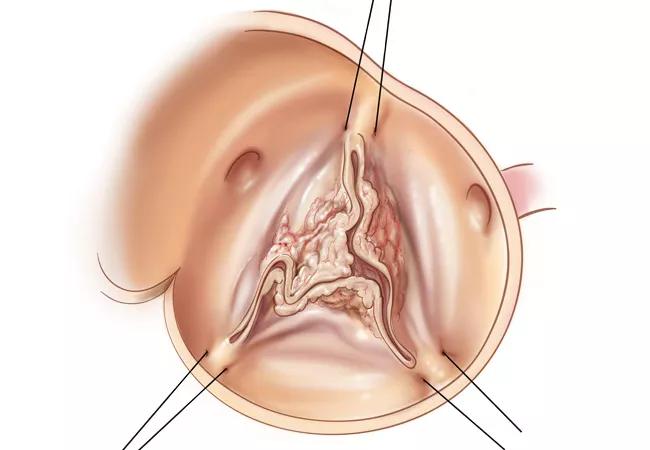
Image content: This image is available to view online.
View image online (https://assets.clevelandclinic.org/transform/be57d299-de46-4ee9-ba6a-6732355216fa/18-HRT-039-Endocarditis-CME-CQD_jpg)
18-HRT-039-Endocarditis-CME-CQD
Integrated multidisciplinary care is so central to managing infective endocarditis (IE) that it’s the focus of the very first recommendation in new guidelines on IE released by the American Association for Thoracic Surgery (AATS) last year: “Patients with suspected IE should ideally be cared for at centers with access to a complete team, including cardiology, infectious disease, cardiac surgery, and other services needed to handle IE complications.”
Advertisement
Cleveland Clinic is a non-profit academic medical center. Advertising on our site helps support our mission. We do not endorse non-Cleveland Clinic products or services. Policy
That principle is at the core of “Multidisciplinary Master Class in Endocarditis and Other Cardiovascular Infections,” an unprecedented two-day CME symposium offered by Cleveland Clinic on Thursday and Friday, April 12-13, 2018, at the InterContinental Hotel and Conference Center on Cleveland Clinic’s main campus.
“This is the first comprehensive multidisciplinary symposium in the U.S. on managing infective endocarditis and other cardiovascular infections and their complications,” says course co-director Gosta Pettersson, MD, PhD, a Cleveland Clinic cardiothoracic surgeon and co-chair of the writing committee for the above AATS guidelines.
The course takes the “multidisciplinary” in its name seriously, in at least two critical ways:
Advertisement
The expansive two-day agenda allows for plenty of nuanced focus on narrower questions and challenges often not addressed at meetings. A sampling of presentation titles gives a hint of that focus:
“The program is also designed to put a premium on exploring the many complex clinical decision-making processes involved in infective endocarditis,” notes course co-director Brian Griffin, MD, Cleveland Clinic’s Section Head of Cardiovascular Imaging. “For example, we’ll consider the choice of transthoracic versus transesophageal echocardiography for diagnosing IE in different circumstances, and also the signs and symptoms that indicate a need for surgery, as well as how best to time that surgery.”
“Additional sessions will describe the decision-making approach to managing aortic infections, infections of VADs and sternal wound infections,” notes course co-director Steven Gordon, MD, Chairman of Cleveland Clinic’s Department of Infectious Disease.
“Other sessions will weigh the pros and cons of surgery for infective endocarditis and debate issues associated with surgically treating all patients with prosthetic valve infections,” adds Dr. Pettersson.
All of this can be covered thanks to the division of the course into highly focused 10- or 15-minute presentations, with plenty of panel discussions to allow deeper dives into topics of most interest.
Advertisement
One such high-interest topic — the impact of opioid addiction on IE and its outcomes — will be at the center of a special 90-minute luncheon session.
The symposium is designated for a maximum of 15.75 AMA PRA Category 1 Credits™.
For more information and to register, visit ccfcme.org/endocarditis18.
Advertisement
Advertisement
A sampling of outcome and volume data from our Heart & Vascular Institute
Concomitant AF ablation and LAA occlusion strongly endorsed during elective heart surgery
Large retrospective study supports its addition to BAV repair toolbox at expert centers
Young age, solid tumor, high uptake on PET and KRAS mutation signal risk, suggest need for lobectomy
Surprise findings argue for caution about testosterone use in men at risk for fracture
Residual AR related to severe preoperative AR increases risk of progression, need for reoperation

Findings support emphasis on markers of frailty related to, but not dependent on, age
Provides option for patients previously deemed anatomically unsuitable
 Search