Locations:





These specialty nurses facilitate critical procedures
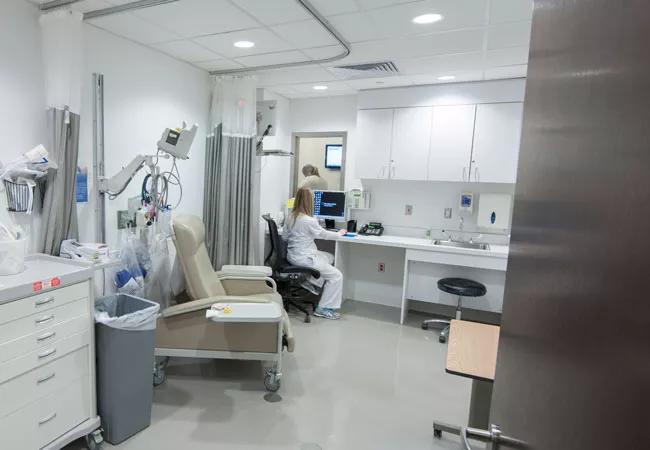
Image content: This image is available to view online.
View image online (https://assets.clevelandclinic.org/transform/6d43a7e8-e970-4e25-bcd4-25ab6d8a048c/imaging-nurse_650x450_jpg)
imaging-nurse_650x450
There are more than 100 nursing specialties, many of which are well-known to both nursing students and the general public, such as emergency, medical/surgical and pediatrics. While other specialties may not garner as much attention, they are equally rewarding career options and deserve recognition. One such field is radiologic and imaging nursing.
Advertisement
Cleveland Clinic is a non-profit academic medical center. Advertising on our site helps support our mission. We do not endorse non-Cleveland Clinic products or services. Policy
Desiree Chizmadia, MSN, RN, has been an imaging nurse for about six years and now serves as nurse manager for the specialty at Cleveland Clinic’s main campus, where she oversees more than 100 imaging nurses. “I don’t think people realize what imaging nurses do,” says Chizmadia. “It’s an evolving field, and it’s fascinating!”
Radiologic and imaging nurses perform a variety of tasks and are represented by The Association for Radiologic & Imaging Nursing (ARIN). Founded in 1981, the ARIN is a professional organization for nurses who practice in diagnostic, neuro/cardiovascular, interventional, ultrasonography, computerized topography, nuclear medicine, magnetic resonance and radiation oncology.
During a typical day at Cleveland Clinic, an imaging nurse may see dozens of patients in the procedure room who are undergoing MRIs, CT scans, ultrasounds, angioplasties, biopsies and other procedures. Among their tasks, imaging nurses may do the following:
Advertisement
Perhaps one of the most important jobs of radiologic and imaging nurses is alleviating patient anxiety. Many people undergoing a procedure are nervous about the test itself, as well as any possible negative results. As with other specialties, these nurses can put patients at ease.
“We may only see patients for a short amount of time, but we do make a difference,” says Chizmadia. “For example, we have a breast navigator who helps coordinate imaging appointments with patients who are diagnosed with cancer. She gets accolades all the time from people who appreciate a friendly face during their time of need. She’s there to help people through the process.”
Like other imaging nurses at Cleveland Clinic, Chizmadia worked on an inpatient unit prior to becoming an imaging nurse. The healthcare organization requires nurses have a strong inpatient background prior to becoming an imaging nurse because the job requires keen assessment skills and experience. “You are the frontline caregiver and often have to make judgement calls about the patient before, during and after the procedure,” she says.
After five years on an inpatient unit, Chizmadia joined the imaging team because she was “looking for something challenging in a nontraditional specialty.” Imaging nursing piqued her interest. “With imaging nursing, it’s something different all the time, but you still build relationships with patients who come in frequently,” she says.
Advertisement
Advertisement

Nurses play key role in comprehensive lifetime treatment program
Customized bots improve speed, efficiency by streamlining daily clinical, clerical tasks

Nurses play pivotal role in patients’ ability to recover in the comfort of their own homes
New protocol reduces costs, increases patient and caregiver satisfaction

Advocating for patient safety is imperative in fast-paced surgical settings

M-Power program improves the perinatal experience for people who have survived abuse

Advice for those pursuing a WOC nursing career

Veteran nurse shares his experience as a caregiver and community volunteer
 Search