Locations:





A closer look at extended antiplatelet therapy
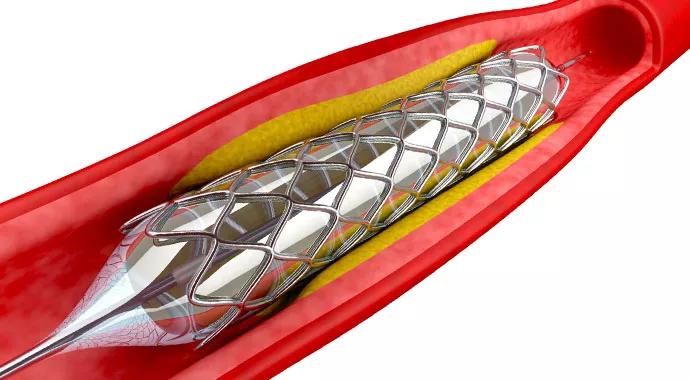
Image content: This image is available to view online.
View image online (https://assets.clevelandclinic.org/transform/b7045b32-a3f2-40ee-ab4a-d07f67fe2420/DAPT-690x380_jpg)
DAPT-690×380
Results of the Dual Antiplatelet Therapy (DAPT) trial presented at the American Heart Association 2014 Scientific Session found that extending therapy from 12 to 30 months after stenting reduced the risks of stent thrombosis and major adverse cardiovascular and cerebrovascular events (MACCE), but at a price.
Advertisement
Cleveland Clinic is a non-profit academic medical center. Advertising on our site helps support our mission. We do not endorse non-Cleveland Clinic products or services. Policy
Current American College of Cardiology/American Heart Association guidelines for stenting recommend dual antiplatelet therapy with clopidogrel or related drugs and aspirin for 12 months in patients who receive drug-eluting stents (DES), after which aspirin monotherapy is continued indefinitely.
The trial evaluated the rate of stent thrombosis and MACCE (a composite of death, myocardial infarction or stroke) in 8,308 patients with DES and 1,718 with bare-metal stents treated with a thienopyridine agent plus aspirin or placebo for an additional 18 months. Longer treatment reduced the rate of stent thrombosis by 1 percent and MACCE by 1.5 percent. The rate of myocardial infarction (MI) was 2 percent lower with thienopyridine than placebo, and the rate of death was 0.5 percent lower.
However, extended use of dual antiplatelet therapy increased the rate of moderate or severe bleeding by 0.9 percent. Additionally, rates of stent thrombosis and MI increased within three months after thienopyridine treatment was discontinued.
“This was an important trial, because it was the first to look at extended length of dual antiplatelet therapy and provided important information on benefits versus risks,” says Steven Nissen, MD, Chairman of Cardiovascular Medicine at Cleveland Clinic. “However, the optimal duration of therapy remains unknown.”
Advertisement
Advertisement

A sampling of outcome and volume data from our Heart & Vascular Institute
Concomitant AF ablation and LAA occlusion strongly endorsed during elective heart surgery
Large retrospective study supports its addition to BAV repair toolbox at expert centers
Young age, solid tumor, high uptake on PET and KRAS mutation signal risk, suggest need for lobectomy

Surprise findings argue for caution about testosterone use in men at risk for fracture
Residual AR related to severe preoperative AR increases risk of progression, need for reoperation

Findings support emphasis on markers of frailty related to, but not dependent on, age
Provides option for patients previously deemed anatomically unsuitable
 Search