Locations:





Join cardiovascular experts in Hollywood, Florida, Feb. 27-March 1
Will strain supplant ejection fraction in evaluation of heart disease? Should TAVR replace SAVR in low- and moderate-risk aortic stenosis patients? Should mitral leaflet repair routinely be used to treat severe functional mitral regurgitation?
Advertisement
Cleveland Clinic is a non-profit academic medical center. Advertising on our site helps support our mission. We do not endorse non-Cleveland Clinic products or services. Policy
Come hear expert cardiovascular clinicians debate these hot topics at Cleveland Clinic’s 22nd Valve Disease, Structural Interventions, and Diastology/Imaging Summit, Feb. 27 through March 1, 2020, in Hollywood, Florida. Then join in the discussion yourself.
“This will be a unique summit, discussing all aspects of mitral, aortic and tricuspid valve diseases as well as diastolic function evaluation and myocardial and pericardial diseases,” says summit director Allan Klein, MD, Director of Cleveland Clinic’s Pericardial Disease Center. “We will be addressing controversies head-on.”
Each day of the course will culminate in a debate about a controversy in valve and structural heart disease. Faculty members will present opposing viewpoints, followed by rebuttals, leaving ample time for audience participation.
“We have a longstanding history of convening top leaders in this field, and this summit — our 22nd — will be no exception,” says summit co-director Samir Kapadia, MD, Chair of Cleveland Clinic’s Department of Cardiovascular Medicine.
More than a dozen faculty from Cleveland Clinic’s Miller Family Heart & Vascular Institute — ranked the nation’s No. 1 cardiology and heart surgery program for 25 consecutive years by U.S. News & World Report — will be joined by guest faculty from various other leading heart programs across the U.S.
In addition to tackling the latest in echocardiography and assessing the newest innovations in structural interventions, the summit will include an introduction to artificial intelligence.
Advertisement
“Attendees will learn what artificial intelligence is and how it can support the practice of cardiologists and interventional cardiologists,” explains summit co-director Christine Jellis, MD, PhD, Co-Director of Cleveland Clinic’s Pericardial Disease Center.
Also new this year is an optional learning lab that kicks off the summit on Thursday evening, Feb. 27, with an opportunity for hands-on practice. The two-hour lab offers up to 25 participants direct experience with 3D transesophageal echocardiography and multiplanar reconstruction in the setting of preprocedural evaluation and intraprocedural guidance of structural heart interventions. Separate registration is required.
The rest of the weekend features morning and midday sessions, with afternoons and evenings free to enjoy the summit venue, the Diplomat Beach Resort, and South Florida’s Gold Coast.
Sessions will explore recent advances in TAVR, percutaneous mitral repair, valve-in-valve procedures and LAA occluder devices. There will be updates on imaging techniques, including 3D echocardiography, fusion imaging, strain imaging, interventional echo and MRI/CT.
On Friday and Saturday, attendees can choose between midday workshops — either case presentations or hands-on practice sessions. Hands-on how-to sessions will review cropping with 3D transesophageal and transthoracic imaging, as well as strain and diastology implementation and interpretation.
Sunday sessions will discuss the latest in pericardial and myocardial diseases, concluding with case presentations on constriction, restriction, complicated pericarditis and more.
Advertisement
“Among the many takeaways, attendees will learn how to incorporate new imaging criteria when making decisions about structural valve interventions, medical treatment, and surgical valve repair or replacement,” notes summit co-director L. Leonardo Rodriguez, MD, Program Director of Cleveland Clinic’s Advanced Imaging Fellowship.
For more details and registration, visit ccfcme.org/echo. Early-bird registration rates end Jan. 3, 2020.
Advertisement
Advertisement
A sampling of outcome and volume data from our Heart & Vascular Institute
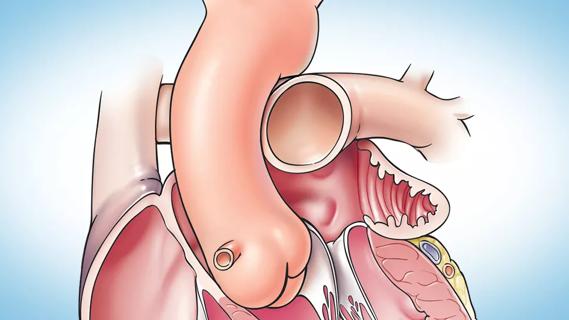
Concomitant AF ablation and LAA occlusion strongly endorsed during elective heart surgery
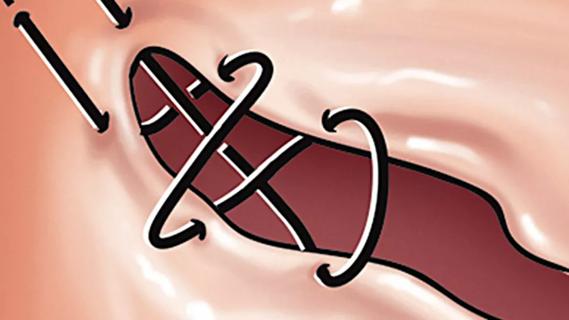
Large retrospective study supports its addition to BAV repair toolbox at expert centers
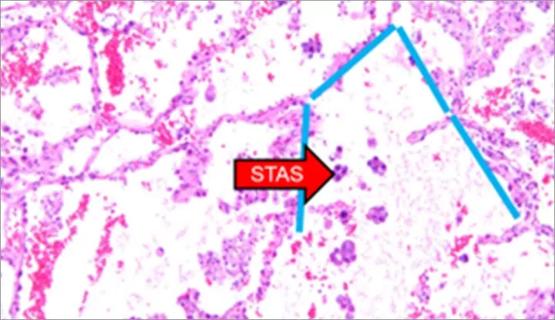
Young age, solid tumor, high uptake on PET and KRAS mutation signal risk, suggest need for lobectomy
Surprise findings argue for caution about testosterone use in men at risk for fracture
Residual AR related to severe preoperative AR increases risk of progression, need for reoperation
Findings support emphasis on markers of frailty related to, but not dependent on, age
Provides option for patients previously deemed anatomically unsuitable
 Search