Locations:





 Search
Study is the first double-blinded randomized controlled trial to evaluate a non-opiate analgesic regimen after ureteroscopy (URS)
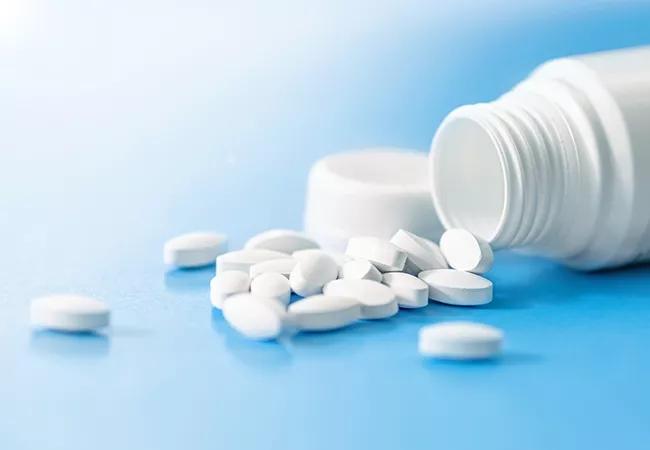
Image content: This image is available to view online.
View image online (https://assets.clevelandclinic.org/transform/a17669b1-3783-49af-8ba3-0a6bc0d259b1/21-URL-2155418-CQD-Sivalingam-650x450-1_jpg)
Pills spilled out of white bottle on light blue background with copy space. Medical healthcare concept
A team of urologists found that a non-opioid anti-inflammatory regimen was as effective as a narcotic regimen in controlling postoperative pain following URS. The findings from this randomized, double-blinded trial were published in The Journal of Urology.
Advertisement
Cleveland Clinic is a non-profit academic medical center. Advertising on our site helps support our mission. We do not endorse non-Cleveland Clinic products or services. Policy
There is a high incidence of kidney stones in the U.S. An estimated 19% of males and 9% of females will develop a kidney stone by the age of 70, according to the National Health and Nutrition Examination Survey. Depending on the size of the stone, URS may be recommended as a first-line treatment for managing nephrolithiasis.
Sri Sivalingam, MD, endourologist at Cleveland Clinic and senior author of the paper, says the SKOPE (Study of Ketorolac vs Opioid for Pain after Endoscopy) trial, with a noninferiority design, aimed to understand if pain following URS could be managed equally well with a non-opiate agent compared with an opioid medication.
“Pain is the leading factor for emergency room visits and hospital readmission following URS,” he explains. “And this compels many urologists to prescribe significant amounts of opioids after URS.”
Dr. Sivalingam, who is also Director of the Center for Endourology and Stone Disease at Cleveland Clinic Hillcrest Hospital, explains that ureteral stents (often placed temporarily after URS) are responsible for many pain-related symptoms after surgery. Nonsteroidal anti-inflammatory drugs (NSAIDs) have been shown to decrease ureteral contractions and/or inflammation. Studies have also demonstrated their superiority in pain control with fewer adverse reactions in patients with renal colic (i.e. kidney stone attack).
However, the debate persists in the context of post-URS pain management. “A well-controlled, noninferiority trial like this provides the best opportunity to evaluate postoperative pain outcomes to determine what is best for patients undergoing ureteroscopy.”
Advertisement
The research team enrolled 81 patients, who were randomized and blinded, forming two cohorts receiving 5 mg oxycodone (N= 43) and 10 mg of Ketorolac (N=38), respectively. Patients reported pain by way of a visual analog score on postoperative days 1-5. Three non-blinded oxycodone rescue pills were provided for breakthrough pain.
Study findings showed no significant difference in patient-reported pain scores, rescue pill usage or adverse effects between the two groups. All participants shared comparable clinical and perioperative characteristics. Regardless of analgesic used, higher pain scores correlated with usage patterns —regardless of the type of intervention.
Dr. Sivalingam says these findings align with his anecdotal experience, and what the investigators had theorized when they designed the noninferiority trial. More surprising, however, is that patients who received the Ketorolac reported fewer days (mean + SD 1.0 + 1.3 vs . 2.3 + 2.6, p = 0.02) confined to bed during the recovery period than that of the oxycodone cohort.
“That’s significant when you are talking about patients getting back to work, back to childcare responsibilities, back to their lives,” he says.
This is the first double-blinded randomized controlled trial evaluating a non-opiate analgesic regimen after URS, however, Dr. Sivalingam says, other studies have been examining these questions in different ways. The findings of this trial are consistent with other emerging data and growing consensus from colleagues within the field.
Advertisement
He does caution, however, that NSAIDs should generally be avoided in patients with chronic kidney disease due to nephrotoxicity.
He hopes this study will be influential in shaping the future treatment paradigm.
“We owe it to our patients to be responsible stewards of pain control given what we know about the opioid epidemic. While pain control should be determined on a case-by-case basis, this study shows that Ketorolac is not inferior to oxycodone and may, in fact, help patients return to their activities even sooner.”
Advertisement
Advertisement
Clinicians should individualize dosing practices based on patient risk factors and preferences
Pioneering and refining the approach in pyeloplasty, nephrectomy and more
Fully-automated process uses preop CT, baseline GFR to estimate post-nephrectomy renal function
Could mean earlier treatment, but also could have negative effects

Unlike earlier pills, new drugs do not cause liver toxicity

Male factors play a role in about half of all infertility cases, yet men often are not evaluated
Surgeons choreograph nearly simultaneous procedures, sharing one robot between two patients

Identifying barriers in the renal genetic assessment of Black patients