Locations:





Initiative empowers OTs to focus on functional relevance to curb readmission risk
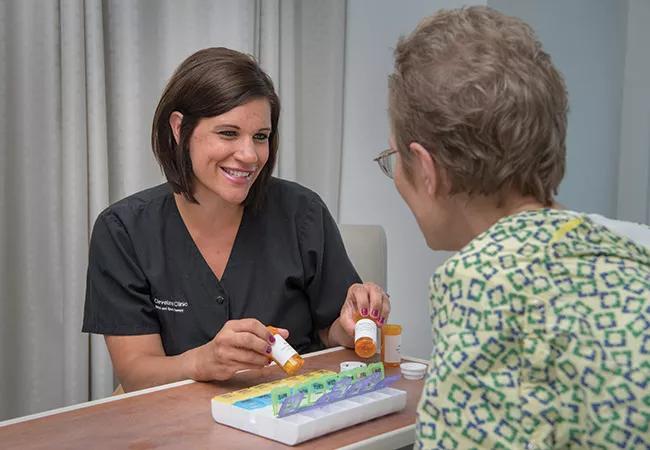
Image content: This image is available to view online.
View image online (https://assets.clevelandclinic.org/transform/2c7d2bcc-9d24-431e-a8c3-6c424316c7cf/17-NEU-4134-Green-650x450-1_jpg)
17-NEU-4134-Green-650×450
Cognitive rehabilitation therapy (cognitive rehab) could stand some reimagining. Although this therapeutic strategy has been around for decades, its scope has rarely been expanded beyond patients with neurological conditions. And the tools and therapies used have largely remained rudimentary and divorced from patients’ day-to-day functional needs.
Advertisement
Cleveland Clinic is a non-profit academic medical center. Advertising on our site helps support our mission. We do not endorse non-Cleveland Clinic products or services. Policy
That need for reinvention has not been lost on Cleveland Clinic’s Department of Physical Medicine and Rehabilitation (PM&R) or on Cleveland Clinic Rehabilitation and Sports Therapy, which have launched an initiative to reimagine cognitive rehab in the inpatient setting. Occupational therapy (OT) is at the effort’s heart, with key aspects including a “rescripting” of OT visits to inpatients referred for therapy services and enterprise-wide training of OTs in cognition issues. A centerpiece is the Cognitive Rehab Study Group, which holds monthly training sessions drawing robust attendance from OTs as well as physical therapists (PTs), speech therapists, rehabilitation psychologists, physicians and other providers.
“Cognitive impairment is one of two or three predominant factors determining whether a hospitalized patient will be able to be discharged home and then later be at risk for readmission,” says Frederick Frost, MD. “We’re pursuing these efforts to elevate and engage our occupational therapists to identify cognitive issues that may hamper inpatients’ ability to manage their medical needs after discharge.”
Under the new initiative, any inpatient for whom a physician orders therapy services undergoes a PT evaluation that includes cognitive screening using the Mini-Cog tool or a similar assessment. When findings suggest cognitive impairment, the PT documentation triggers an OT evaluation for further assessment of cognition and activities of daily living.
The resulting OT evaluation involves deeper cognitive assessment using standardized tools including the Medi-Cog, which then guides therapy to address the patient’s specific cognitive deficits. “Our OTs are still evaluating patients’ mobility needs and self-care abilities, but now we’re building in cognitive assessment along with some psychosocial treatment, if needed,” explains Karen Green, PT, DPT, Director of Rehabilitation for Cleveland Clinic’s main campus and western region. “We’re looking at the patient more holistically to ensure they can manage their medical regime after discharge.”
Advertisement
A frequent challenge is medication management, particularly in cases of polypharmacy. So OTs use medication kits consisting of bottles of various sizes and shapes containing different-colored tablets and capsules (see photo). They ask patients to try to open the bottles, distinguish between different medications, read the bottle labels unaided and follow label instructions. “These assessments take a deep dive into issues patients will have when their medical regime is turned over to them at home,” says Green.
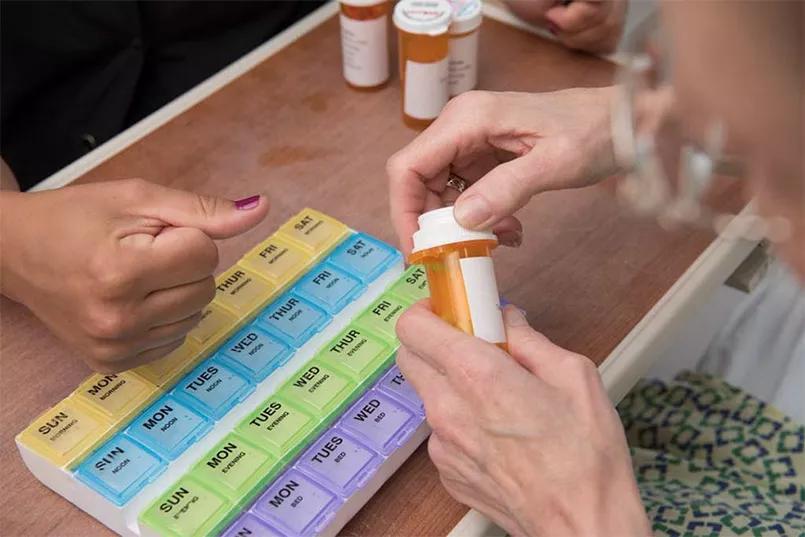
Image content: This image is available to view online.
View image online (https://assets.clevelandclinic.org/transform/a39e2f83-daa5-4818-aa51-af05743761a4/17-NEU-4134-Green-inset-1_jpg)
This type of therapy is in contrast to the flash cards and colored cones traditionally used in cognitive rehab. “We really want to bring the therapy around to function that’s relevant to patients’ daily lives and what they and their families will need to support their care at home,” Green explains.
She cites the example of patients with heart failure or COPD who need to weigh themselves daily: “Patients with mild cognitive impairment can follow rote directions to weigh themselves, but the significance of weight changes can sometimes escape them. A patient may be instructed to call the doctor if they have a five-pound weight gain. But if that gain occurs between a Friday and a Saturday, when the office is closed, by the time the patient calls on Monday, they may have gained 10 pounds. Now the patient may be in need of critical care. So our OTs use tools and reminders to help the patient problem-solve their way through dilemmas like that.”
The initiative was piloted on medical-surgical units of Cleveland Clinic’s main campus hospital for three months earlier this year. The pilot showed that it helped expedite discharge for many patients who no longer required an OT note due to the initial cognitive screening by PTs — either because they had no sign of cognitive issues or because they were being sent to a skilled nursing facility or other extended-care facility and didn’t need OT services in the immediate term.
Advertisement
At the same time, the initiative freed up OTs’ time for deeper assessment and targeted therapy for patients who were candidates for discharge home but had signs of cognitive challenges. “It allowed us to deploy our OTs where they could provide the greatest value,” Green says.
The pilot has since been turned into a workflow that’s being rolled out more broadly, starting with cardiovascular and neurological units. “We’re looking at cognitive rehab through a broader lens than just the neurological populations in which it’s traditionally been used,” Green remarks. “Almost any hospitalized patient can be vulnerable to cognitive impairment, especially as inpatient populations trend older and toward greater acuity.”
Meanwhile plans call for extending medication kit training to all OTs throughout Cleveland Clinic health system, both inpatient and outpatient. And the monthly Cognitive Rehab Study Group sessions draw more and more interdisciplinary attendees, thanks in part to webcasting to locations across the enterprise.
“This initiative is empowering OTs to operate at the top of their license and bring a high level of value to the patients who need them most,” says Green. “And it promises to help our health system prevent readmissions in the process. This is a win all around.”
Advertisement
Advertisement

New study advances understanding of patient-defined goals
Testing options and therapies are expanding for this poorly understood sleep disorder
Real-world claims data and tissue culture studies set the stage for randomized clinical testing
Digital subtraction angiography remains central to assessment of ‘benign’ PMSAH

Cleveland Clinic neuromuscular specialist shares insights on AI in his field and beyond

Findings challenge dogma that microglia are exclusively destructive regardless of location in brain

Neurology is especially well positioned for opportunities to enhance clinical care and medical training
New review distills insights from studies over the past decade
 Search