Locations:





A focus on biological processes should improve both research and management
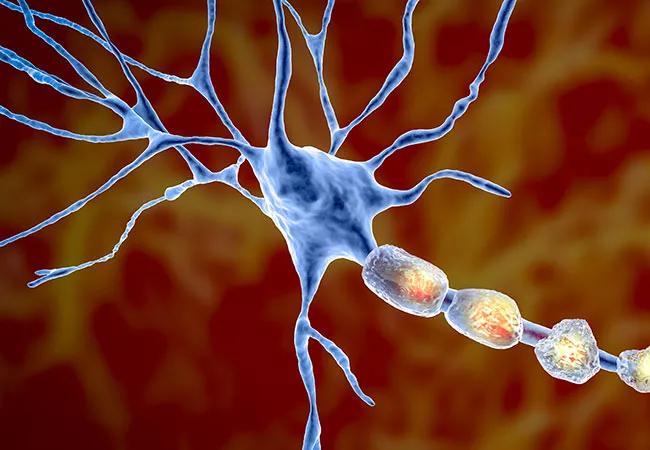
Image content: This image is available to view online.
View image online (https://assets.clevelandclinic.org/transform/4d6d1f71-7968-4957-a916-cd8dcfb43bad/23-NEU-3534432-CQD-Hero-1-650x450-1_jpg)
23-NEU-3534432-CQD-Hero-1-650×450 (1)
A new conceptual framework has been proposed for characterizing multiple sclerosis (MS) based on underlying biological processes rather than the current categorization based on clinical disease course. The proposal, published in Lancet Neurology (2023;22[1]:78-88) by a team of experts under the auspices of the International Advisory Committee on Clinical Trials in Multiple Sclerosis (IAC), contends that a new framework will drive better disease management and treatment development.
Advertisement
Cleveland Clinic is a non-profit academic medical center. Advertising on our site helps support our mission. We do not endorse non-Cleveland Clinic products or services. Policy
“The current categories of MS are artificial, and using them likely hampers progress,” says Cleveland Clinic neurologist Jeffrey Cohen, MD, a co-author of the article. “The categories have no biological basis, and it’s notable that my patients often tell me they don’t reflect what they are experiencing.”
Dr. Cohen, who is Director of the Experimental Therapeutics Program in Cleveland Clinic’s Mellen Center for Multiple Sclerosis Treatment and Research, recently served as chair of the IAC for six years. The IAC is sponsored by the European Committee for Treatment and Research in MS (ECTRIMS) and the U.S. National Multiple Sclerosis Society (NMSS).
The current system of MS classification, developed in 1996 and revised in 2014, consists of three clinical courses: relapsing-remitting (acute attacks with partial or complete recovery in between), primary progressive (gradual worsening from disease onset) and secondary progressive (relapsing-remitting initially, then gradual worsening).
Dr. Cohen emphasizes that no tests or biomarkers can distinguish the courses, and some features are common among them. In addition, some processes that underlie relapses and progression are present throughout the disease. For example, some patients with progressive MS experience relapses. Conversely, gradually worsening disability and the processes that underlie it are measurable in some patients with relapsing-remitting MS, even in the earliest stages.
Evidence indicates that the MS course is better conceived of as a continuum, with the biologic processes that cause relapses — focal inflammatory lesions evident on MRI causing acute injury — being most noticeable early in the disease. Over time, as focal lesion activity wanes, the processes that underlie progression, which also are present early, become more evident due to the accumulation of damage, failure of compensatory mechanisms and aging.
Advertisement
“We should be targeting MS research and management to specific underlying biological processes, such as focal inflammation, diffuse compartmentalized inflammation or neurodegeneration,” Dr. Cohen asserts.
The Lancet Neurology article contends that MS disability progression is a result of multiple mechanisms of injury that, if measurable, could potentially be used as diagnostic, management and research targets. These mechanisms include:
Individual disease trajectories are likely also affected by a variety of dynamics, including age, sex, genetics, social and environmental factors, comorbid illnesses and disease duration.
The authors also attribute progressive disability worsening in MS to a failure of compensatory mechanisms that possibly could be enhanced. These include:
Advertisement
While treatments are now available to forestall relapses, there has been less success in stopping or reversing MS progression. Dr. Cohen notes that although not yet completely defined, a new framework will allow future therapies to be more sensibly tested — and prescribed — with regard not to the traditional categories but to evidence of reduced inflammation or enhanced remyelination, for example. Similarly, existing drugs that slow disease progression should likely not be limited to patients classified as having “secondary progressive disease” simply because that was the population in which the therapies were tested.
To inform the framework, the IAC is calling for research to elucidate underlying biological processes with the aims of developing and validating tools that measure them and assess their clinical relevance.
Implementing the new framework poses its own challenges, and Dr. Cohen says the IAC will be focusing on that process next. “Transitioning from the current phenomenological classification system to mechanism-based definitions of disease process will require coordinated efforts on the part of regulators, researchers, clinicians and patient groups,” he says. “There is much work to be done, but I think this concept already resonates across this spectrum.”
Advertisement
Advertisement

New study advances understanding of patient-defined goals

Testing options and therapies are expanding for this poorly understood sleep disorder
Real-world claims data and tissue culture studies set the stage for randomized clinical testing
Digital subtraction angiography remains central to assessment of ‘benign’ PMSAH

Cleveland Clinic neuromuscular specialist shares insights on AI in his field and beyond

Findings challenge dogma that microglia are exclusively destructive regardless of location in brain

Neurology is especially well positioned for opportunities to enhance clinical care and medical training
New review distills insights from studies over the past decade
 Search