Locations:





Large analyses of recurrence, cardiac tamponade at Heart Rhythm 2017
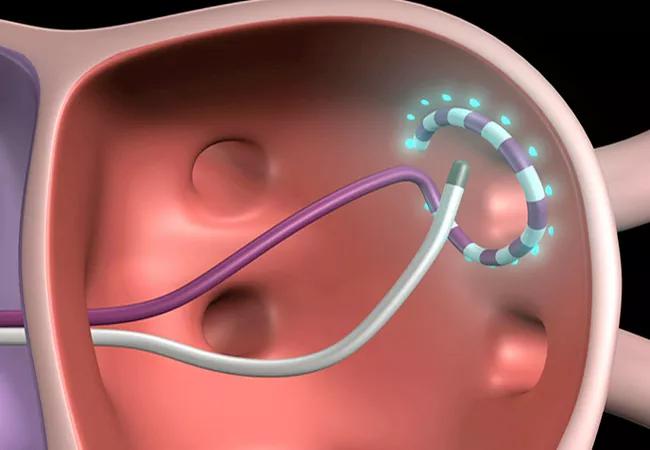
Image content: This image is available to view online.
View image online (https://assets.clevelandclinic.org/transform/426aa49d-9150-437e-8ef7-b588b561cff3/17-HRT-3382-HRS-CQD_jpg)
Insights from 15 Years of Afib Ablation: Volume-Based Experience Counts
Ongoing efforts to better understand atrial fibrillation (AF) and minimize the complications associated with AF ablation are paying off, as illustrated by two Cleveland Clinic studies presented at Heart Rhythm 2017, the Heart Rhythm Society’s 2017 annual scientific sessions in Chicago.
Advertisement
Cleveland Clinic is a non-profit academic medical center. Advertising on our site helps support our mission. We do not endorse non-Cleveland Clinic products or services. Policy
One investigation revealed that pulmonary vein reconnections are still observed in 81 percent of patients who undergo repeat ablation after having enjoyed long-term freedom from arrhythmia following an initial ablation.
The second study showed that when ablation is performed at a high-volume center, the occurrence of pericardial effusion with cardiac tamponade is rare and outcomes can be excellent.
Both studies drew on a prospectively maintained Cleveland Clinic data registry, analyzing outcomes of 10,378 patients who underwent AF ablation at the institution from 2000 to 2015.
“These studies of our experience with a large volume of patients show it is possible to achieve improved outcomes and decrease complication rates,” says Cleveland Clinic electrophysiologist Ayman Hussein, MD, who presented the studies.
The first investigation examined 137 consecutive patients who had initially enjoyed freedom from AF for more than 36 months after ablation before undergoing repeat ablation for recurrent AF. Their median arrhythmia-free period was 52 months (range, 41-68) and had been achieved following one, two or three ablations.
In the redo ablations, reconnections along at least one of the pulmonary veins were found in 81 percent of patients. Additional ablations were performed at the veins, as well as in the substrate, as deemed necessary. After a median follow-up of 17 months, 75.2 percent of patients were arrhythmia-free (17.5 percent on antiarrhythmic medications).
Venous conduction recovery in most patients who had initially done well for years was a surprise, says Dr. Hussein. “When patients achieve long-term success with AF ablation, it’s reasonable to think they have well-isolated veins, but this was not the case,” he notes. “Fortunately, we were able to show that these patients benefit from redo ablations.”
Advertisement
The finding leads to questions such as how quickly pulmonary vein reconnections develop after ablation. Cleveland Clinic is designing multiple studies to better elucidate AF and identify the mechanisms that lead to persistent arrhythmias. “We hope to achieve more durable pulmonary vein ablations,” says Dr. Hussein.
Pericardial effusion resulting in cardiac tamponade is a potentially fatal complication that’s been reported to occur in approximately 1.3 percent of ablations in a worldwide survey (Circ Arrhythm Electrophysiol. 2010;3:32-38). Furthermore, data from the Nationwide Inpatient Sample have suggested an increasing trend in pericardial complications with AF ablation in the United States (Circulation. 2013;128:2104-2112).
In contrast, cardiac tamponade occurred in only 0.5 percent of the AF ablation cases (57 of 10,378) at Cleveland Clinic from 2000 to 2015, Dr. Hussein reported in his second presentation at Heart Rhythm 2017. Moreover, the incidence trended downward at the end of the study period.
All 57 patients who experienced cardiac tamponade required emergent pericardiocentesis, but only seven required emergent surgical repair for cardiac perforation. None had bleeding complications from the repair. Two patients suffered a cardiac arrest and were successfully resuscitated. Three months after the procedure, all patients had recovered well, with no long-term disability or surgery-related complications. There were no procedure-related deaths or strokes.
Dr. Hussein explains that all ablations at Cleveland Clinic are performed with anticoagulation for stroke protection. Although this increases the risk of serious bleeding or pericardial effusion, these results suggest that this risk can be minimized and appears to be outweighed by the benefits of stroke prevention.
Advertisement
“We were among the first centers to introduce ablation with blood thinners on board and demonstrate its feasibility,” he says. “We saw a clear and significant decrease in ablation-related stroke rates due to certain anticoagulation protocols we adopted over the 15-year study period. The incidence from 2007 to 2015 was 0.1 percent.”
In more than 15 years of performing AF ablation on more than 10,000 patients, Cleveland Clinic has treated many highly complex cases, including patients with persistent AF or multiple recurrences of AF after failed ablation, without incurring a single death.
Whether other centers should expect to achieve similar outcomes may depend on experience.
“Because our outcomes run counter to the trend toward higher complication rates, we feel those higher rates are primarily associated with centers and operators doing a lower volume of procedures,” says Dr. Hussein. “These are complex interventions. The risk of complications is low, but you still need proper surgical backup for when they do occur.”
Advertisement
Advertisement

A sampling of outcome and volume data from our Heart & Vascular Institute
Concomitant AF ablation and LAA occlusion strongly endorsed during elective heart surgery
Large retrospective study supports its addition to BAV repair toolbox at expert centers
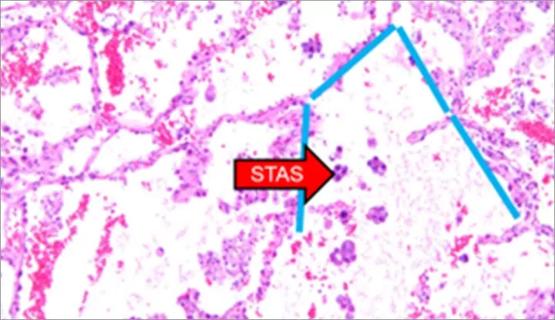
Young age, solid tumor, high uptake on PET and KRAS mutation signal risk, suggest need for lobectomy
Surprise findings argue for caution about testosterone use in men at risk for fracture
Residual AR related to severe preoperative AR increases risk of progression, need for reoperation

Findings support emphasis on markers of frailty related to, but not dependent on, age
Provides option for patients previously deemed anatomically unsuitable
 Search