Locations:





Nurse-led project leads to improved bedside handoff
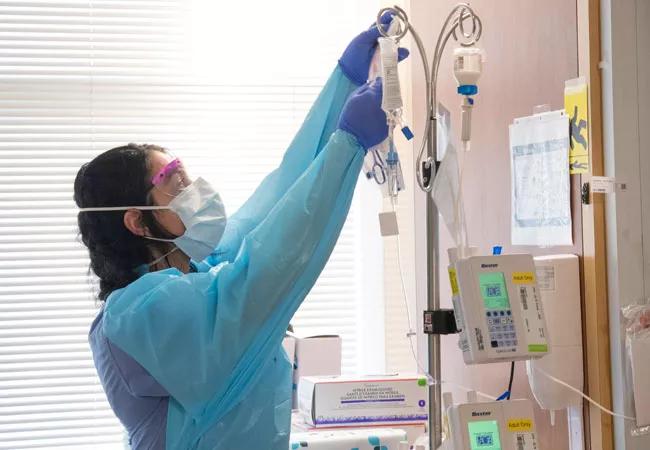
Image content: This image is available to view online.
View image online (https://assets.clevelandclinic.org/transform/b00fe755-5bd8-43c1-bbed-ef1dbb531496/20-NUR-2005270-MostCrucialHourOfDay-CQD_650x450_jpg)
20-NUR-2005270-MostCrucialHourOfDay-CQD_650x450
Change of shift can be a chaotic time for the busy 36-bed internal medicine/telemetry unit at Cleveland Clinic’s main campus. To help create a smoother transition, three nurses on the unit undertook a project to improve the change of shift process.
Advertisement
Cleveland Clinic is a non-profit academic medical center. Advertising on our site helps support our mission. We do not endorse non-Cleveland Clinic products or services. Policy
“Our goal was to reduce the stress that oncoming nurses and patient care nursing assistants (PCNAs) feel during change of shift so they could get started with their day and not play catch-up from the prior shift,” says Patrick Griffith, BSN, RN, CMSRN, Assistant Nurse Manager on the internal medicine/telemetry unit.
Griffith teamed with Clinical Nurses Paul Yeager, BSN, RN, CMSRN, and Rebecca Callahan, BSN, RN, CMSRN, to develop the “Most Crucial Hour of the Day” project. The goal is to promote compliance with bedside reporting, improve caregiver satisfaction and decrease the potential for patient safety concerns.
The nurses launched the project in April 2019, beginning with two information gathering activities – a caregiver survey and room audits. They sent an email survey to all nurses and PCNAs on the unit to obtain their baseline level of satisfaction with room readiness at the beginning of shift change. Some of the questions on the short survey included the following:
Caregivers answered the questions using a Likert scale, responding with always, very often, sometimes, rarely or never. Overall, nurses indicated a high level of stress and potential burnout.
Advertisement
During initial room audits, Griffith, Yeager, Callahan and Clinical Nurse Specialist Dianna Copley, MSN, APRN, ACCNC-AG, CCRN, who served as a mentor on the project, examined patient rooms prior to change of shift “to ensure the room was set up the way we expect it to be and to look for any underlying issues that we could address with our project,” says Griffith. For instance, they checked to see if IV bags were running low and water pitchers needed to be filled. The audits revealed only 20% of rooms were adequately prepared for change of shift.
After collecting data, Griffith and his peers created the Most Crucial Hour of the Day initiative with Copley’s guidance. The initiative focused on strategic rounding with the aid of a checklist to help caregivers prepare the room and patient for shift-change reports. The checklist, divided by responsibilities for registered nurses and PCNAs, included more than 20 tasks, such as:
Advertisement
After the team educated nurses on the reason for and components of the initiative via email, printed material and a PowerPoint presentation, nurses began strategically rounding on patients in May 2019 during “the most crucial hours” – from 6 a.m. to 7 a.m. for night nurses and from 6 p.m. to 7 p.m. for day shift nurses.
At change of shift, the outgoing and incoming clinical nurses review the checklist, and the incoming nurse signs off that all tasks have been completed. If tasks were missed, the outgoing caregiver completes them before leaving.
Griffith and Yeager performed weekly room preparedness audits for 12 weeks after initiation of strategic rounding. In addition, they sent a post-project survey to nurses asking the same questions as the initial survey. “We had quite a bit of improvement on the room being prepared, as well as caregiver satisfaction, which in turn increased patient satisfaction,” says Yeager. “The two often go hand-in-hand.”
During the five weeks following education and implementation of the project, audits revealed 71% caregiver compliance with room preparedness before bedside handoff, an increase of 51% from pre-intervention audits. The post-intervention survey revealed these two improvements, among others:
Advertisement
In addition, the link to enhanced patient safety was shown anecdotally. The internal medicine/telemetry unit at a zero fall rate during the intervention period. Future projects should focus on identifying if improvement in bedside report is correlated to reduction in falls.
A poster presentation of the project was featured at the Academy of Medical-Surgical Nurses 2020 Virtual Convention in October. “The benefits of bedside rounding have been proven in literature and in our study,” says Griffith. “There are positive correlations for caregivers and for patient outcomes.”
Advertisement
Advertisement

Nurses play key role in comprehensive lifetime treatment program
Customized bots improve speed, efficiency by streamlining daily clinical, clerical tasks
Nurses play pivotal role in patients’ ability to recover in the comfort of their own homes
New protocol reduces costs, increases patient and caregiver satisfaction

Advocating for patient safety is imperative in fast-paced surgical settings

M-Power program improves the perinatal experience for people who have survived abuse

Advice for those pursuing a WOC nursing career

Veteran nurse shares his experience as a caregiver and community volunteer
 Search