Locations:





Analysis pinpoints key window for addiction intervention
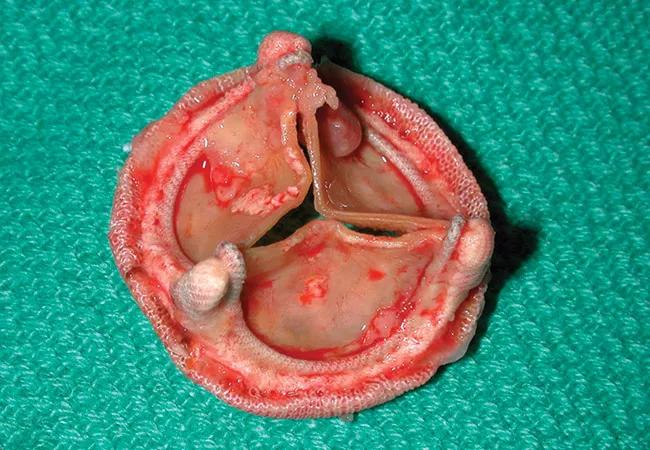
Image content: This image is available to view online.
View image online (https://assets.clevelandclinic.org/transform/c4615ce7-7c6b-4f17-89d6-a2873518f131/15-HRT-2410-IE-in-Drug-Users-CQD_jpg)
infective endocarditis
Patients with infective endocarditis (IE) who inject drugs are nearly 10 times more likely than those who don’t inject drugs to experience an IE recurrence within three to six months of surgical intervention for IE. So finds a recent retrospective cohort analysis of IE patients treated at Cleveland Clinic over a five-year period. The study was published in Annals of Thoracic Surgery.
Advertisement
Cleveland Clinic is a non-profit academic medical center. Advertising on our site helps support our mission. We do not endorse non-Cleveland Clinic products or services. Policy
“Physicians appreciate the fact that patients with injection-drug use are at higher risk for developing infective endocarditis at any time,” says the study’s lead author, Nabin Shrestha, MD, of Cleveland Clinic’s Department of Infectious Disease. “This study shows that for patients who undergo surgery, there is a period of very high risk within six months after surgery.”
In fact, Dr. Shrestha advises physicians to begin addiction treatment for appropriate patients as soon as possible after surgery for IE. Waiting until after treatment for IE is complete will often end up being too late, he says.
Dr. Shrestha and colleagues from Cleveland Clinic’s Miller Family Heart & Vascular Institute and Department of Infectious Disease initiated their analysis after they observed a growing incidence of IE patients who were injection-drug users in their practices. They reviewed the records of 536 patients who underwent surgery for IE at Cleveland Clinic for the first time from July 2007 to July 2012.
Of the 536 patients, 41 (8 percent) injected drugs. The researchers found that these patients had a much higher risk of another episode of IE — resulting in reoperation or death — between three and six months after surgery compared with the patients who did not inject drugs. The risk elevation was nearly tenfold (hazard ratio = 9.8 [95% CI, 2.7 to 35.3]) during this period, yet it was not statistically significant either before postoperative month 3 or after postoperative month 6.
“What makes this study unique is the identification of a specific time window of very high risk,” Dr. Shrestha notes. “This allows for planning interventions that might make a difference.”
Advertisement
When an IE patient with injection-drug use comes to Cleveland Clinic for IE treatment, Dr. Shrestha and his colleagues begin exploring post-discharge addiction treatment options early on. Yet many obstacles thwart these urgent efforts. “Unfortunately, we are still unable to make satisfactory addiction treatment arrangements in the majority of patients,” he says.
In an invited commentary on the study in Annals of Thoracic Surgery, Gabriel S. Aldea, MD, of the University of Washington School of Medicine, stresses that this addiction treatment challenge is not an isolated institutional failure but rather a systemic national issue caused by a structural disconnect between healthcare and social services.
Dr. Aldea writes, “Until urgent surgical care of IE is recognized as a critical but merely initial component of a mandatory continuum of therapy that is linked and fully coordinated to urgent addiction therapy, these sobering and disappointing long-term results are unlikely to improve.”
Dr. Shrestha sees widespread challenges to addiction treatment. Most patients with IE who inject drugs are uninsured or underinsured and do not have the financial means to obtain adequate treatment. Many also lack social support, often as a result of poor choices they have made.
Meanwhile, the United States faces a shortage of addiction treatment specialists. “There too few such specialists to take care of the increasing numbers of heroin addicts,” Dr. Shrestha observes, “and they are often at the upper limit of patients to whom they can legally provide opioid replacement therapy.”
These challenges leave many patients’ addiction untreated.
Advertisement
“Most patients with injection-drug use who develop infective endocarditis receive state-of-the-art medical and surgical care,” Dr. Shrestha says. “The bigger problem is the addiction. We don’t have a satisfactory solution for that problem.”
Advertisement
Advertisement

A sampling of outcome and volume data from our Heart & Vascular Institute

Concomitant AF ablation and LAA occlusion strongly endorsed during elective heart surgery

Large retrospective study supports its addition to BAV repair toolbox at expert centers

Young age, solid tumor, high uptake on PET and KRAS mutation signal risk, suggest need for lobectomy

Surprise findings argue for caution about testosterone use in men at risk for fracture

Residual AR related to severe preoperative AR increases risk of progression, need for reoperation

Findings support emphasis on markers of frailty related to, but not dependent on, age

Provides option for patients previously deemed anatomically unsuitable
 Search