Locations:





Technique reduces blood requirements and helps normalize coagulation levels
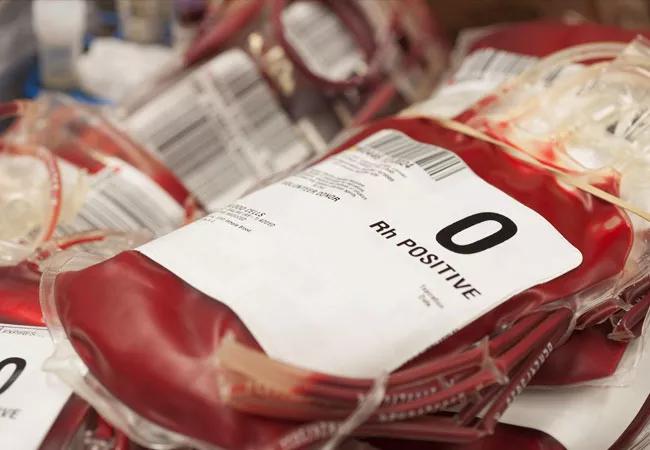
Image content: This image is available to view online.
View image online (https://assets.clevelandclinic.org/transform/48a25248-2707-4c94-a690-cbce1655692c/21-HVI-2255659_blood-transfusion_650x450_jpg)
21-HVI-2255659_blood-transfusion_650x450
Acute normovolemic hemodilution (ANH) in patients undergoing open abdominal aortic aneurysm (AAA) repair appears to reduce intra- and postoperative blood transfusion requirements, help normalize coagulation parameters and decrease hospital stay.
Advertisement
Cleveland Clinic is a non-profit academic medical center. Advertising on our site helps support our mission. We do not endorse non-Cleveland Clinic products or services. Policy
According to a retrospective review of Cleveland Clinic patients published in the Journal of Vascular Surgery, ANH — a blood conservation technique that involves controlled collection and storage of patients’ whole blood shortly after induction of anesthesia — may be an improvement over standard transfusion practices for open surgical management of AAA. The technique is accompanied by intravenous infusions of crystalloids or colloids to maintain intravascular volume.
“Although acute normovolemic hemodilution has been well studied in cardiac surgery and neurosurgery, and briefly studied in a mixed cohort of vascular surgery populations, data on the technique’s utility specifically in open AAA repair are limited,” says study co-author Jarrad Rowse, MD, of Cleveland Clinic’s Department of Vascular Surgery. He notes that this study appears to be the first to evaluate the effect of ANH on use of intra- and postoperative fluids, blood components and colloids as well as its effect on coagulation function in the AAA population.
“The development of techniques designed to reduce blood loss in surgical patients continues to be a high priority, as the long-term sequelae of allogeneic blood transfusion are an ongoing source of clinical concern,” adds study co-author Jia Lin, MD, PhD, a cardiothoracic anesthesiologist at Cleveland Clinic. “However, new research shows that fewer red cells and other critical elements are lost when acute normovolemic hemodilution is employed — a benefit that can help patients maintain acceptable hematocrit levels and obviate the need for further intervention in patients undergoing open AAA repair.”
Advertisement
The study reviewed all 209 patients who underwent elective open AAA repair at Cleveland Clinic from 2017 to 2019. Among these, the researchers identified those who were eligible for ANH and had a hematocrit > 38%, normal ventricular function, a normal coagulation profile, and absence of cardiac ischemia, valvular disease and late-stage chronic kidney disease. Of the 76 patients who met these inclusion criteria, 27 were managed with ANH and 49 with standard transfusion practices.
Comparison of the ANH and standard transfusion groups revealed the following:
“These retrospective data show that acute normovolemic hemodilution in the setting of open AAA repair reduced intra- and postoperative transfusion requirements while improving platelet counts and INRs at 48 hours and shortening patients’ length of stay,” observes Dr. Rowse. “The fact that patients undergoing this technique showed improved postoperative coagulation parameters and significantly shorter length of stay is encouraging, as both of these are known to improve clinical outcomes.”
Advertisement
The authors write that these findings can help inform the design of a prospective randomized trial and that a multivariate analysis may provide further insights as more Cleveland Clinic patients undergo ANH. Ultimately, they note, a larger prospective investigation is needed to fully confirm the promise of ANH as a favorable blood conservation strategy for patients undergoing open AAA repair.
Advertisement
Advertisement
A sampling of outcome and volume data from our Heart & Vascular Institute
Concomitant AF ablation and LAA occlusion strongly endorsed during elective heart surgery
Large retrospective study supports its addition to BAV repair toolbox at expert centers
Young age, solid tumor, high uptake on PET and KRAS mutation signal risk, suggest need for lobectomy
Surprise findings argue for caution about testosterone use in men at risk for fracture
Residual AR related to severe preoperative AR increases risk of progression, need for reoperation

Findings support emphasis on markers of frailty related to, but not dependent on, age
Provides option for patients previously deemed anatomically unsuitable
 Search