Locations:





ACHA accreditation recognizes programs meeting broad needs of a unique population
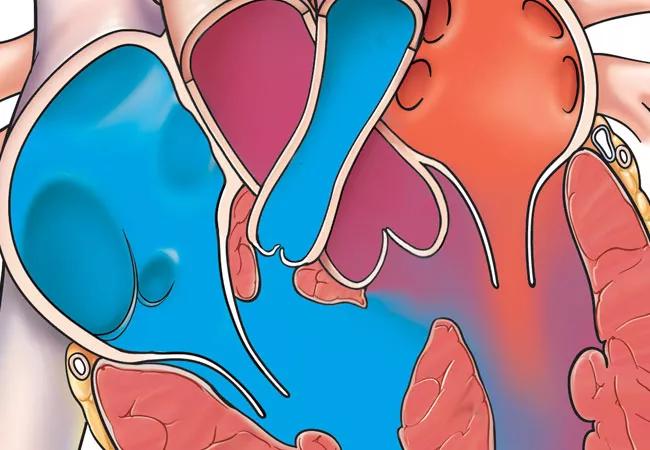
Image content: This image is available to view online.
View image online (https://assets.clevelandclinic.org/transform/95500dd8-1955-4a7d-9f60-413731e3d3fe/19-HRT-3920_tetralogy-of-Fallot-650x450_jpg)
19-HRT-3920_tetralogy of Fallot-650×450
After an extensive two-year application process, Cleveland Clinic’s Adult Congenital Heart Disease (ACHD) Center has been designated an ACHD Accredited Comprehensive Care Center by the Adult Congenital Heart Association (ACHA).
Advertisement
Cleveland Clinic is a non-profit academic medical center. Advertising on our site helps support our mission. We do not endorse non-Cleveland Clinic products or services. Policy
The accreditation, launched in September 2017 and held by a limited number of programs nationwide, serves to assure patients and providers that Cleveland Clinic has the infrastructure, personnel and programs necessary to provide every aspect of care needed by CHD patients of all ages.
“Adults make up one-third of our large case volume in CHD,” says Cleveland Clinic congenital heart surgeon Tara Karamlou, MD, MSc. “The ACHA’s Comprehensive Care Center accreditation underscores our commitment to providing coordinated and longitudinal care for these patients for life.”
An estimated 4 million Americans are living with CHD. Today, 95% of the 20,000 to 30,000 babies born every year with CHD survive, but the U.S. healthcare system has not sufficiently evolved to manage the burden of this disease.
“Patients with CHD treated in a freestanding children’s hospital may be cared for by highly engaged pediatric cardiologists and pediatric cardiac surgeons, but when they turn 18, they are usually forced to change providers,” explains Dr. Karamlou. “Many adult-care providers have limited knowledge about managing patients with CHD and may not understand how serious their lesions can be.”
As a result, many patients who have undergone corrective surgery as infants or young children are lost to follow-up. “They are often unaware of the need for continued close monitoring to ensure that any problem that may develop gets addressed before it’s too late,” Dr. Karamlou says.
Cleveland Clinic’s ACHD Center has been thriving for years, but its physicians felt that obtaining the ACHA designation would serve to reinforce the program’s comprehensiveness.
Advertisement
“Our team of board-certified adult congenital cardiologists and congenital heart surgeons provides surveillance, clinical care, surgery, catheter interventions and multimodality imaging using the newest equipment and techniques,” says Joanna Ghobrial, MD, MSc, Cleveland Clinic’s adult congenital interventional cardiologist. “Patients don’t need to go elsewhere for any aspect of their CHD care.”
That focus on comprehensiveness means welcoming the most complex patients. “We are very comfortable treating patients who have failed multiple prior surgeries — and who may have been told that there are no options left,” says Dr. Karamlou.
To continue meeting the needs of this growing patient population, Cleveland Clinic plans to soon add two new ACHD specialists to its staff: one imaging specialist and one focused on clinical care, research and education.
The subspecialty is a popular choice among cardiology fellows. The Accreditation Council for Graduate Medical Education offers subspecialty accreditation in ACHD, and Cleveland Clinic will soon start offering an ACHD fellowship to help train future ACHD physicians as demand for this specialized care continues to rise.
On a daily basis, Drs. Ghobrial and Karamlou see ACHD patients with advanced complications that could have been avoided with earlier intervention. They are dedicated to helping their colleagues everywhere learn how to evaluate patients with ACHD.
“We cannot emphasize strongly enough the importance of lifelong surveillance in this population,” says Dr. Ghobrial. “Even if you are a cardiovascular provider who feels comfortable caring for these patients, it is important for an ACHD expert to lay eyes on these patients periodically to ensure they are getting the care they need.”
Advertisement
She adds that it’s key to recognize that some forms of CHD are particularly complex and should unquestionably be referred to an ACHD specialist. “For instance, bicuspid aortic valves may be managed by some adult cardiologists,” she says, “but patients with moderate- or high-complexity conditions such as tetralogy of Fallot should be referred to an ACHD expert.”
Advertisement
Advertisement
A sampling of outcome and volume data from our Heart & Vascular Institute
Concomitant AF ablation and LAA occlusion strongly endorsed during elective heart surgery
Large retrospective study supports its addition to BAV repair toolbox at expert centers
Young age, solid tumor, high uptake on PET and KRAS mutation signal risk, suggest need for lobectomy
Surprise findings argue for caution about testosterone use in men at risk for fracture
Residual AR related to severe preoperative AR increases risk of progression, need for reoperation
Findings support emphasis on markers of frailty related to, but not dependent on, age
Provides option for patients previously deemed anatomically unsuitable
 Search