Locations:





Presentation in an 87-year-old woman
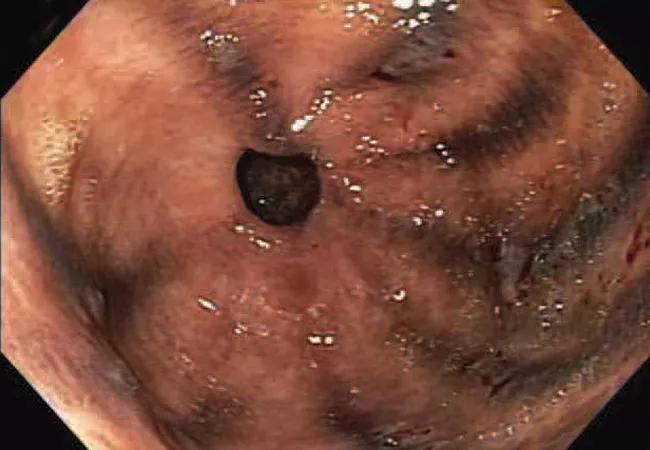
Image content: This image is available to view online.
View image online (https://assets.clevelandclinic.org/transform/fe70bf28-32e4-4850-bdc2-ae86382f04a0/17-DDI-3293-Images-of-Note-CQD-Hero_jpg)
17-DDI-3293-Images-of-Note-CQD-Hero
By Neal Mehta, MD; Syed Rizwan Ali, MD; Jennifer Jeung, MD; Priya Kalahasti, MD; John Vargo, MD, MPH; and Amit Bhatt, MD
Advertisement
Cleveland Clinic is a non-profit academic medical center. Advertising on our site helps support our mission. We do not endorse non-Cleveland Clinic products or services. Policy
An 87-year-old woman with a history of gastroesophageal reflux disease and end-stage renal disease secondary to hypertension underwent an esophagogastroduodenoscopy (EGD) for surveillance of a duodenal polyp that had been endoscopically removed 1 year previously. The gastric antrum had appeared normal at the time of the original EGD. She was on iron therapy for anemia related to the kidney disease. Surveillance EGD revealed striped black pigmentation to the antrum of the stomach (a), in a pattern similar to that seen in gastric antral vascular ectasia (GAVE), and pigmented changes in the duodenum consistent with pseudomelanosis duodeni. Biopsy specimens were obtained from the antrum of the stomach. Histopathology revealed macrophages in the lamina propria with brown-black cytoplasmic pigment (b) that was partially positive by Prussian blue iron stain and positive by Fontana — Masson stain, with subsequent negativity after bleaching. These findings are characteristic of pseudomelanosis. In addition, there were extracellular coarse crystalline brown deposits within the superficial mucosa and luminal space that were positive for iron on Prussian blue stain (c), consistent with iron pill gastritis. The striped black pigmented appearance of the stomach was due to a combination of gastric pseudomelanosis and iron pill gastritis. (Informed consent was obtained from the patient to publish these images.)
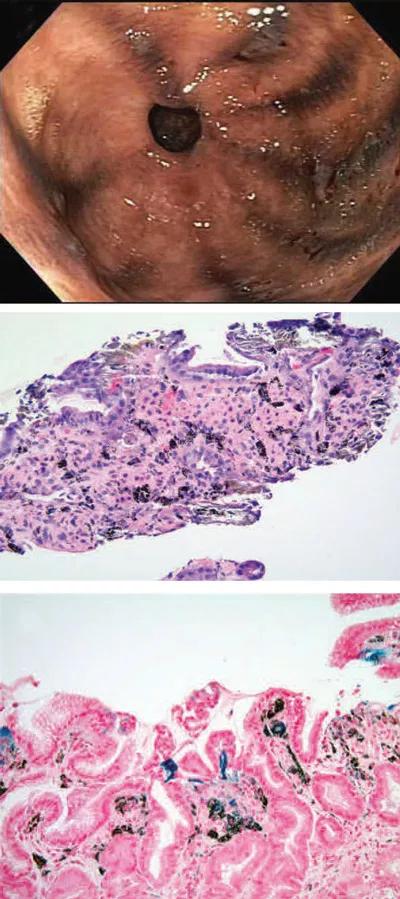
Image content: This image is available to view online.
View image online (https://assets.clevelandclinic.org/transform/d345814a-8843-4bf3-b92e-f0d62a0224e6/17-DDI-3293-Images-of-Note-CQD-inset_jpg)
This article first appeared in the American Journal of Gastroenterology
Advertisement
Advertisement

Strong patient communication can help clinicians choose the best treatment option

ctDNA should be incorporated into care to help stratify risk pre-operatively and for post-operative surveillance

The importance of raising awareness and taking steps to mitigate these occurrences

New research indicates feasibility and helps identify which patients could benefit

Treating a patient after a complicated hernia repair led to surgical complications and chronic pain
Standardized and collaborative care improves liver transplantations

Fewer incisions and more control for surgeons

Caregiver collaboration and patient education remain critical
 Search