Locations:





A Q&A with Drs. Hashimoto and Kwon
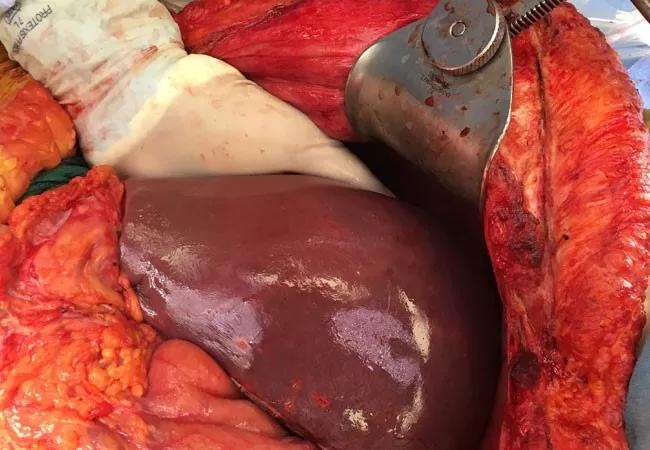
Image content: This image is available to view online.
View image online (https://assets.clevelandclinic.org/transform/962c0dab-6583-4e92-98c3-d2daa9813901/liver_jpg)
liver
With 14,000 people on the waitlist in the U.S., it may take years to get a lifesaving liver transplant. This is why expansion of living donor liver transplant (LDLT) capabilities is so critical.
Advertisement
Cleveland Clinic is a non-profit academic medical center. Advertising on our site helps support our mission. We do not endorse non-Cleveland Clinic products or services. Policy
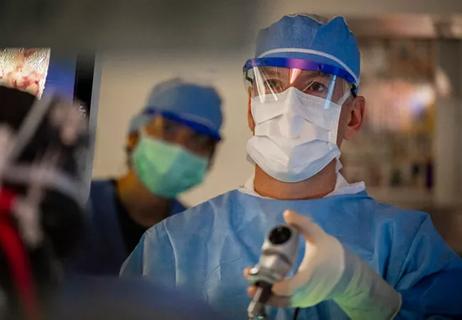
World-renowned transplant surgeon David Kwon, MD, recently joined Cleveland Clinic’s Digestive Disease & Surgery Institute as Director of Laparoscopic Liver Surgery. He and Koji Hashimoto, MD, PhD, Director of Living Donor Liver Transplantation, discuss what Dr. Kwon’s arrival means for Cleveland Clinic’s LDLT program.
Q: Dr. Kwon’s arrival has been much-anticipated. Why is his addition to the program critical to expanding LDLT services?
Dr. Hashimoto: It’s important to first understand that people waiting for liver transplants are struggling with many complications of liver disease, including hepatic encephalopathy, ascites, muscle loss and variceal bleeding. These complications, however, do not increase priority for deceased donor liver transplant. We want to give these people a better quality of life and the chance to survive.
Nationally, a significant proportion (15 to 20 percent) of patients die or become untransplantable prior to a suitable donor organ being identified. At Cleveland Clinic, we also see such tragic rates and are striving to reduce the waiting time through expanded LDLT services.
We wanted to add Dr. Kwon’s expertise to our team. He is not only a brilliant LDLT surgeon, he is also a pioneer in laparoscopic liver resection, which will help us expand our capabilities. Dr. Kwon was the first person in the world to perform a live demonstration of laparoscopic LDLT and is one of the key surgeons extending the reach of this new technique.
Our goal is to increase the use of LDLT and ultimately make the waiting list mortality zero. By having Dr. Kwon here, we expect we will significantly increase our volume of LDLT cases.
Advertisement
Q: Why do you think the timing is right for an expansion of laparoscopic LDLT services and what type of growth do you think is possible?
Dr. Kwon: Despite the continuous effort to meet the demands of the patients on the waitlist for deceased donors, so many patients are still dying while waiting for an organ donor. This is true throughout the United States, but is particularly the case in certain regions, including Ohio.
Throughout my career, I had opportunities to develop expertise in both living donor liver transplantation and minimally invasive liver resection. In 2013, I was able to fuse these two areas of interest together and create a laparoscopic program for donors offering their livers for living donor liver transplantation. This program was the first of its kind, and I helped it grow to one of the largest laparoscopic liver transplantation centers for adults and children in the world.
At Cleveland Clinic, I will be augmenting an already strong LDLT program by applying my expertise of laparoscopy, and then building a laparoscopic program for donors. I have experienced the huge impact the laparoscopic approach has on the lives of donors and their families, and I would like to offer this service to Cleveland Clinic patients in need of liver transplantation.
Q: Why hasn’t laparoscopic LDLT grown as quickly in the U.S. as in other places?
Dr. Kwon: Laparoscopic donor liver resection is one of the most complex operations using laparoscopy — the pinnacle of laparoscopic liver resection. It not only requires an expertise in living donor liver transplantation, but also extensive experience in advanced laparoscopic technique, which very few surgeons have been able to acquire.
Advertisement
But there are many benefits of minimally invasive surgery to the donor when done properly — much less pain and medication, less bleeding and complication, cosmetically gratifying scarring (the incision is formed below the bikini line) and quicker recovery to normal life. Donors can be out of the hospital two to three days earlier, and can even start playing golf in a month.
The application of laparoscopic approach in living donor kidney transplantation has played a big role in increasing the donation rate of live donors due to its less invasive nature. I believe the time is ripe for a successful expansion of living donors in liver transplantation.
Advertisement
Advertisement

Strong patient communication can help clinicians choose the best treatment option
ctDNA should be incorporated into care to help stratify risk pre-operatively and for post-operative surveillance

The importance of raising awareness and taking steps to mitigate these occurrences
New research indicates feasibility and helps identify which patients could benefit

Treating a patient after a complicated hernia repair led to surgical complications and chronic pain
Standardized and collaborative care improves liver transplantations
Fewer incisions and more control for surgeons

Caregiver collaboration and patient education remain critical
 Search