Locations:





Decade-long analysis compares effects between U.S. and English leagues
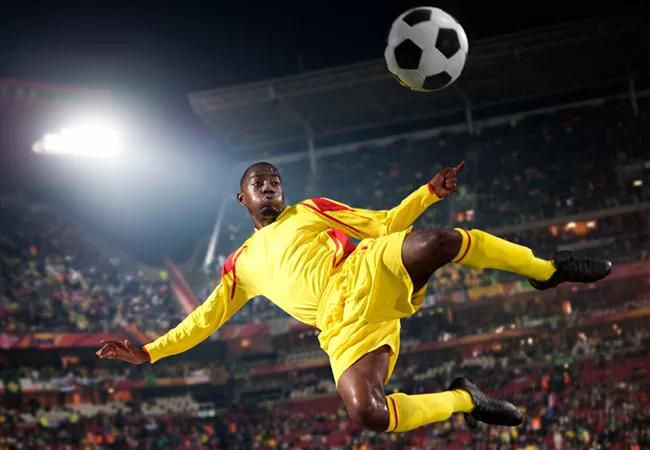
Image content: This image is available to view online.
View image online (https://assets.clevelandclinic.org/transform/32595db5-2d5c-475b-ad5e-d6fd2e0f97d2/19-ORT-1187-Soccer-Concussion-CQD_jpg)
19-ORT-1187-Soccer-Concussion-CQD
The incidence of sports-related concussions (SRC) has increased in both American and European professional soccer leagues over the last decade. While both leagues report comparable data on SRC, the U.S.’s Major League Soccer (MLS) provides a longer recovery period for concussed players than the English Premier League (EPL). This difference may have implications linked to player safety and performance, according to a recent study published in the American Journal of Sports Medicineby surgeons from Cleveland Clinic and the Hospital for Special Surgery.
Advertisement
Cleveland Clinic is a non-profit academic medical center. Advertising on our site helps support our mission. We do not endorse non-Cleveland Clinic products or services. Policy
The research team examined contracts, transactions, injury reports and performance statistics from 2008 to 2017 on athletes in MLS and EPL to establish incidence rates, return-to-play (RTP) intervals, performance and career longevity associated with SRC. The analysis included 102 MLS players and 124 EPL players, who sustained 165 and 142 concussions, respectively.
The study, led by Prem Ramkumar, MD, MBA, a fourth-year resident in Cleveland Clinic’s Department of Orthopaedic Surgery, reveals the radically different approaches the leagues take to address SRC.
Players with MLS, which enforces a more conservative RTP policy, returned approximately 26 days after the injury. These players missed a mean of 7.3 games (37.0 days), while EPL players missed a mean of 0.6 (10.9 days).
“Our findings underscore that, despite an international consensus statement on how to manage concussions, not everyone is following these guidelines in the global soccer community,” notes Dr. Ramkumar. “While the reasons for this mixed enforcement were not specifically studied, it’s causing a drop in on-field performance for English Premier League players who may not be receiving sufficient convalescence.”
The study also indicates that MLS players have sustained, on average, more concussions than EPL players, although the discrepancy was not statistically significant. Publicly reported concussions in the MLS and EPL were 20.22 and 18.68, respectively (P = .53), per 1,000 athlete exposures for each newly reported concussion per year, and adjusted for the total number of teams and games in MLS (24 teams, 34 games) and EPL (20 teams, 38-game seasons).
Advertisement
Dr. Ramkumar says this might be emblematic of increased education and awareness around SRC in the U.S.
“There is arguably more of a national conversation happening in the U.S. about sports-related concussions, which might account for the increased incidence,” he says. “Additionally, the diagnosis of a concussion is more nebulous than other injuries, such as a fracture, and players are not financially or competitively incentivized to declare their symptoms.”
And the same theory may explain why the incidence rate has steadily increased in the past decade for both leagues. During the 2008-2012 seasons, these numbers were much lower, at 15.44 and 14.21, and increased to 25.00 and 23.20 for the 2013-2017 seasons.
Performance was also linked to RTP, the data revealed. On average per year, EPL players who were treated for SRC had 0.5 fewer assists, started in 5.2 fewer games, had 3.5 fewer shots on goal and took 8.2 fewer total shots than their non-concussed teammates. In contrast, the MLS players who returned to play from concussion later than their EPL counterparts experienced no significant decline in performance. Career longevity among concussed players in both leagues was also studied, but no discernible difference was revealed.
With an estimated 4 billion fans globally, soccer is the world’s most popular sport; however, relatively little is known about the long-term effects of SRC in professional soccer.
And this is a problem. Prior studies indicate that SRC in professional soccer may lead to the onset of neurological diseases, including amyotrophic lateral sclerosis.
Advertisement
Other studies reveal that professional athletes who have had four or five concussions throughout their career had an increased risk of developing depression, anxiety, sleep disorders and substance abuse issues.
What is known is that professional athletes are likely to willfully ignore concussion-related symptoms — either because of perceived lack of severity or to avoid removal from the game, according to Delaney et al.
Lutul D. Farrow, MD, an orthopaedic surgeon in the Cleveland Clinic Orthopaedic & Rheumatologic Institute and member of Cleveland Clinic Sports Health, notes that no treatment — or substantial delay in treatment — can be dangerous for players. Standard management after concussion includes rest and neurological evaluation.
“There is significant pressure for professional athletes who are concussed to immediately return to play, and little continuity across leagues in terms of how to address this,” says Dr. Farrow. “The result is increasing disparities in how concussions are handled internationally.”
The Concussions in Sports Group has released international recommendations to address this high variability and advocates for a conservative approach like the one adopted by MLS. But there is much discrepancy in how RTP guidelines are interpreted and applied — even across professional sports leagues in the U.S.
“As researchers, clinicians, and surgeons in sports medicine, we have a responsibility to lead initiatives that protect and promote the health of athletes — in the U.S. and around the world,” says Dr. Farrow.
Advertisement
The study was not able to control for comorbidities or other injuries players incurred. It was also not able to account for player position on the field, although the dataset was predominantly non-goalies. The researchers utilized publicly available injury data from both leagues, but note that a comprehensive injury database, like what is used by Major League Baseball, could improve future studies and help raise awareness.
“While more research is needed, we believe we have established meaningful metrics and identified a major discrepancy in the management of international sports medicine,” says Dr. Ramkumar.
Advertisement
Advertisement
Biologic approaches, growing implants and more

Study reports zero infections in nearly 300 patients
How to diagnose and treat crystalline arthropathy after knee replacement
Study finds that fracture and infection are rare

Center will coordinate, interpret and archive imaging data for all multicenter trials conducted by the foundation’s Osteoarthritis Clinical Trial Network

Reduced narcotic use is the latest on the list of robotic surgery advantages

Cleveland Clinic specialists offer annual refresher on upper extremity fundamentals

Cleveland Clinic orthopaedic surgeons share their best tips, most challenging cases and biggest misperceptions
 Search