Locations:





New program is all about shifting the power in pain management
Too often patients with chronic pain can be exceedingly passive, expecting their healthcare providers to be the main actors in “fixing” their pain. In the case of chronic low back pain, the result can sometimes be unneeded — and potentially harmful — prescriptions or spine injections, and occasionally even inappropriate and irreversible spine surgery.
Advertisement
Cleveland Clinic is a non-profit academic medical center. Advertising on our site helps support our mission. We do not endorse non-Cleveland Clinic products or services. Policy
Cleveland Clinic’s Neurological Institute is attempting to turn that dynamic on its head through a population health initiative for chronic low back pain that’s centered on the concept of empowering patients to take the lead in caring for their pain themselves. Spine neurosurgeon Edward Benzel, MD, who is directing the interdisciplinary initiative, explains the concept in this two-and-a-half-minute video.
Video content: This video is available to watch online.
View video online (https://www.youtube.com/embed/fZBYWisnuOY?feature=oembed)
We here at Cleveland Clinic see a huge number of chronic pain patients… These patients are often maybe mismanaged and/or could be managed in a more effective manner. We have developed a program to help deal with a small subset of this patient population, the early, chronic low-back pain patients, and trying to get them to a better place to manage their pain themselves from a non-surgical, minimizing-medicine perspective. The program is called the ‘Back on TREK’ program. It is appropriate for many people who have relatively early but chronic pain, and the pain’s been around for over several months, and they see no way out. Nothing has worked: injections, medications, etc., have not worked for them. When it is deemed by us that they don’t need surgery or other procedures… we try to get them into a program that causes them to be empowered to take care of their own pain problem. What often happens is we deal with passive patients, people who want to be healed… What we try to do is shift this empowerment… where the patient is trying to empower the physician to treat them, and we try to reverse that process and cause the patient to be empowered to treat themselves.
Advertisement
Advertisement

New study advances understanding of patient-defined goals
Testing options and therapies are expanding for this poorly understood sleep disorder
Real-world claims data and tissue culture studies set the stage for randomized clinical testing
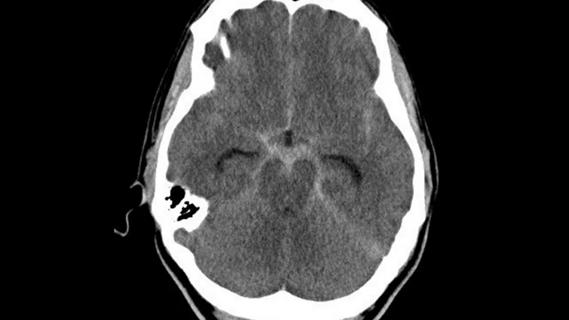
Digital subtraction angiography remains central to assessment of ‘benign’ PMSAH

Cleveland Clinic neuromuscular specialist shares insights on AI in his field and beyond

Findings challenge dogma that microglia are exclusively destructive regardless of location in brain
Neurology is especially well positioned for opportunities to enhance clinical care and medical training
New review distills insights from studies over the past decade
 Search