Locations:





Research supports national guidelines for early-stage breast cancer
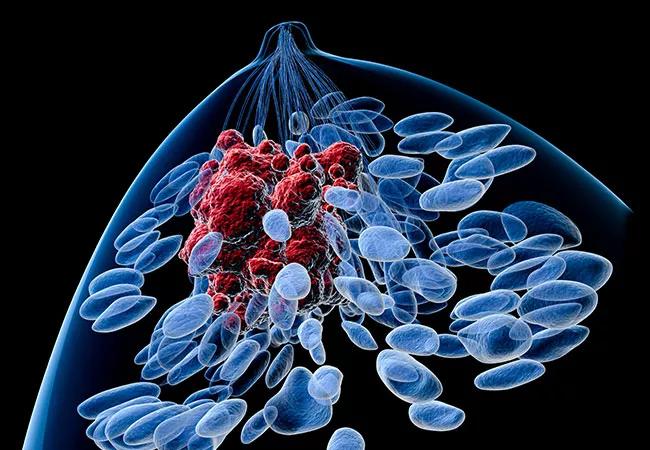
Image content: This image is available to view online.
View image online (https://assets.clevelandclinic.org/transform/83f18f4d-6ea3-4e51-94b1-de084242c985/22-CNR-3297867-CQD-Hero-650x450-breast-cancer_jpg)
breast cancer radiation
Early studies of intraoperative radiation therapy (IORT) for breast cancer were encouraging, but subsequent data has suggested that this procedure has higher rates of recurrence compared to alternative approaches. Now a new study presented at the 2022 American Society for Radiation Oncology annual meeting provides confirmation that IORT has higher rates of recurrence in the breast than accelerated partial breast irradiation (ABPI), an alternative radiation approach.
Advertisement
Cleveland Clinic is a non-profit academic medical center. Advertising on our site helps support our mission. We do not endorse non-Cleveland Clinic products or services. Policy
“We’ve moved away from IORT because of data like this as well as other published data and current national guidelines,” says Cleveland Clinic Director of Breast Radiation Oncology and senor study author Chirag Shah, MD. “A takeaway for clinicians, consistent with current national guidelines, is that we really should not be considering IORT for early stage breast cancer outside of a clinical or prospective trial right now, given the data that we’re seeing.”
For the study, researchers conducted a retrospective review of 482 patients with stage 0 to IIA breast cancer who had received a lumpectomy and radiation. 215 patients received IORT, a procedure in which radiation is delivered directly into the lumpectomy cavity during surgery. The remaining 267 patients received ABPI, with radiation administered over five sessions following surgery.
“From a radiation oncology perspective, we thought the ABPI probably would have better outcomes, as the dose delivered at depth (1 cm and beyond) is better with APBI,” Shah says. “With IORT, we’re not able to give the full dose prescription beyond a few millimeters, so there’s some worry we weren’t getting all the microscopic cells that could remain. whereas with ABPI, you can deliver full dose to one or two centimeters beyond the cavity edge.” In addition, radiation oncologists lack imaging capability with IORT, making it potentially less precise.
The research results confirmed previous studies that found local control outcomes with IORT were worse than what has been published with other techniques. The researchers found that IORT was associated with a 7% rate of local recurrence after five years (92.7% locoregional control). In comparison, the ABPI group (who were treated more recently) had only one case of recurrence after 16 months.
Advertisement
The researchers acknowledged that a longer follow-up is needed to compare long-term recurrence rates between the two procedures. However, Dr. Shah noted that other studies of ABPI have found a five-year recurrence rate of 1.5% and a 10-year recurrence rate of 3% to 4%. “This means that the 7% recurrence rate for IORT is dramatically higher than what we expect, compared to other radiation alternatives,” he says.
“This provides confirmatory data that we’re really seeing these elevated rates of recurrence with IORT. The other thing that’s worth noting is that these patients who received IORT were low risk, with many receiving endocrine therapy, and yet they’re still seeing a rate of recurrence that’s quite high.”
The researcher team plans to continue following the IORT group to gather more data on long-term outcomes. At the same time, as more patients receive APBI, they will evaluate long-term outcomes from a large cohort of patients.
Advertisement
Advertisement
Key learnings from DESTINY trials

Are we ready for ‘observation’ of lesions found on core needle biopsy?
Clinics designed for high-risk patients, young women

Researchers discuss new data on breast cancer treatment
Symposium presenters offer practice-changing updates


Testing CQD Post

A well-prepared team meets the distinctive needs of patients at hereditary high risk
 Search