Locations:





Higher levels of TMAO portend higher long-term mortality risk
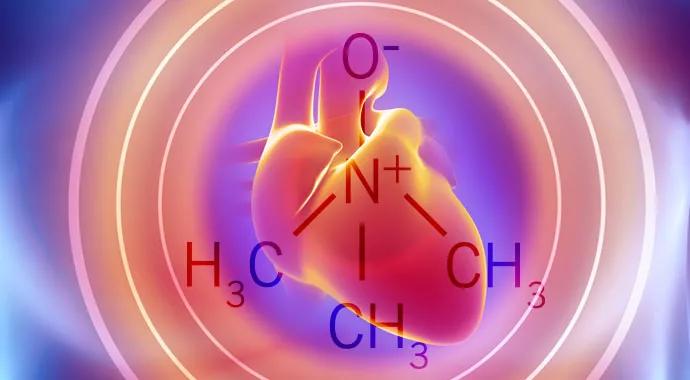
Image content: This image is available to view online.
View image online (https://assets.clevelandclinic.org/transform/8f218b09-6bc2-4402-ac71-83294a69f4ea/TMAO-690x380_jpg)
TMAO-690×380
Cleveland Clinic researchers have obtained direct evidence that gut microbiota may contribute to disease progression in heart failure (HF).
Advertisement
Cleveland Clinic is a non-profit academic medical center. Advertising on our site helps support our mission. We do not endorse non-Cleveland Clinic products or services. Policy
In a study published in the July 29, 2014, Journal of the American College of Cardiology, W.H. Wilson Tang, MD, Stanley L. Hazen, MD, PhD, and colleagues showed that patients with HF had higher levels of plasma trimethylamine-N-oxide (TMAO), a microbiota-generated metabolite, than patients without HF. Moreover, higher levels of TMAO increased long-term adverse clinical outcomes from HF.
“Our key finding is the strong prognostic value of plasma TMAO levels in stable patients with HF incremental to traditional risk factors, cardio-renal indices and markers of systemic inflammation,” says Dr. Tang.
The researchers prospectively enrolled 720 stable patients with HF undergoing elective coronary angiography at Cleveland Clinic from 2001-2007. Fasting blood samples were collected and compared with samples from 300 healthy individuals without heart disease. Fasting TMAO, B-natriuretic peptide (BNP), high-sensitivity C-reactive protein (hsCRP), fasting lipids, uric acid and serum creatinine levels were measured in all participants.
During the 5-year follow-up, 207 patients died. When TMAO was stratified by quartiles, a graded increase in mortality risk was seen when levels rose above 5.0 μM, the median TMAO level in patients with HF. Patients with the highest levels of TMAO had a 3.4-fold increased all-cause mortality rate independent of other risk factors.
A significant but relatively modest correlation was seen between TMAO and BNP, and a stronger inverse correlation between TMAO and glomerular filtration rate (eGFR). Elevated TMAO was associated with a 2.2-fold increase in mortality risk after adjusting for traditional risk factors and BNP, and a 1.80-fold increase after adjusting for traditional risk factors plus BNP, eGFR and hsCRP.
Advertisement
Within the intermediate BNP range, the lower two tertiles of TMAO portended a 3.3-fold increase in all-cause mortality risk, while the highest TMAO tertile had a 5.7-fold increased risk, compared to low BNP and TMAO levels.
The same team of researchers recently described a link between TMAO and increased risk for cardiovascular adverse events, including death, myocardial infarction and stroke. The current study is the first to demonstrate an association between elevated TMAO levels and poor prognosis in patients with HF.
“It is intriguing to observe that in the setting of elevated natriuretic peptides—which often represent significant myocardial disease progression—a relatively low fasting TMAO level was associated with a far lower mortality risk than elevated levels of both markers. This further reinforces the ‘gut hypothesis’ in a large population of heart-failure patients and suggest a potential association between gut microbiota and pathways with known pro-atherogenic potential to adversely impact the prognosis in heart failure,” says Dr. Tang.
Whether microbial composition changes in HF directly or indirectly contribute to enhanced oxidative stress and inflammation remains unclear.
“Further investigations to test whether targeted interventions to alter the gut microbiota composition and lower TMAO production or enhance TMAO clearance can alter the natural history of HF disease progression are warranted,” says Dr. Tang.
For more related research on TMAO follow here.
Advertisement
Advertisement
A sampling of outcome and volume data from our Heart & Vascular Institute
Concomitant AF ablation and LAA occlusion strongly endorsed during elective heart surgery
Large retrospective study supports its addition to BAV repair toolbox at expert centers
Young age, solid tumor, high uptake on PET and KRAS mutation signal risk, suggest need for lobectomy
Surprise findings argue for caution about testosterone use in men at risk for fracture
Residual AR related to severe preoperative AR increases risk of progression, need for reoperation

Findings support emphasis on markers of frailty related to, but not dependent on, age
Provides option for patients previously deemed anatomically unsuitable
 Search